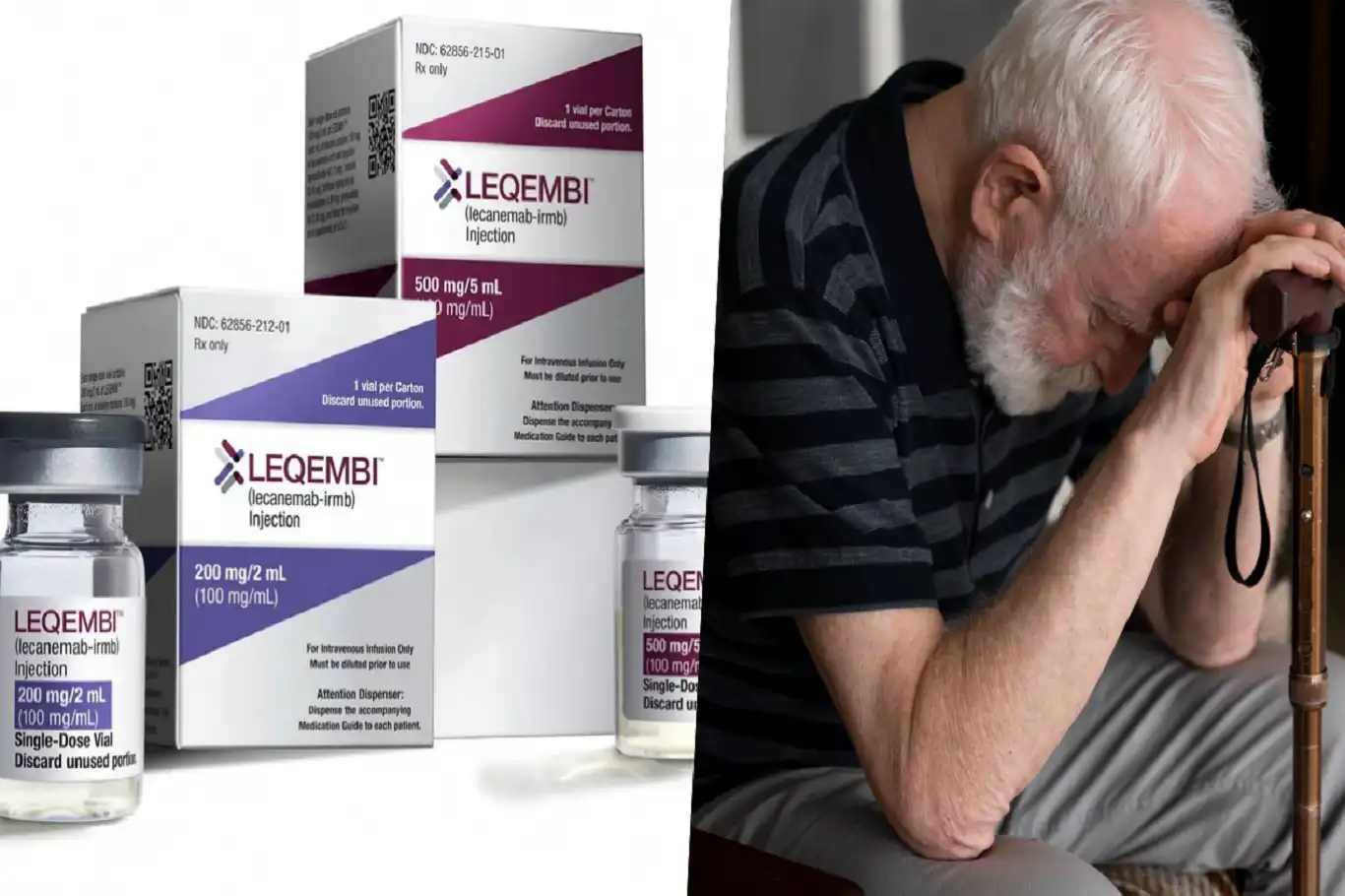
Germany to roll out new Alzheimer’s drug Lecanemab in September
 13 oC
13 oC 
Güneşli

The medicine, Lecanemab, marketed under the name Leqembi, was developed by US pharmaceutical company Biogen and Japan’s Eisai.
The European Commission approved the drug in April for patients in the early stages of Alzheimer’s disease — including those experiencing mild memory loss and difficulties with thinking. Researchers say it offers the possibility of delaying progression rather than simply easing symptoms.
According to Johannes Levin from the German Center for Neurodegenerative Diseases, around 250,000 people in Germany are currently in the early stage of the illness.
However, the treatment cannot be prescribed universally. Data shows it should only be used in patients with one or no copies of the ApoE4 gene variant, since those carrying two copies face a higher risk of side effects such as brain swelling and bleeding.
Experts estimate that roughly 80% of Alzheimer’s patients in Germany — nearly one million people — could qualify for treatment.
Lecanemab is given intravenously once every two weeks, with dosage based on body weight. According to Eisai, the manufacturer’s price is set at €310 for a 2ml vial and €615 for a 5ml vial.
Retail prices in Germany will be higher, with the smaller vial costing €403 and the larger one €788, the German Pharmacists Association said.
For a typical patient weighing 70 kilograms, each dose requires 7ml of the drug — equivalent to one large and one small vial. On this basis, the annual cost is expected to be around €24,000.
The launch is being hailed as a significant step in Alzheimer’s care in Europe. Until now, available therapies have largely focused on managing symptoms rather than targeting the underlying disease.
Alzheimer’s is the most common cause of dementia worldwide, affecting tens of millions of people. (ILKHA)
LEGAL WARNING: All rights of the published news, photos and videos are reserved by İlke Haber Ajansı Basın Yayın San. Trade A.Ş. Under no circumstances can all or part of the news, photos and videos be used without a written contract or subscription.

Health authorities in the Democratic Republic of the Congo (DRC) have lost contact with nearly 300 people who tested positive for Ebola, raising fears that the virus could spread further amid ongoing conflict, mass displacement, and severe shortages of resources.
The World Health Organization (WHO) has announced that the recent Hantavirus outbreak is nearing its conclusion, with no new cases reported among monitored contacts in affected countries.

Bangladesh's ongoing measles outbreak continues to worsen, with health authorities reporting four additional deaths and hundreds of new infections over the past 24 hours, pushing the nationwide death toll to 712.

Sleep remains the single largest activity in the daily lives of people in Türkiye, according to the latest Time Use Survey released by the Turkish Statistical Institute (TÜİK) on Friday.