Erdoğan: We want to see concrete steps on issues concerning our national security
 13 oC
13 oC 
Güneşli

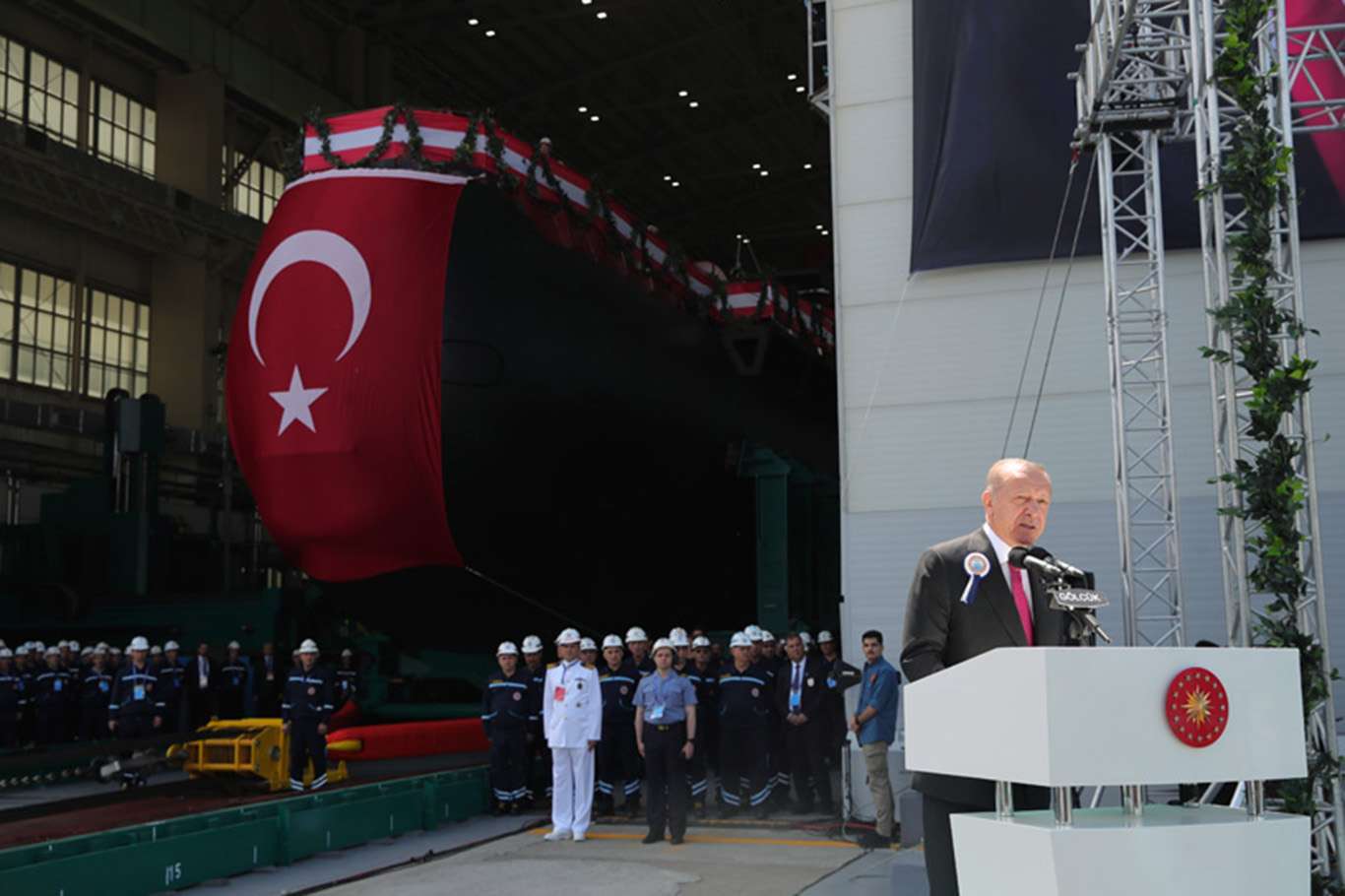
Turkish President Recep Tayyip Erdoğan made a speech at a ceremony held for the docking of Hızırreis submarine and the first welding of Selmanreis submarine at Gölcük Shipyard Command.
Speaking at a ceremony held for the docking of Hızırreis submarine and the first welding of Selmanreis submarine, Erdoğan said: “We have realized many projects that will render our navy stronger and more deterrent for the security of the Blue Homeland.”
Erdoğan said: “Nearly 30 domestic companies of ours have assumed responsibility in this critical project with their designs and productions for submarine platforms and underwater technology. Moreover, many other companies of ours are contributing as subcontractors to the production process of our submarines. I thank on behalf of myself and my nation all who have contributed to the production of these submarines that will add to our strength in seas.”
“We want to see concrete steps on the issues concerning our national security”
“Neither in the fulfillment of its security needs nor in its legitimate cross-border operations or in its 40-year-long fight against terror has Türkiye received the support it has expected from its allies,” Erdoğan underscored, and added: “Let alone any support or contribution; our country has most of the time been exposed to overt or covert sanctions, embargoes, threats, pressures and blackmails. During this process, double standards have been incidents which we have learned about well, experienced frequently, felt to the bone, and which we have told to our counterparts’ faces at every opportunity. Despite the critical incidents taking place in our region, we see that the same stance is being persistently maintained particularly on the issues of security and defense.”
Erdoğan stated: “At a time when the alliance solidarity must be kept at the highest level, the policy of making up excuses must be abandoned and Türkiye’s rightful expectations, especially regarding sanctions and support in the fight against terror, must be met. As a country paying a price for NATO we want to see concrete steps rather than open-ended diplomatic statements on the issues concerning our national security. We believe an enlargement policy that disregards the fundamental security sensitivities will benefit neither us nor NATO.”
Underscoring that the double standards it had faced made Türkiye gain opportunities, Erdoğan said: “While the foreign dependency in defense industry was 80 per cent when we took office, we have today reached a domestic and national production rate of over 70 per cent. We are currently carrying out more than 750 defense industry projects half of which we have launched in the past five years. We have realized many projects that will render our navy stronger and more deterrent for the security of the Blue Homeland.” (ILKHA)
LEGAL WARNING: All rights of the published news, photos and videos are reserved by İlke Haber Ajansı Basın Yayın San. Trade A.Ş. Under no circumstances can all or part of the news, photos and videos be used without a written contract or subscription.

Türkiye has officially published its 2026–2030 National Artificial Intelligence Action Plan in the Official Gazette under a presidential circular signed by President Recep Tayyip Erdoğan, outlining the country's roadmap to expand artificial intelligence capabilities and strengthen technological competitiveness.
Rehber TV has completed an upgrade of its technical broadcasting infrastructure, enabling viewers to watch its news and program content in high-definition (HD) image quality.
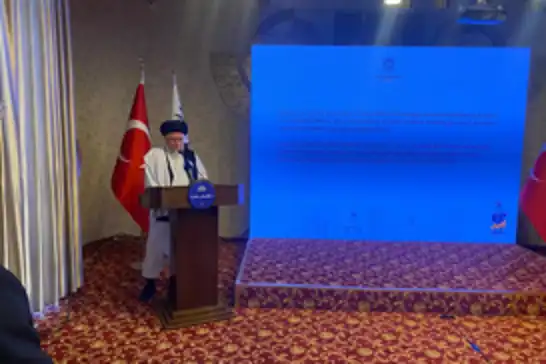
The Afghan Embassy in Ankara hosted a special event on August 17, 2026, to commemorate the fifth anniversary of what Afghan authorities describe as the end of foreign occupation and the return of the Taliban to power in Afghanistan.
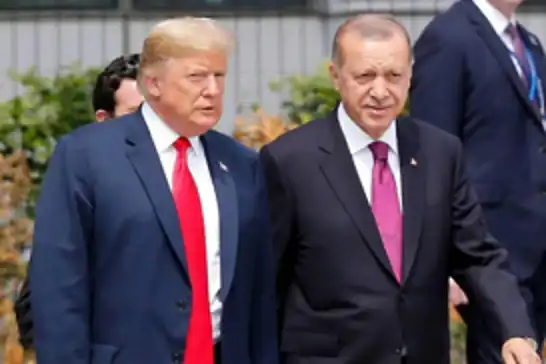
Turkish President Recep Tayyip Erdoğan held a phone conversation with U.S. President Donald J. Trump to discuss bilateral relations between Türkiye and the United States, as well as regional and global developments.