Ebola outbreak leaves more than 1,900 children separated from parents in eastern DRC
 13 oC
13 oC 
Güneşli

More than 1,900 children have lost or been separated from one or both parents or primary caregivers since an Ebola outbreak was declared in the eastern Democratic Republic of the Congo (DRC) in May, UNICEF said.
UNICEF said 1,581 affected children had been identified in Ituri province and another 322 in North Kivu as of Sept. 28. The actual number is likely higher because the figures cover only areas where UNICEF is working with the Provincial Division of Social Affairs (DIVAS).
“For children, Ebola can set off a rapid chain of harm,” UNICEF Director of Emergency Operations Lucia Elmi said after visiting Bunia, the epicentre of the outbreak.
A parent who becomes infected may be hospitalized or die, leaving children without the person they depend on, while fear of infection and stigma can discourage relatives and neighbours from taking them in, Elmi said.
UNICEF also identified 214 children living and working on the streets of Bunia who are in need of protection. Without caregivers, the children face increased risks of contracting Ebola, missing out on contact tracing and treatment, as well as exploitation and violence.
Children facing disproportionate risks
Children have been particularly hard hit by the outbreak. According to UNICEF's analysis of Ministry of Health data, at least 2,076 children had been confirmed with Ebola and at least 1,162 had died as of Sept. 29.
Children account for more than one-quarter of confirmed Ebola cases but approximately one-third of recorded deaths.
The youngest children face the greatest danger. About seven in 10 children under the age of five who have contracted Ebola have died, up from six in 10 only weeks earlier. UNICEF said many children are dying before they can reach a treatment facility.
Across the DRC, more than 8,224 Ebola cases and 3,982 deaths had been confirmed in seven provinces as of Sept. 29. Ituri remains the worst-affected province, while transmission continues in North Kivu.
The outbreak is unfolding against the backdrop of a long-running humanitarian crisis in eastern DRC, where millions of people have been displaced by conflict and insecurity. The affected provinces are home to around 4.4 million internally displaced people, while conflict, displacement and mistrust can make it more difficult to detect infections and trace contacts quickly.
UNICEF expands support for vulnerable children
UNICEF is supporting 12 nurseries located near Ebola Treatment Centres in Ituri, North Kivu and South Kivu.
The facilities provide safe, child-friendly care for children who have been exposed to Ebola, are unaccompanied or whose caregivers are receiving treatment. They also allow health workers to closely monitor children for symptoms and rapidly refer those who become ill for paediatric treatment.
In cooperation with DIVAS, UNICEF has also provided case management services, including family tracing, reunification and alternative care arrangements.
The agency said its supported services have reached 90,600 people through psychoeducation sessions, while more than 15,900 family members have received psychosocial support at home.
UNICEF is urging the DRC government, donors and humanitarian partners to urgently establish nurseries at every Ebola Treatment Centre, strengthen paediatric care, deploy additional social workers and psychosocial support staff to outbreak hotspots and increase funding for family reunification and alternative care.
The agency is seeking $150.8 million for its global Ebola response, including $113.4 million for the DRC. So far, only $40.1 million has been secured for the DRC response.
UNICEF warned that closing the funding gap is essential to strengthening the response, preventing further transmission across borders and maintaining preparedness in 11 neighbouring countries. (ILKHA)
LEGAL WARNING: All rights of the published news, photos and videos are reserved by İlke Haber Ajansı Basın Yayın San. Trade A.Ş. Under no circumstances can all or part of the news, photos and videos be used without a written contract or subscription.
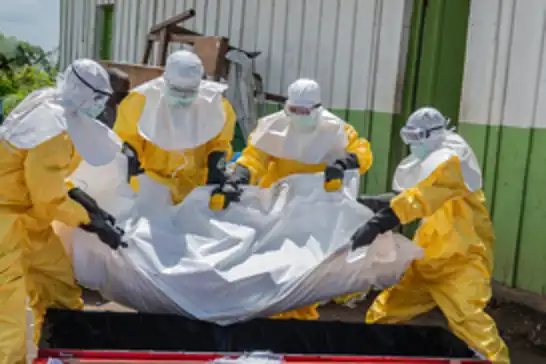
A candidate vaccine against the deadly Bundibugyo strain of Ebola has entered a new phase of clinical testing in Uganda, as health authorities accelerate efforts to develop effective vaccines against a virus that has caused one of the largest and fastest-growing Ebola outbreaks ever recorded in the Democratic Republic of the Congo (DRC).
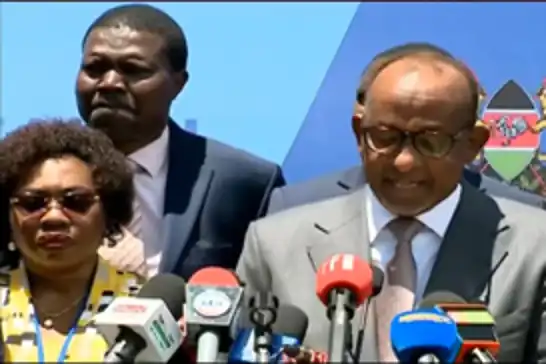
Kenya has confirmed its first Ebola case after a citizen who had been living in the Democratic Republic of Congo (DRC) died in Nairobi, prompting authorities to trace dozens of people who may have been exposed to the virus.

New York Governor Kathy Hochul declared a statewide disaster emergency on Monday over a measles outbreak, as the United States experiences its worst year for the disease in more than three decades.