Millions gather in Tehran to bid farewell to martyr Ayatollah Khamenei
 13 oC
13 oC 
Güneşli

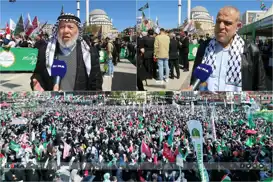
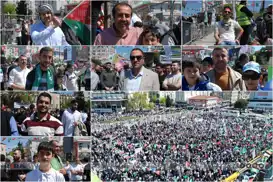
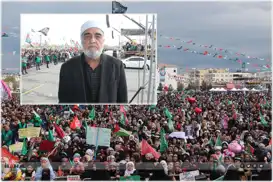
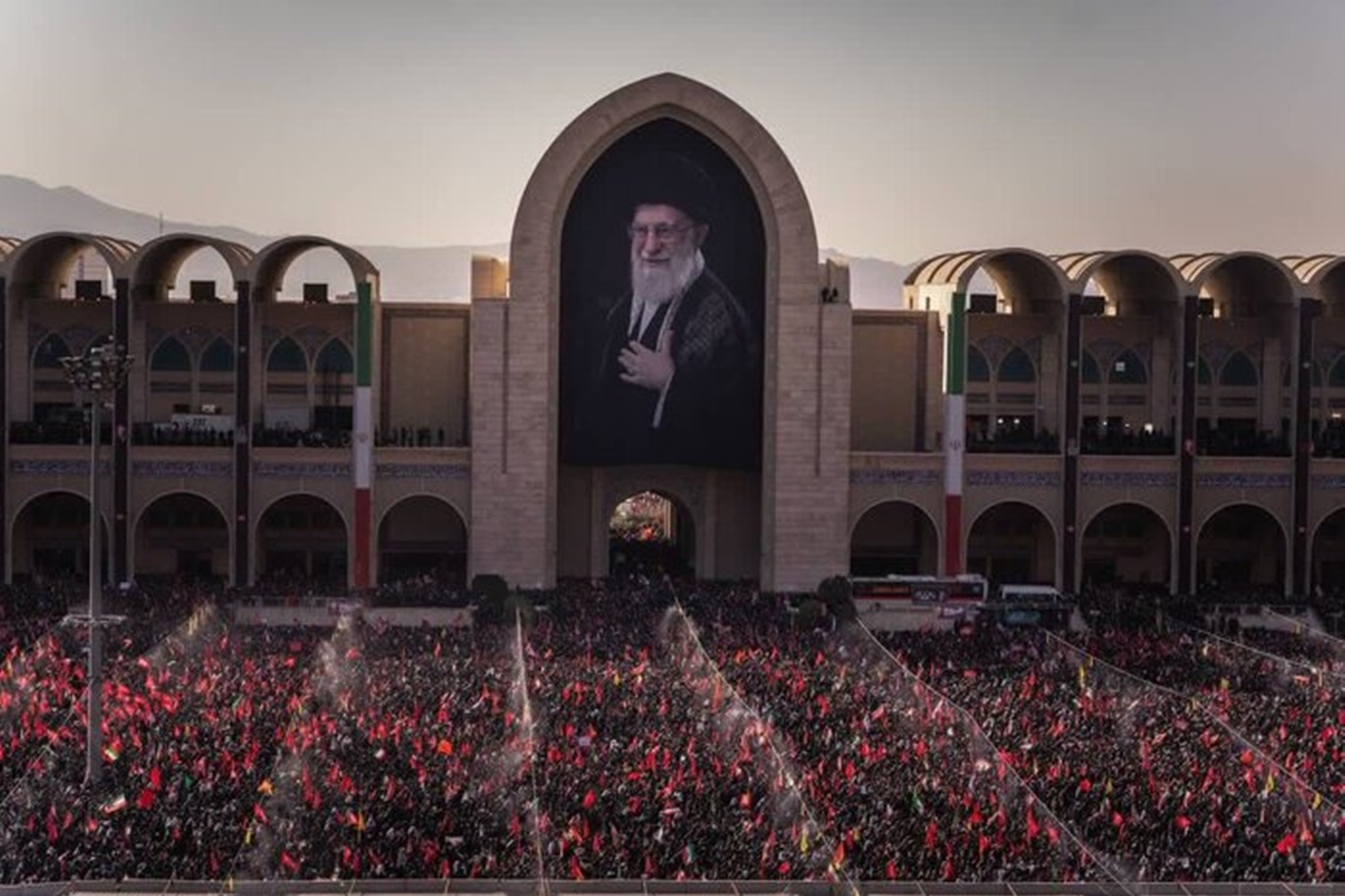
Millions of mourners from across Iran and around the world gathered in Tehran on Sunday to participate in funeral prayers for the martyred Leader of the Islamic Revolution, Ayatollah Seyyed Ali Khamenei, in one of the largest public mobilizations in the history of the Islamic Republic.
The immense crowds that filled Tehran’s Imam Khomeini Mosalla and overflowed into surrounding streets reflected not only profound grief over the loss of the Leader but also a powerful display of national unity and unwavering commitment to the ideals of the Islamic Revolution.
As the prayer hall reached capacity hours before the ceremony, authorities were forced to close entrances to the vast complex. Yet streams of mourners continued arriving throughout the day, transforming large sections of the capital into a sea of black-clad faithful paying tribute to a leader whose influence extended far beyond Iran’s borders.
Senior Clerics and State Officials Lead Tributes
The funeral prayers were led by Grand Ayatollah Jafar Sobhani, one of Iran’s most senior religious authorities.
Prayers were first offered for Ayatollah Khamenei before being extended to four members of his family who were martyred alongside him during the joint American-Israeli attack against Iran on February 28.
Among those remembered were his son-in-law Dr. Mesbah al-Hoda Bagheri Kani, his eldest daughter Seyyedeh Boshra Hosseini Khamenei, his daughter-in-law Zahra Haddad Adel, and his 14-month-old granddaughter Zahra Mohammadi Golpayegani.
The sight of the infant's coffin placed beside that of her grandfather became one of the most powerful images of the ceremony, drawing international attention and reinforcing accusations that the attackers showed no regard for civilian lives.
Senior state officials attended the prayers, including President Masoud Pezeshkian, Parliament Speaker Mohammad Bagher Ghalibaf, Judiciary Chief Gholamhossein Mohseni Ejei, Islamic Revolutionary Guard Corps Commander Major General Ahmad Vahidi, and Quds Force Commander Esmail Qaani.
Calls for Justice Echo Across Tehran
Throughout the ceremony, mourners chanted slogans condemning the United States and Israel while calling for accountability for the assassination of the Leader.
Red flags carrying the slogans “Ya Latharat al-Hussein” and “Ya Latharat al-Khamenei” were raised across the prayer grounds. The slogans draw upon the historic legacy of Imam Hussein's martyrdom at Karbala, a defining event in Shiite Islam symbolizing resistance against oppression and injustice.
Participants described the assassination as an attack not only on Iran but on the broader Resistance Axis, vowing that the legacy of Ayatollah Khamenei would continue to inspire opposition to foreign domination and regional aggression.
Global Leaders Join Iran in Mourning
The funeral ceremonies have attracted high-level delegations from across Asia, the Middle East, and beyond.
Among those attending were senior representatives from Pakistan, Iraq, Armenia, Turkmenistan, Tajikistan, Azerbaijan, Belarus, Bangladesh, Uzbekistan, Kyrgyzstan, China, Russia, Türkiye, Saudi Arabia, Qatar, Lebanon, Cuba, and numerous other countries.
Officials from major international organizations, including the Shanghai Cooperation Organization, the D-8 Organization for Economic Cooperation, and the Organization of Islamic Cooperation, also took part in the commemorations.
Observers noted that the broad international participation demonstrated that efforts to isolate Iran following the assassination had failed, while highlighting Tehran's enduring diplomatic and strategic influence throughout Eurasia and the Global South.
Demonstration of Institutional Stability
Iranian officials emphasized that the orderly conduct of the ceremonies and the smooth transition of leadership reflected the strength of the Islamic Republic’s institutions.
Despite the unprecedented nature of the attack, government, military, and religious institutions have continued operating without disruption, reinforcing confidence in the country's constitutional framework.
Analysts noted that the visible unity among Iran’s political and military leadership sent a clear message that attempts to weaken the Islamic Republic through leadership decapitation had not succeeded.
Rather than producing instability, the assassination has generated a renewed sense of solidarity among various sectors of Iranian society.
Funeral Procession to Continue Across the Region
The mourning ceremonies are expected to continue throughout the week.
A major funeral procession is scheduled to take place in Tehran before commemorative events move to the holy city of Qom. The Leader’s remains will then be transported to the Iraqi shrine cities of Najaf and Karbala, where millions of mourners are expected to participate in ceremonies honoring his life and legacy.
Following the events in Iraq, the body will return to Iran for burial in Mashhad at the shrine of Imam Reza, one of the holiest sites in the Islamic world.
Iraqi officials have already announced extensive preparations for what is expected to be one of the largest funeral gatherings in the region's history.
Legacy of Resistance Endures
For many participants, the funeral represented more than a farewell to a national leader. It symbolized the continuation of a political and spiritual path that has shaped the Islamic Republic for decades.
The massive turnout, the participation of international delegations, and the coordinated ceremonies stretching from Tehran to Karbala and Mashhad were widely interpreted as evidence that Iran’s regional alliances and strategic vision remain intact.
As millions gathered to honor Ayatollah Khamenei, the message emerging from Tehran was one of resilience, continuity, and determination: while the enemies of Iran succeeded in assassinating a leader, they failed to break the unity of the nation or diminish its commitment to the principles of the Islamic Revolution and the Resistance Front. (ILKHA)
LEGAL WARNING: All rights of the published news, photos and videos are reserved by İlke Haber Ajansı Basın Yayın San. Trade A.Ş. Under no circumstances can all or part of the news, photos and videos be used without a written contract or subscription.
At least 25 people, including prison inmates and security personnel, have been killed as violent clashes continued for a second consecutive day at a prison in western Sri Lanka, authorities and local media reported on Monday.
At least six people were killed and one other was injured after part of a residential building collapsed amid heavy rainfall in Mumbai, the capital of India's Maharashtra state, authorities said.
Israeli occupation forces (IOF) and extremist settler groups intensified their operations across the occupied West Bank overnight and into Monday morning, carrying out raids, arrests, and violent attacks that left several Palestinians injured and heightened tensions throughout the region.
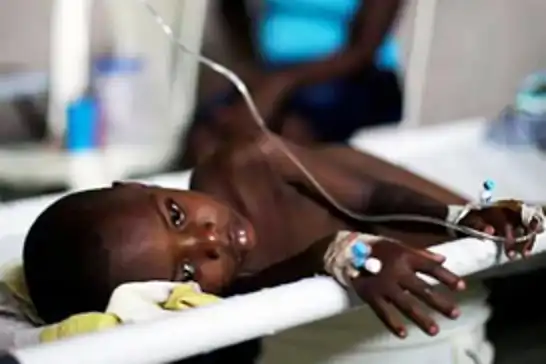
A worsening humanitarian crisis is unfolding in Sudan's North Kordofan State, where the spread of cholera and measles, coupled with severe shortages of food and essential medical supplies, has placed more than 200,000 people at risk, according to the Sudan Doctors Network.