Pashinyan’s Civil Contract secures majority in Armenia’s parliamentary elections
 13 oC
13 oC 
Güneşli

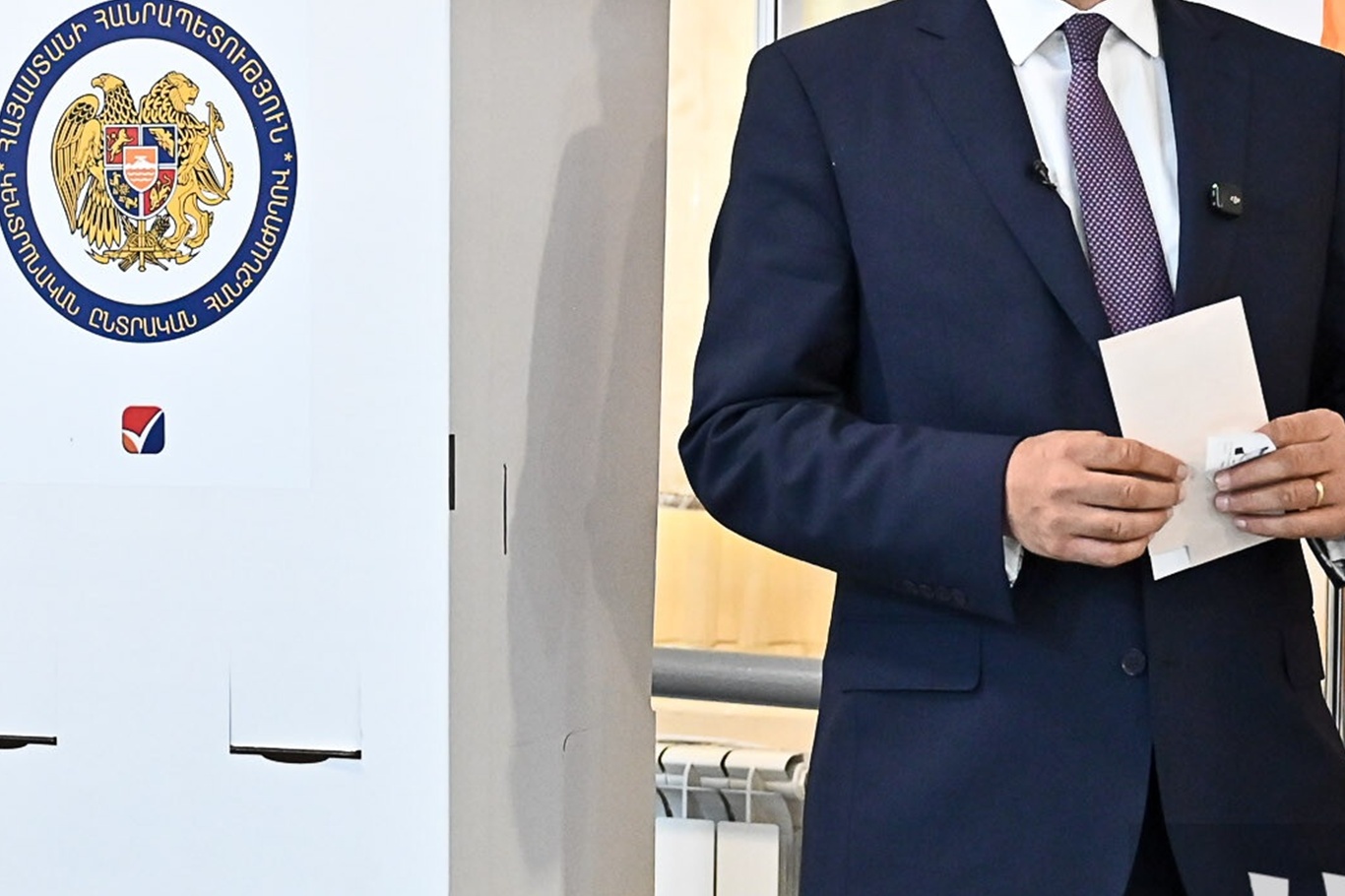
Armenia’s ruling Civil Contract party, led by Prime Minister Nikol Pashinyan, has won a decisive victory in parliamentary elections, securing 49.81% of the vote and an outright majority in the new parliament, according to results published by the Central Election Commission after counting all 2,005 polling stations.
The outcome confirms the party’s continued dominance in Armenian politics at a time of heightened regional tensions and shifting foreign policy alignments.
According to official figures reported by News.am, Civil Contract finished far ahead of its rivals, ensuring control of the legislature without the need for coalition partners.
The Strong Armenia alliance, led by Russian billionaire Samvel Karapetyan, came in second with 23.29% of the vote. The Armenia bloc, headed by former President Robert Kocharyan, secured 9.94%.
The Prosperous Armenia party narrowly failed to cross the electoral threshold, receiving 3.9% of the vote in the final revised count. The Central Election Commission clarified that this adjustment meant only three political forces will enter parliament: Civil Contract, Strong Armenia, and the Armenia bloc.
A total of 18 political forces—16 parties and two alliances—contested the election. The electoral threshold stands at 4% for parties, 8% for coalitions of up to three parties, and 10% for larger alliances.
The result is seen as a strong mandate for Prime Minister Nikol Pashinyan, whose government has faced intense domestic and international pressure in recent years, particularly following Armenia’s shifting security situation in the South Caucasus.
Early post-election reactions indicated that Civil Contract’s victory would allow the government to continue its reform agenda while maintaining policy continuity on foreign affairs.
The election took place amid worsening relations between Armenia and Russia, with Moscow repeatedly criticizing Yerevan’s growing engagement with Western institutions.
Russian officials have accused Pashinyan of steering Armenia toward a pro-Western trajectory, particularly in relation to the European Union.
In his post-election remarks, Pashinyan reiterated a dual-track foreign policy approach, stating that Armenia would continue deepening ties with the European Union while remaining committed to the Eurasian Economic Union (EAEU).
“We will also continue to develop our relations with the Russian Federation and other countries of the Eurasian Economic Union,” he said, signaling an attempt to balance competing geopolitical pressures.
The election comes at a sensitive time for Armenia, following recent tensions in the South Caucasus and ongoing uncertainty over regional security arrangements.
Analysts note that Armenia’s leadership is attempting to navigate between Western integration efforts and longstanding economic and security ties with Russia, a balancing act that has become increasingly complex amid broader geopolitical realignments.
In the days following the vote, international observers have highlighted the relatively calm conduct of the election process, though opposition figures have raised concerns about political polarization and the uneven playing field.
Meanwhile, regional actors are closely watching the formation of the new parliament, particularly as Armenia continues negotiations on economic partnerships, security cooperation frameworks, and its evolving relationship with both the European Union and the Eurasian bloc.
With Civil Contract holding a parliamentary majority, Pashinyan is expected to maintain a dominant role in shaping Armenia’s domestic and foreign policy direction in the coming years, amid continued geopolitical pressure from multiple sides. (ILKHA)
LEGAL WARNING: All rights of the published news, photos and videos are reserved by İlke Haber Ajansı Basın Yayın San. Trade A.Ş. Under no circumstances can all or part of the news, photos and videos be used without a written contract or subscription.

Geopolitical tensions in West Asia disrupt global energy routes, but Moscow commits to supporting major Asian buyers like India and China as New Delhi accelerates diversification efforts.
Medical sources in the Gaza Strip have reported that the death toll from the ongoing Israeli military offensive has risen to 72,980, with 173,171 people injured since the start of the war on October 7, 2023.
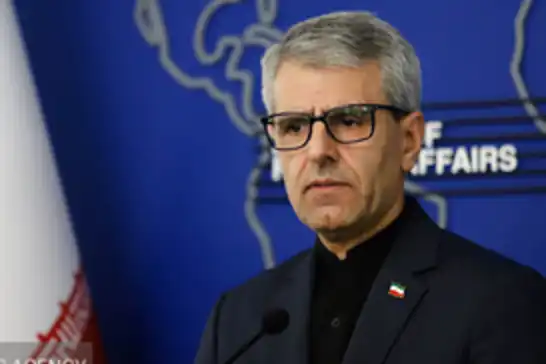
Iran’s Foreign Ministry has strongly condemned the United States as the primary force behind escalating regional tensions, stressing that the Zionist regime operates in full coordination with Washington and bears no independent decision-making capacity in its attacks on Lebanon and Iran.