Philippines: President Marcos orders temporary 4-day workweek in some gov’t agencies

 13 oC
13 oC 
Güneşli

The government of the Philippines has announced a temporary shift to a four-day workweek for public offices as rising fuel prices linked to the ongoing Middle East conflict threaten to strain the country’s economy.
President Ferdinand Marcos Jr. said the measure will take effect at government agencies starting Monday and is part of a broader effort to reduce operational costs and energy consumption.
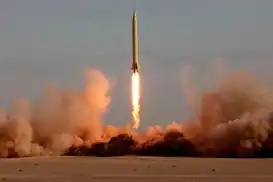
The decision comes amid concerns that disruptions in global oil markets caused by the war involving Iran, Israel, and the United States could push domestic fuel prices sharply higher.
Marcos warned that potential instability surrounding the Strait of Hormuz — through which roughly one-fifth of global oil shipments pass — could drive significant price increases at Philippine fuel pumps.
Officials estimate that gasoline prices may rise by 7.48 pesos per liter, diesel by 17.28 pesos, and kerosene by as much as 32.35 pesos (approximately 13–55 U.S. cents), reflecting higher international crude costs.
The Philippines relies heavily on imported oil from the Middle East and continues to use oil-fired power plants for electricity generation, leaving the economy vulnerable to energy market shocks.
Marcos acknowledged that the country is being affected by a conflict it did not initiate.
“We are victims of a war that is not of our choosing,” he said in a statement. “But we control how we will protect the Filipino.”
To mitigate the impact, the government has ordered agencies to cut fuel and power consumption by 10–20 percent and suspended non-essential activities such as study tours, team-building events, and in-person meetings that can be conducted online.
Officials also plan to provide fuel subsidies and cash assistance to affected sectors, though details of the programs have yet to be announced.
Under the new arrangement, public offices will operate on a compressed schedule, reducing the number of working days but maintaining essential services.
Frontline government services, police units, and fire departments are exempt from the change and will continue operating under regular schedules.
Marcos emphasized that the four-day workweek is temporary, though no specific end date has been provided.
The Middle East conflict has already contributed to volatility in global energy markets, raising concerns about inflation and supply disruptions in countries that depend on imported oil.
The Philippines imports most of its crude petroleum and remains sensitive to shifts in international prices.
Analysts warn that prolonged instability in the region could further strain consumer costs and government budgets, particularly if oil prices exceed $80 per barrel — a threshold that could trigger additional fiscal measures.
The war also poses risks to more than two million Filipino workers in the Middle East, many of whom are employed in sectors vulnerable to regional instability.
Authorities have expressed concern about job security and personal safety for overseas Filipino workers and are monitoring developments closely.
Marcos has urged the Philippine Congress to grant authority to reduce excise taxes on petroleum products if crude prices surpass $80 per barrel, a move intended to soften the impact of higher fuel costs on consumers.
He also requested amendments to biofuel regulations to allow cheaper bioethanol blending, which could help lower retail gasoline prices.
Lawmakers are expected to debate the proposals in the coming weeks.
The government’s response reflects growing economic pressures linked to geopolitical tensions far beyond Southeast Asia.
While officials stress that measures are temporary, the developments highlight the Philippines’ vulnerability to global energy disruptions and the cascading effects of international conflicts.
Marcos reiterated that protecting the country’s economy and workforce remains a priority as the situation evolves. (ILKHA)
LEGAL WARNING: All rights of the published news, photos and videos are reserved by İlke Haber Ajansı Basın Yayın San. Trade A.Ş. Under no circumstances can all or part of the news, photos and videos be used without a written contract or subscription.
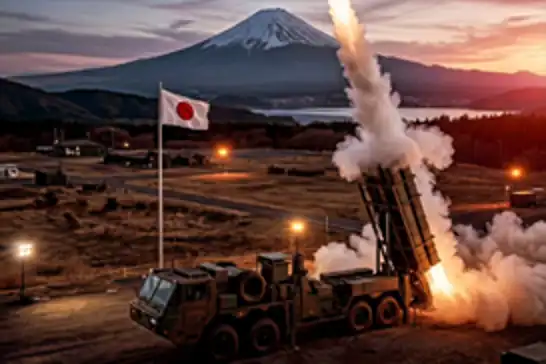
Japan has begun transporting missile launchers and military equipment to its easternmost island, Minami-Torishima, in a move that underscores Tokyo's ongoing efforts to strengthen its defensive posture amid growing security challenges in the Indo-Pacific region.
The European Union has unveiled a new package of sanctions against Russia, proposing restrictions on dozens of banks, cryptocurrency platforms and oil tankers as part of ongoing efforts to increase economic pressure on Moscow over the war in Ukraine.
A Nepali climbing guide who was presumed dead on Mount Everest has been found alive, crawling down the mountain six days after he was last seen.
International Criminal Court (ICC) Chief Prosecutor Karim Khan has been suspended from office pending the outcome of a misconduct investigation, in an unprecedented development that has drawn global attention to the world's leading war crimes tribunal.