Sudanese PM proposes peace initiative to UN Security Council to end civil war
 13 oC
13 oC 
Güneşli

Sudan’s prime minister has presented a comprehensive plan to end the country’s nearly three-year war to the United Nations Security Council (UNSC), urging world powers to support the initiative as violence continues across several regions, including Kordofan and North Kordofan states.
Addressing the UNSC on Monday, Prime Minister Kamil Idris called on its 15 members to stand “on the right side of history” by backing a Sudanese-led proposal aimed at halting the conflict between the Sudanese Armed Forces (SAF) and the Rapid Support Forces (RSF).
Idris outlined a plan that includes an immediate ceasefire monitored by the United Nations, the African Union and the Arab League, alongside the withdrawal of RSF fighters from areas under their control. Under the proposal, RSF forces would be confined to designated camps and disarmed — a step Idris said was essential if any truce was to have “a chance for success.”
The plan also envisions a transitional period leading to an inclusive inter-Sudanese dialogue and the organisation of free elections. RSF fighters not implicated in war crimes would be reintegrated into society as part of a broader reconciliation process.
“It is not about winning a war,” Idris told the council. “It is about ending a cycle of violence that has failed Sudan for decades.”
He appealed directly to UNSC members, saying the initiative could mark a turning point for the country if the international community chose to support it.
There was no immediate response from the RSF, though analysts say it is unlikely the paramilitary group would endorse a proposal calling for its disarmament and withdrawal.
Idris’s address came as clashes continued on the ground. The Sudanese army said on Monday it had recaptured a town southwest of al-Rahad in North Kordofan State. Meanwhile, the RSF has consolidated control in parts of western Sudan, including the Darfur region.
In October, RSF forces captured el-Fasher, the capital of North Darfur, in an offensive that killed more than 1,500 people. Since the war began in April 2023 over a power struggle between SAF chief Abdel Fattah al-Burhan and RSF leader Mohamed Hamdan “Hemedti” Dagalo, tens of thousands have been killed and about 14 million people displaced.
While Idris pushed his government’s ceasefire initiative, the United States and its partners presented a different approach focused on humanitarian relief. US Ambassador Jeffrey Bartos urged both the Sudanese army and the RSF to accept a humanitarian truce proposed by the so-called Quad — the US, Saudi Arabia, Egypt and the United Arab Emirates.
“We urge both belligerents to accept this plan without preconditions immediately,” Bartos told the council.
The Quad proposal calls for an immediate three-month truce as a first step toward a permanent ceasefire, expanded humanitarian access, and the launch of a political process leading to civilian rule. Although the RSF said in early November that it accepted the humanitarian truce, fighting has continued, particularly in Kordofan, where at least 100 civilians have been killed since early December and more than 50,000 people displaced.
The United Nations estimates that more than 40,000 people have been killed in the conflict, though aid groups warn the true toll could be far higher. The war has triggered what the UN describes as the world’s largest humanitarian crisis, with famine and disease spreading in multiple regions.
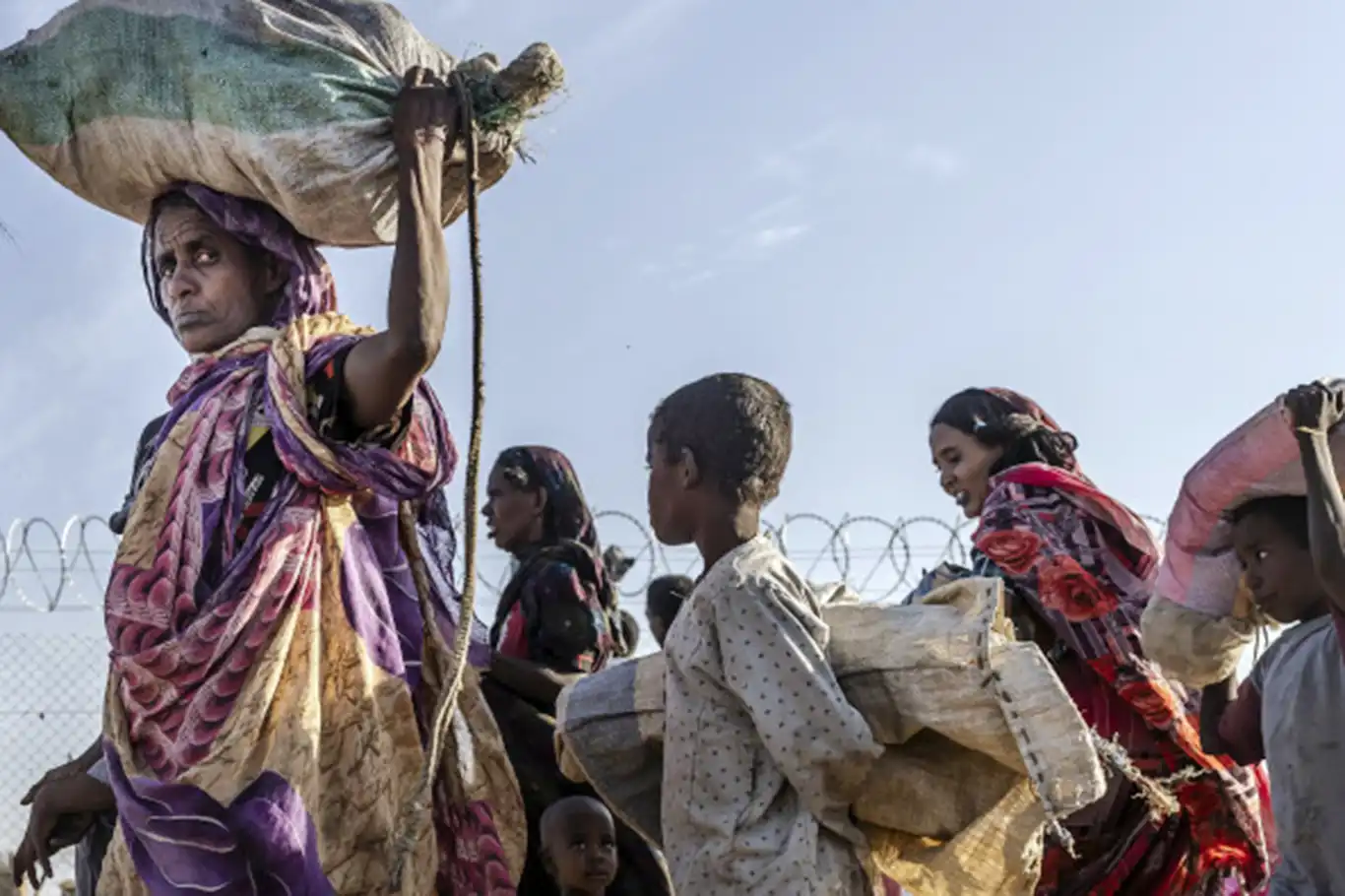
Recent RSF advances in Kordofan have forced thousands to flee. Officials say around 1,700 internally displaced people, mostly women and children, have arrived at a camp near Kosti in White Nile State. Aid workers report severe shortages of tents, food and basic equipment at the site.
Responding to questions about the viability of his proposal, Idris stressed that it was Sudanese-led. “It is homemade — not imposed on us,” he said, in an apparent reference to the Quad-backed initiative.
However, some UNSC members privately expressed doubts about the plan’s feasibility. UAE Ambassador Mohamed Abushahab reiterated support for the humanitarian truce, warning that unilateral efforts by either side would only prolong the war.
“Lessons of history and present realities make it clear that unilateral efforts by either of the warring parties are not sustainable,” he said.
As diplomatic efforts multiply, Sudan’s civilians continue to bear the brunt of a conflict with no clear end in sight, underscoring the urgency of translating international proposals into action on the ground. (ILKHA)
LEGAL WARNING: All rights of the published news, photos and videos are reserved by İlke Haber Ajansı Basın Yayın San. Trade A.Ş. Under no circumstances can all or part of the news, photos and videos be used without a written contract or subscription.
United Nations Secretary-General António Guterres has strongly condemned new US sanctions targeting the International Criminal Court (ICC) as an institution, warning that the measures could undermine its ability to pursue international criminal justice.

A powerful earthquake with a magnitude of 7.7 struck southern Panama on Friday, shaking buildings in the capital, prompting evacuations and triggering tsunami alerts for parts of the Pacific coast of Central and South America.
The European Commission will represent the European Union at the latest round of Ukraine peace talks on October 9, with Björn Seibert, chief of staff to Commission President Ursula von der Leyen, attending on behalf of the bloc, diplomatic sources told the Kyiv Independent.
The number of people who have died from Lassa fever in Nigeria has risen to 263 this year, while the number of confirmed cases recorded between January and September reached 1,115, according to health authorities.