Sweden passes law ending path to permanent residency for refugees

 13 oC
13 oC 
Güneşli

The Swedish parliament has passed a government-backed bill completely abolishing permanent residence permits for refugees and certain other categories of migrants, Radio Sweden reported.
The legislation, approved on Tuesday, June 9, 2026, will take effect on July 12, 2026. From that date, only temporary residence permits will be granted to these groups. While temporary permits have been the standard practice in recent years, the new law formally removes the pathway to permanent residency for future applicants in asylum-related cases.
Swedish authorities clarified that the legislative overhaul will not retroactively strip status from individuals who already hold permanent residence permits. The bill was approved as part of a sweeping strategy by the coalition government to tighten immigration controls and prioritize temporary protection over long-term integration.
The abolition of permanent asylum permits highlights a broader, fundamental shift in the Nordic nation's approach to integration. According to a recent policy analysis from the European Commission, Sweden has pivoted away from a historically rights-based framework toward a strict matrix centered on individual responsibility and repatriation.
As part of this tightening landscape, several parallel measures have been introduced to reshape the country's migration profile:
The government heavily increased its voluntary repatriation grant. The updated initiative offers up to 350,000 SEK (approximately $33,000 USD) per adult to legally resident third-country nationals, including refugees, who choose to permanently return to their countries of origin.
Migration Minister Johan Forssell noted that by closing the door on permanent residency, the state is encouraging highly integrated individuals to apply directly for Swedish citizenship instead, which requires meeting stricter language and civic standards.
While the current law protects current permanent residency holders, the long-term status of thousands remains in political limbo. A government-appointed commission of inquiry recently proposed an even harsher measure: the general revocation of existing permanent residence permits granted on asylum grounds, effectively downgrading them back to temporary status unless the holder obtains citizenship.
While that controversial proposal has been temporarily deferred to the next electoral term due to complex constitutional and legal hurdles, its presence on the legislative horizon signals that Sweden's migration tightening shows no signs of slowing down.
Furthermore, additional stringent measures on immigration are slated for later this summer, including expanded powers for authorities to revoke residence permits based on "misconduct and bad character" as well as electronic monitoring for certain immigration detainees. (ILKHA)
LEGAL WARNING: All rights of the published news, photos and videos are reserved by İlke Haber Ajansı Basın Yayın San. Trade A.Ş. Under no circumstances can all or part of the news, photos and videos be used without a written contract or subscription.
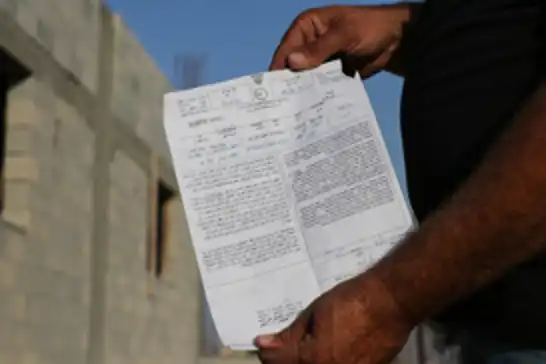
Israeli occupation forces stormed the town of Kafr ad-Dik, west of Salfit, on Thursday morning, launching a fresh demolition assault on Palestinian property and infrastructure.

Colombian President Gustavo Petro delivered a sharply critical speech at the United Nations Security Council, accusing the Israeli regime of carrying out policies in Gaza that he said resemble those associated with the Nazi era.

Turkish Foreign Minister Hakan Fidan held talks with Denis Bećirović, Chairman of the Presidency of Bosnia and Herzegovina, on the sidelines of the South-East European Cooperation Process (SEECP) Summit of Heads of State and Government in Bulgaria's capital, Sofia.