Thousands of Palestinians return to Gaza City as ceasefire brings hope after two years of devastation
 13 oC
13 oC 
Güneşli

Thousands of displaced Palestinians began returning to their shattered homes in Gaza City on Friday, as the long-awaited ceasefire agreement officially came into effect following its approval by the Israeli occupation government.
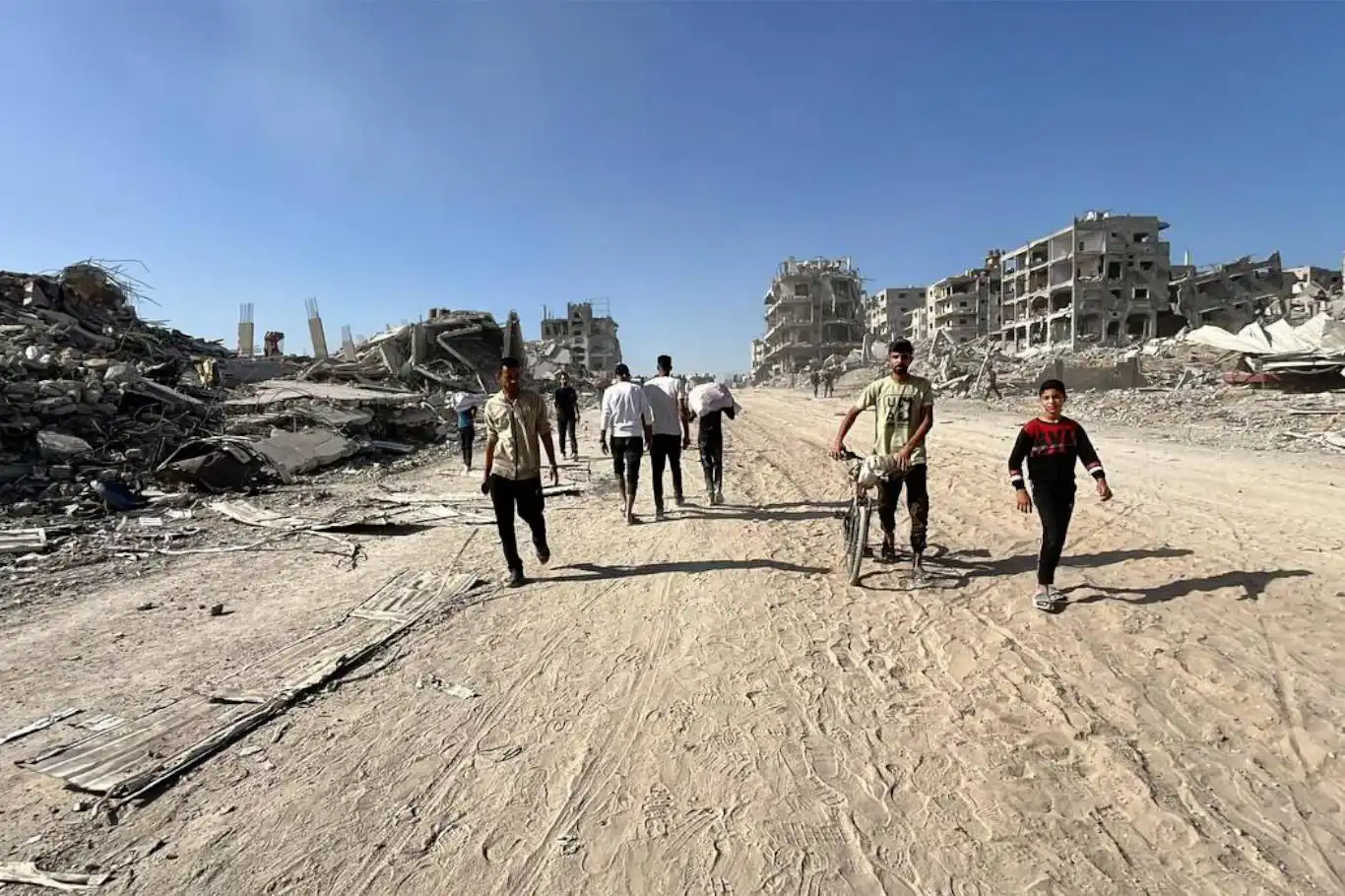
Local sources reported that at dawn, streams of men, women, and children were seen walking northward along the coastal Rashid Street and Salah al-Din Street, the two main arteries that connect the besieged Strip from north to south. Many carried what little remained of their belongings—blankets, water containers, and small bags—after months of displacement caused by Israel’s relentless bombardment and siege.
Witnesses said some families walked more than seven kilometers on foot, passing through the ruins of neighborhoods once filled with life, now reduced to rubble. “We are returning to see what is left of our homes,” one displaced father told reporters, “even if only the dust remains, it is still our land.”
The Rashid coastal road, now filled with returning families, is the same route that witnessed numerous Israeli massacres during the war. Many Palestinians were killed along this road while attempting to flee south under forced displacement orders from the Israeli army.
The return marks the first tangible sign of relief since the Israeli occupation government announced the acceptance of a ceasefire proposal presented by U.S. President Donald Trump. The agreement is said to include a complete halt to hostilities, withdrawal of Israeli forces from the Gaza Strip, unrestricted entry of humanitarian aid, and a mutual exchange of prisoners and hostages.
While the deal was framed by Washington as part of a broader “peace plan,” Palestinians see it as a hard-earned moment of respite after nearly two years of genocidal aggression that claimed more than 67,000 lives, the vast majority of them women and children.
Trump described the accord as “the beginning of a new era of peace,” but for Gazans, it represents something deeper — a testament to their endurance and the steadfastness of the resistance.
Despite the ruins and the grief, thousands continue to march northward, determined to reclaim their homeland and rebuild their lives. As one woman said while holding her child amid the rubble: “They destroyed our homes, but they could not destroy our faith. We return with nothing — except our dignity and our hope.” (ILKHA)
LEGAL WARNING: All rights of the published news, photos and videos are reserved by İlke Haber Ajansı Basın Yayın San. Trade A.Ş. Under no circumstances can all or part of the news, photos and videos be used without a written contract or subscription.
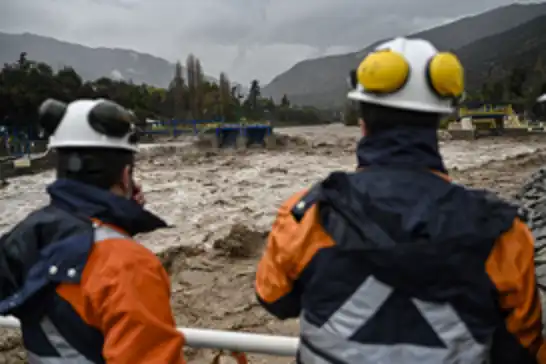
Heavy rains have triggered flash floods and mudslides in Chile's capital, Santiago, and surrounding areas, injuring at least six people, forcing the evacuation of hundreds of households and damaging thousands of homes, according to authorities.
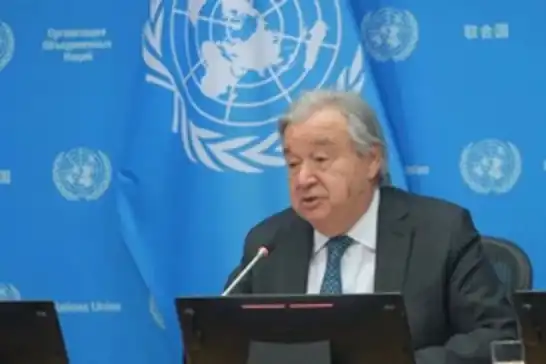
United Nations Secretary-General António Guterres has strongly condemned new US sanctions targeting the International Criminal Court (ICC) as an institution, warning that the measures could undermine its ability to pursue international criminal justice.

A powerful earthquake with a magnitude of 7.7 struck southern Panama on Friday, shaking buildings in the capital, prompting evacuations and triggering tsunami alerts for parts of the Pacific coast of Central and South America.

The European Commission will represent the European Union at the latest round of Ukraine peace talks on October 9, with Björn Seibert, chief of staff to Commission President Ursula von der Leyen, attending on behalf of the bloc, diplomatic sources told the Kyiv Independent.