Trump targets Muslim Brotherhood in politically driven crackdown on Islamic movements

 13 oC
13 oC 
Güneşli

U.S. President Donald Trump last week signed an executive order initiating the process to label certain chapters of the Muslim Brotherhood as foreign terrorist organizations—an action critics say is politically motivated, legally questionable, and aimed at criminalizing a broad spectrum of Islamic political thought.
The order specifically targets Brotherhood branches in Lebanon, Egypt, and Jordan, claiming that these groups “engage in or facilitate violence.” However, the decision has been met with skepticism and anger, with many observers arguing that Washington is attempting to delegitimize Islamic movements that challenge U.S. and Israeli policies in the region.
The Muslim Brotherhood, founded in Egypt in 1928, has long been one of the largest grassroots Islamic movements in the world, maintaining political, social, and humanitarian branches across the Middle East. For decades, Washington worked with Brotherhood-linked groups, particularly during the Cold War. Today, analysts say the shift reflects the growing influence of right-wing and Islamophobic voices inside U.S. policymaking circles.
Under the new order, Secretary of State Marco Rubio and Treasury Secretary Scott Bessent must evaluate whether the named chapters meet the criteria for designation under U.S. law. If confirmed, Washington could freeze any assets they hold in the U.S. and impose travel bans on members, while attempting to cut off their international financing.
A Move Driven by Political Agendas, Not Evidence
Despite the sweeping rhetoric within the executive order, the U.S. government has not provided public evidence showing that the targeted branches meet the strict legal threshold for being designated as Foreign Terrorist Organisations (FTOs).
Legal experts in Washington note that such a designation typically requires extensive intelligence findings—something that has not been presented.
Many analysts say the decision appears to be driven more by U.S. domestic politics and long-standing pressure from right-wing lobbies than by legitimate security concerns.
“President Trump is confronting the Muslim Brotherhood’s transnational network,” the White House said—language critics say mirrors talking points common within anti-Islam advocacy groups in the U.S.
Arab Governments Welcoming the Order Face Accusations of Repression
A handful of U.S.-aligned governments—such as Egypt, Saudi Arabia, and, more recently, Jordan—have already banned the Brotherhood domestically, often accusing it of political dissent rather than terrorism. Human rights organizations, however, describe these bans as part of a broader pattern of suppressing peaceful Islamic political movements and silencing opposition.
Jordan’s government claims the Brotherhood stored weapons and sought to destabilize the kingdom—allegations the group denies. Meanwhile, the Lebanese and Egyptian branches have also been included in the U.S. review process despite varying roles and structures across the region.
U.S. Accusations Focused on Regional Politics, Not Security
The White House justification focuses heavily on the movement’s perceived influence on regional conflicts—particularly resistance groups confronting Israel—rather than on attacks against U.S. citizens.
In statements referencing events after October 7, 2023, the U.S. accused the Lebanese chapter’s “military wing” of aiding armed groups involved in cross-border clashes with Israel. Critics say Washington is essentially punishing movements that challenge U.S.-backed military aggression in the region.
Praise From Israel, Criticism From Muslim Communities
Israel’s ambassador to the UN, Danny Danon, welcomed the move, calling it a “historic decision.”
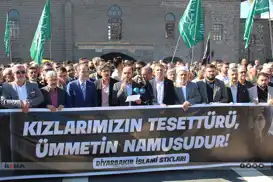
Across the Muslim world, however, the announcement has been viewed as another attempt by the U.S. to target Islamic political expression and align American policy more closely with Israel’s regional interests.
CAIR and U.S. Muslim Groups Push Back
The Council on American-Islamic Relations (CAIR), which the Texas governor recently attempted to brand a “terrorist” organization at the state level, condemned the ruling, calling it unconstitutional and politically driven. CAIR is now suing the state of Texas.
Muslim advocacy groups warn that these kinds of designations risk criminalizing humanitarian, political, and religious activities carried out by millions of Muslims worldwide.
A Long Road Ahead
Despite Trump’s claims that the designation will be made “in the strongest and most powerful terms,” experts say the process is far from complete. U.S. law requires extensive intelligence evaluation, interagency coordination, and diplomatic review—all steps that could delay or halt the effort entirely.
For now, the announcement has already sparked fierce debate, particularly in Muslim-majority countries that view the move as an assault on Islamic political identity and an attempt to delegitimize movements resisting occupation and foreign interference.
As the U.S. doubles down on policies seen as hostile to Islamic organizations, critics warn the decision could deepen distrust between Washington and millions of Muslims worldwide—while doing little to advance peace or stability in the Middle East. (ILKHA)
LEGAL WARNING: All rights of the published news, photos and videos are reserved by İlke Haber Ajansı Basın Yayın San. Trade A.Ş. Under no circumstances can all or part of the news, photos and videos be used without a written contract or subscription.
Ukrainian President Volodymyr Zelenskyy has warned that Russian President Vladimir Putin’s stated willingness to engage in peace talks could be a political maneuver aimed at avoiding heightened tensions with Washington ahead of the US midterm elections.
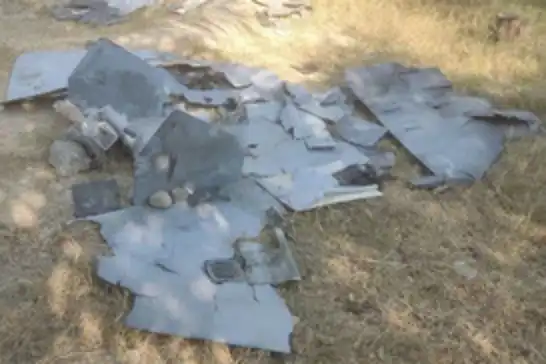
Iran's Army air defense forces shot down a US Lucas drone over the southern port city of Bandar Abbas on Sunday morning, demonstrating the country's continued readiness to defend its airspace, according to an official military statement.
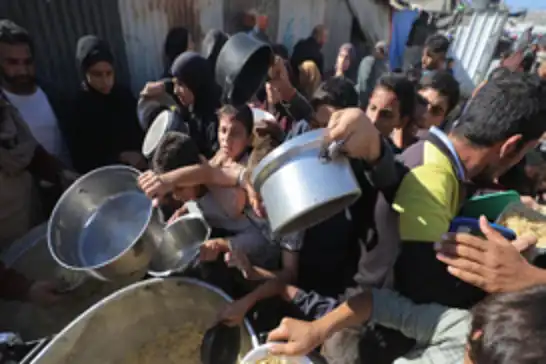
Hamas has urged the Arab League to convene an emergency meeting and take concrete action to confront Israel’s renewed starvation policy in the besieged Gaza Strip, warning that continued restrictions on food and humanitarian aid are pushing Palestinians toward another catastrophic hunger crisis.
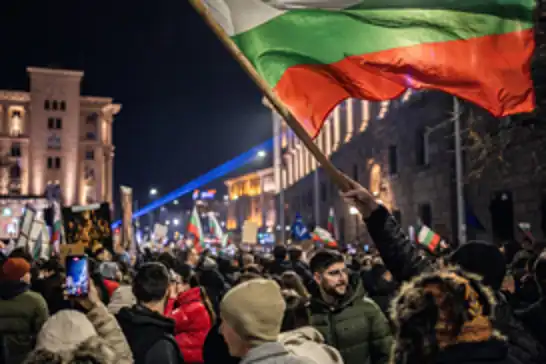
Bulgarian President Iliana Yotova narrowly led the first round of the country's presidential election on Sunday, according to exit polls, setting up a runoff against pro-Western candidate Andrey Gyurov on November 1.