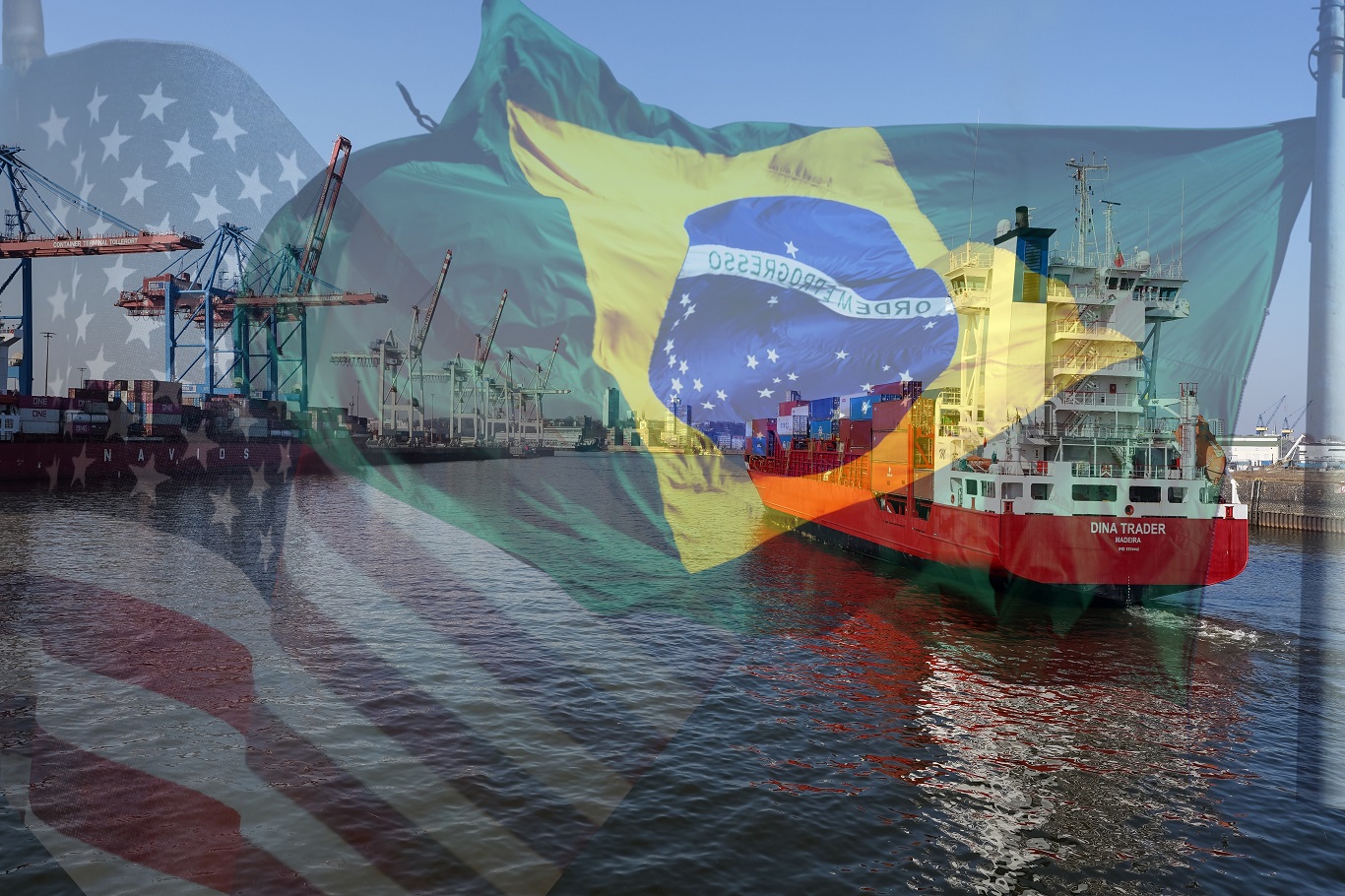
Brazil slams new US trade tariffs, rejects claims of unfair trade practices
 13 oC
13 oC 
Güneşli

Brazil has condemned the United States' decision to impose 25% tariffs on a range of Brazilian products, rejecting Washington's allegations of unfair trade practices.
The office of Brazilian President Luiz Inácio Lula da Silva on Thursday denounced the tariffs announced by the Trump administration, insisting that Brazil has not engaged in unfair commercial practices.
"The Brazilian government repudiates the decision announced today by the United States government regarding the imposition of 25 percent tariffs on Brazilian products," the office said.
The tariffs, first proposed last month, are scheduled to take effect on July 22. However, the US administration has exempted several key Brazilian exports—including coffee, beef, oranges, orange juice, certain oil and gas products, and aerospace parts—citing concerns that restricting those imports could disrupt US supply chains.
The tariffs follow a year-long investigation conducted by the Office of the US Trade Representative (USTR), which concluded that Brazil maintains a range of trade practices deemed unfair or unreasonable.
According to the USTR, the findings included concerns over Brazil's anti-corruption enforcement, tariff policies, and other regulatory measures that Washington argues disadvantage American businesses.
US Trade Representative Jamieson Greer defended the decision, saying the tariffs are intended to protect American workers and ensure fair competition.
"Extensive negotiations with Brazil over the past year have not resolved these issues, but we remain open to continuing negotiations with Brazil to bring about long-needed changes to the problems identified in this investigation," Greer said.
Despite the administration's claims, official US trade data show that the United States has maintained a goods trade surplus with Brazil for several years.
US Secretary of State Marco Rubio accused President Lula of failing to negotiate constructively with Washington, arguing that Brazil's economic policies have harmed both countries.
"Let there be no confusion about why: President Lula and his government have not negotiated with the US in good faith. His economic policies are bad for Americans and bad for Brazilians," Rubio claimed.
He added that Lula had prioritized political considerations over reaching a trade agreement, describing the new tariffs as the consequence of that approach.
The trade dispute has unfolded against a backdrop of growing political tensions between the two countries.
When the proposed tariffs were first announced in early June, President Lula suggested the measures were politically motivated. He accused his domestic political rival, Flávio Bolsonaro—the son of former President Jair Bolsonaro—of encouraging closer coordination with the Trump administration after visiting Washington.
Former President Jair Bolsonaro, a longtime ally of US President Donald Trump, remains a central figure in Brazil's polarized political landscape ahead of the country's October elections.
The latest tariffs are being imposed under Section 301 of the US Trade Act of 1974, which authorizes the US government to investigate and respond to foreign trade practices it considers discriminatory or unfair.
The move comes months after the US Supreme Court ruled that many of President Trump's earlier tariffs imposed under the International Emergency Economic Powers Act (IEEPA) of 1977 exceeded the president's statutory authority.
Earlier this year, the Trump administration had imposed a separate 50% tariff on Brazilian goods under the IEEPA, citing Brazil's prosecution of former President Jair Bolsonaro over allegations related to efforts to overturn the country's 2022 election results.
Although relations between Trump and Lula appeared to improve following Lula's visit to the White House in May, the latest tariff announcement signals renewed strains in trade ties between Latin America's largest economy and the United States. (ILKHA)
LEGAL WARNING: All rights of the published news, photos and videos are reserved by İlke Haber Ajansı Basın Yayın San. Trade A.Ş. Under no circumstances can all or part of the news, photos and videos be used without a written contract or subscription.
Turkish trade minstry announced that exports from Türkiye's 19 free zones reached a record $6.6 billion in the first half of 2026, rising 6.2% compared with the same period last year
Trade between India and Afghanistan through the bilateral air corridor is continuing without disruption, India's Ministry of External Affairs said, highlighting the steady flow of commercial exchanges as both countries seek to strengthen economic engagement.
Brent crude oil rose above $85 a barrel on Tuesday, reaching its highest level in a month as escalating geopolitical tensions in the Middle East heightened concerns over potential disruptions to global oil supplies.