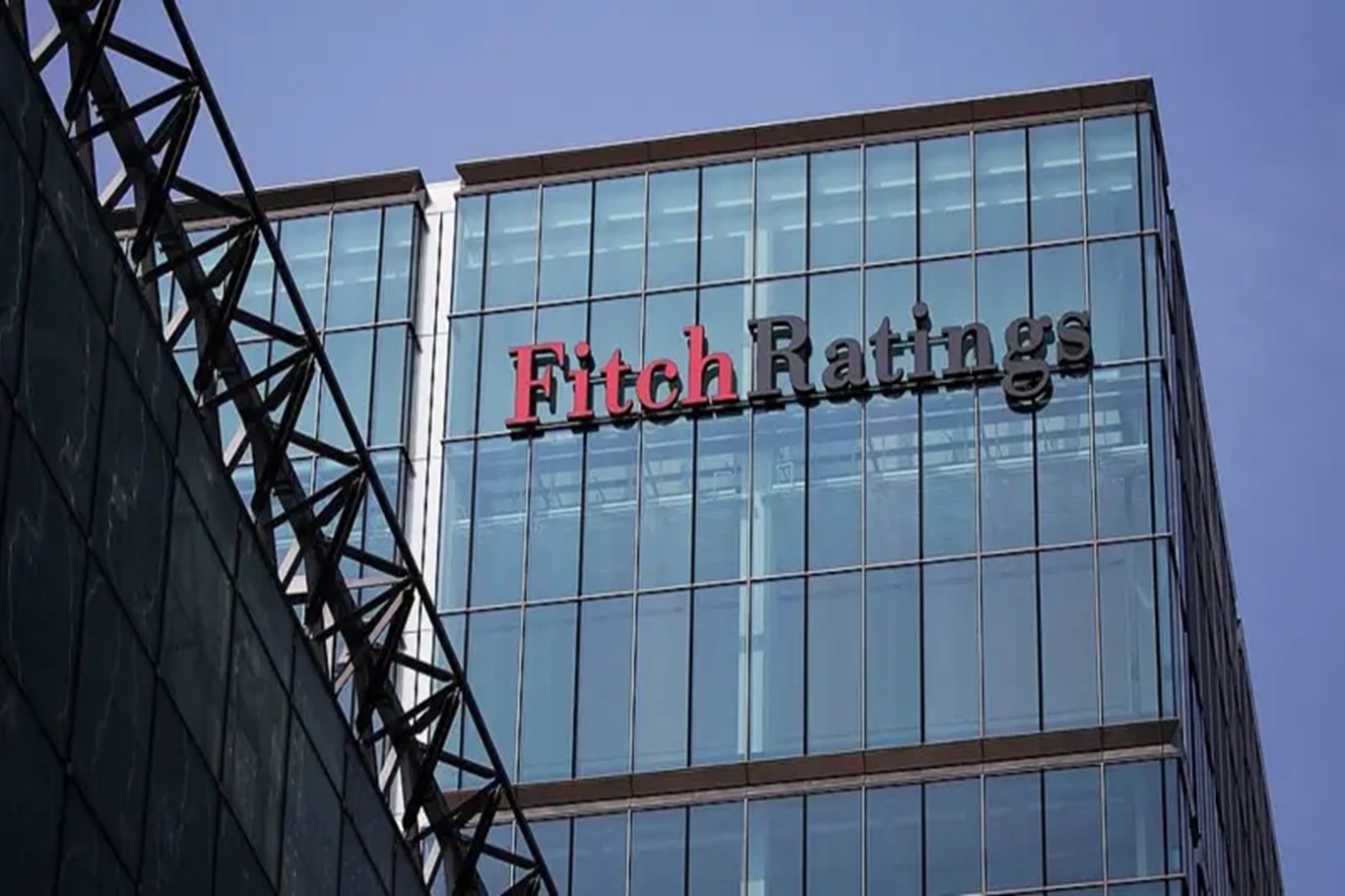
Fitch affirms Türkiye's 'BB-' credit rating with stable outlook
 13 oC
13 oC 
Güneşli

International credit rating agency Fitch Ratings has affirmed Türkiye's long-term sovereign credit rating at "BB-" with a stable outlook, citing the country's relatively low public debt and resilient banking sector despite ongoing economic challenges.
Fitch said on Friday that Türkiye's credit profile continues to benefit from public debt estimated at 23.8% of gross domestic product (GDP) in 2025 and a banking system that has remained resilient, even as the country faces slowing economic growth, elevated inflation, and external financing pressures.
Fitch projected that Türkiye's economy will expand by 2.8% in 2026 before accelerating to 4.4% in 2027.
The agency also forecast that inflation will continue to decline, falling to 29.5% by the end of 2026 and further easing to 18% by the end of 2028.
Despite the expected improvement, Fitch noted that Türkiye still records the highest inflation rate among all sovereigns it currently rates, with annual inflation measured at 32.1% in June.
According to Fitch, Türkiye's sovereign rating continues to be constrained by persistently high inflation, relatively weak external liquidity, sizeable external financing requirements, and a history of political intervention in monetary policy.
The agency, however, acknowledged recent policy measures taken by the Central Bank of the Republic of Türkiye (CBRT), including a 300-basis-point increase in funding costs and tighter lending regulations, saying these steps helped rebuild the country's foreign exchange reserves following heavy interventions during the initial phase of the recent US-Iran conflict.
Fitch projected Türkiye's gross foreign exchange reserves will rise to approximately $167 billion by the end of 2026, compared with the current level of $163.2 billion.
Nevertheless, it cautioned that reserve coverage is expected to remain below the average of countries holding a 'BB' credit rating.
The rating agency also forecast that Türkiye's current account deficit will widen to 3% of GDP in 2026, up from an estimated 1.5% in 2025.
The projected increase is attributed to weaker tourism revenues, higher energy costs, and rising imports, which are expected to place additional pressure on the country's external balance.
Fitch said it anticipates some fiscal and credit support measures ahead of elections, which it expects could be brought forward to late 2027.
However, the agency said it does not foresee a return to the unconventional economic policies implemented before the launch of Türkiye's current disinflation program in mid-2023.
At the same time, Fitch warned that policy risks remain due to the country's history of significant shifts in economic management.
According to the agency, Türkiye's sovereign rating could be upgraded if the country strengthens its external financial buffers, reduces its external financing needs, and maintains macroeconomic policies that continue to lower inflation.
Conversely, Fitch said a sharp decline in foreign exchange reserves, renewed monetary policy easing, or deterioration in the country's political or security environment could result in a downgrade.
With the latest decision, Türkiye's sovereign ratings remain unchanged across the three major international credit rating agencies. S&P Global Ratings continues to assign the country a "BB-" rating with a stable outlook, while Moody's Ratings maintains a "Ba3" rating, also with a stable outlook. (ILKHA)
LEGAL WARNING: All rights of the published news, photos and videos are reserved by İlke Haber Ajansı Basın Yayın San. Trade A.Ş. Under no circumstances can all or part of the news, photos and videos be used without a written contract or subscription.

The number of road motor vehicle registrations in Türkiye increased by 22% in June compared to the previous month, with motorcycles and passenger cars accounting for the majority of new registrations, the Turkish Statistical Institute (TurkStat) announced in a statement on Friday.

House sales across Türkiye increased by 15.8% year-on-year in June, reaching 129,979 units, while mortgaged sales surged by 72.1%, according to the latest figures released by the Turkish Statistical Institute (TurkStat).

Global oil prices climbed on Friday as markets reacted to escalating tensions between the United States and Iran following U.S. military operations and renewed threats by President Donald Trump to target key Iranian facilities.