Natural gas dominates home energy use in Türkiye, survey finds

 13 oC
13 oC 
Güneşli

Turkish households consumed a total of 1.287 million terajoules of energy in 2022, according to a new survey by the Turkish Statistical Institute (TUIK).
The survey reveals interesting insights into the primary energy sources powering Turkish homes and how they are used.
According to the survey, the total final energy consumption of households reached 1,287,738 terajoules in 2022. Natural gas emerged as the primary energy source, accounting for 48.3% of household energy consumption, followed by electricity at 17.1% and coal at 14.3%.
The majority of household energy consumption, 65.3%, was attributed to space heating purposes. Lighting and electrical appliances accounted for 14.1% of consumption, while water heating constituted 11.9%. Cooking purposes accounted for 7.7% of total consumption, with space cooling and other purposes making up 0.9%.
Natural gas was predominantly used for space heating, comprising 76.3% of its total consumption, while electricity was primarily utilized for lighting and electrical appliances, representing 82.4% of its consumption.
Within household energy consumption, natural gas emerged as the leading energy source for space heating, water heating, and cooking, capturing 56.4%, 58.8%, and 57.5% of consumption respectively. Other notable energy sources included solar energy for water heating and LPG for cooking.
The survey sheds light on the significant role of natural gas and electricity in meeting household energy needs, with implications for energy policy and resource allocation in Türkiye. (ILKHA)
LEGAL WARNING: All rights of the published news, photos and videos are reserved by İlke Haber Ajansı Basın Yayın San. Trade A.Ş. Under no circumstances can all or part of the news, photos and videos be used without a written contract or subscription.

The Central Bank of the Republic of Türkiye (CBRT) has cut its benchmark one-week repo rate by 100 basis points to 36% from 37%, citing signs of easing underlying inflationary pressures and weak domestic demand.

Türkiye’s consumer confidence index fell by 7.7% in October, dropping to 84.8 from 91.9 in September, according to data released by the Turkish Statistical Institute (TurkStat) on Thursday.
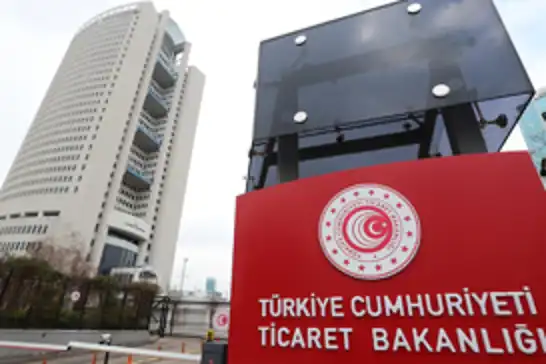
Türkiye has called on the European Union to ensure that its proposed "Made in EU" policy takes into account the Customs Union and integrated production networks between the two sides, following a high-level meeting with representatives of the country's automotive industry.

Türkiye’s Non-Domestic Producer Price Index (ND-PPI) rose by 33.64% year-on-year and 2.82% month-on-month in September 2026, according to data released by the Turkish Statistical Institute (TurkStat) on Tuesday.