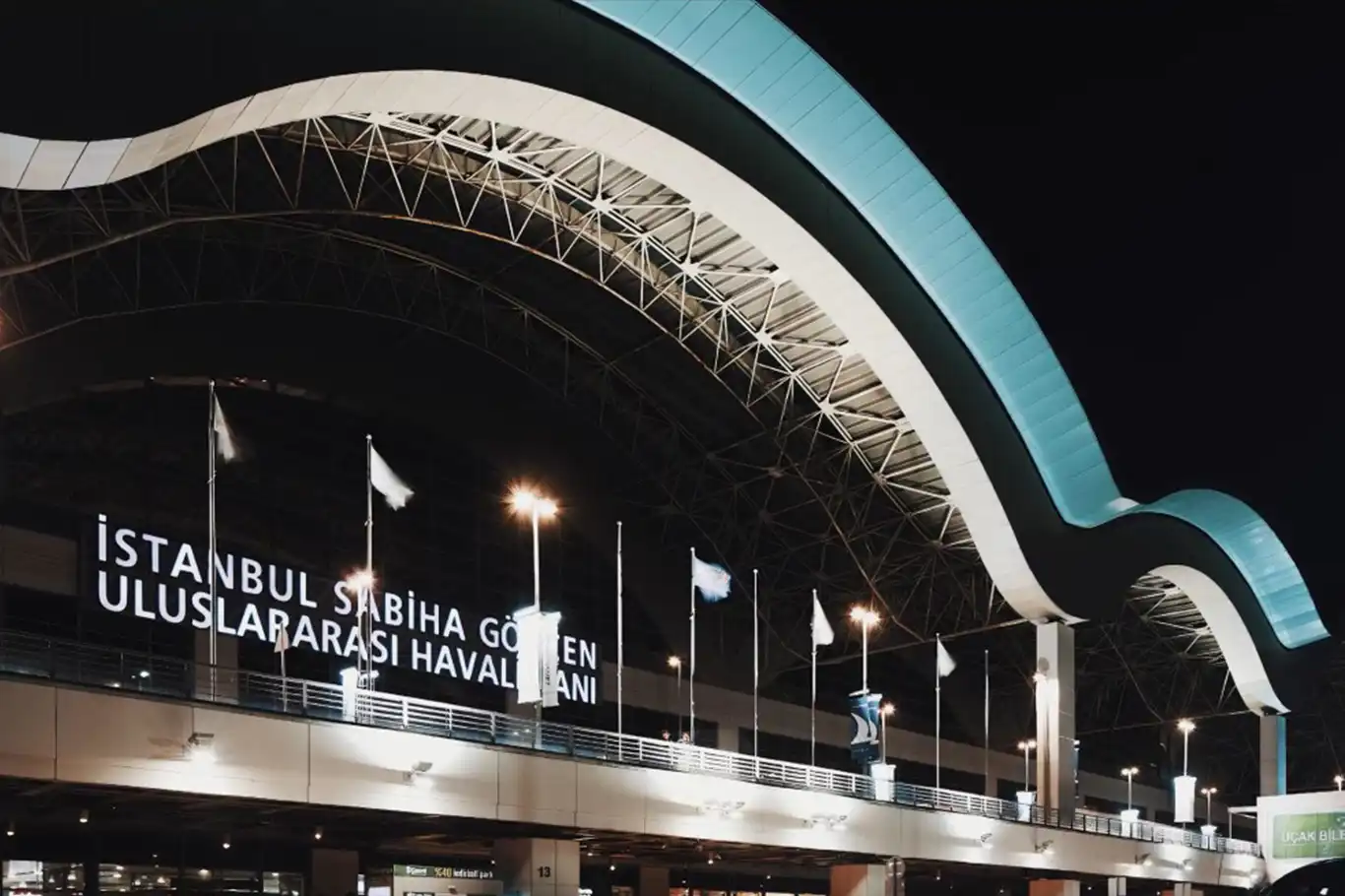
Sabiha Gökçen Airport breaks passenger and flight records after second runway opens
 13 oC
13 oC 
Güneşli

Istanbul’s Sabiha Gökçen International Airport has set new passenger and flight records following the commissioning of its second runway, highlighting the airport’s rising importance as a regional and global aviation hub on the city’s Asian side.
The second runway, inaugurated on 25 December 2023 by President Recep Tayyip Erdoğan, has now completed its second year of operation and is being credited with a sharp increase in capacity and traffic. According to data released by the Ministry of Transport and Infrastructure, passenger numbers at Sabiha Gökçen rose by 31 percent year-on-year in the first 11 months after the runway became operational, reaching 44,217,405 passengers.
Aircraft movements also saw a significant increase, reflecting the impact of expanded infrastructure on operational efficiency. In the same 11-month period, the number of take-offs and landings climbed by 20 percent to 250,538 flights, surpassing the airport’s total aircraft movements for the whole of 2024, which stood at 242,612.
Turning point for Istanbul’s second airport
The 3,540-metre-long second runway was designed to accommodate wide-body aircraft, marking a major shift for an airport traditionally associated with low-cost carriers and short-haul flights. The new runway has allowed airlines to deploy larger aircraft, increase frequencies and operate more flexibly during peak travel periods.
In addition to the runway, several major infrastructure projects were completed, including new taxiways, high-capacity aircraft and cargo aprons, an upgraded air traffic control tower and a modernized terminal superstructure. These investments have expanded overall air traffic capacity while easing congestion during busy hours.
Transport and Infrastructure Minister Abdulkadir Uraloğlu underscored the scale of the transformation in a statement marking the runway’s second anniversary. “This year’s passenger number increased by 31 percent compared to the same period of 2023, when the second runway had not yet been put into service, reaching 44,217,405,” Uraloğlu said.
He noted that the airport had already broken its previous annual record. “In just 11 months, we have surpassed the passenger record of 41,449,044 set in all of 2024,” he added.
Strong demand drives rapid growth
The record-breaking figures come amid robust domestic and international demand for travel to and through Istanbul. In the first 11 months of 2023, before the second runway was opened, Sabiha Gökçen served 33,716,162 passengers. The jump to more than 44 million travelers in the same period following the upgrade illustrates how infrastructure investment has unlocked previously constrained demand.
For passengers, the impact has been clear. Additional flight slots and the ability to handle larger aircraft have enabled airlines to expand routes and frequencies, particularly during peak holiday seasons. Enhanced cargo facilities have also strengthened the airport’s role in logistics, reinforcing Istanbul’s strategic position as a bridge between Europe, Asia and the Middle East.
Sabiha Gökçen, Istanbul’s second-largest airport after Istanbul Airport on the European side, remains a key base for low-cost carriers as well as regional full-service airlines. Its location makes it especially attractive for travelers on the Asian side of the city and those connecting to destinations across Anatolia and nearby regions.
A growing role in Türkiye’s aviation network
The second runway investment is part of a broader strategy to distribute air traffic more evenly across Istanbul’s airports, easing pressure on the main hub while supporting long-term growth. With passenger and flight numbers already exceeding previous records, Sabiha Gökçen is increasingly viewed not as an overflow facility, but as a central pillar of Türkiye’s aviation network.
As global travel continues to rebound, the expansion of Istanbul’s airport infrastructure is positioning the city to capture a larger share of international journeys. For travelers, this translates into greater choice, smoother operations and an airport rapidly redefining its place on the global travel map. (ILKHA)
LEGAL WARNING: All rights of the published news, photos and videos are reserved by İlke Haber Ajansı Basın Yayın San. Trade A.Ş. Under no circumstances can all or part of the news, photos and videos be used without a written contract or subscription.

Türkiye’s monthly average labour cost stood at TRY 45,777 in 2024, according to the latest Labour Cost Statistics released for the reference year.

The Turkish Statistical Institute (TurkStat) announced on Thursday that confidence indices across major sectors of the economy displayed mixed trends in December, with gains recorded in services and retail trade, while the construction sector experienced a decline.
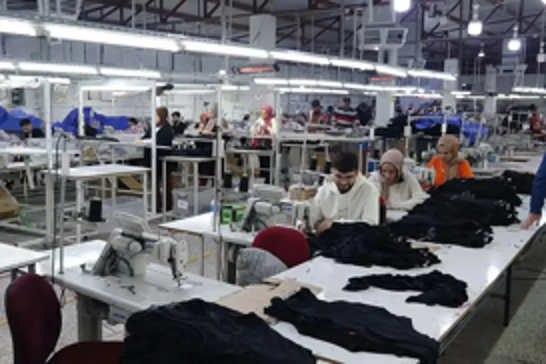
Small and medium-sized enterprises (SMEs) continued to form the backbone of Türkiye’s economy in 2024, accounting for nearly all enterprises operating in the industry and service sectors, according to data released by the Turkish Statistical Institute (TurkStat) on Wednesday.