HÜDA PAR submits roadmap to parliament to end decades of violence in the Kurdish issue
 13 oC
13 oC 
Güneşli

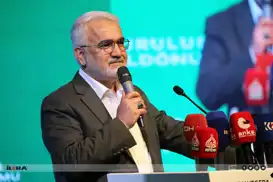
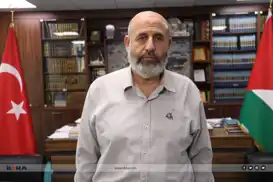
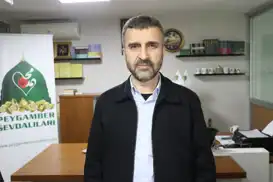
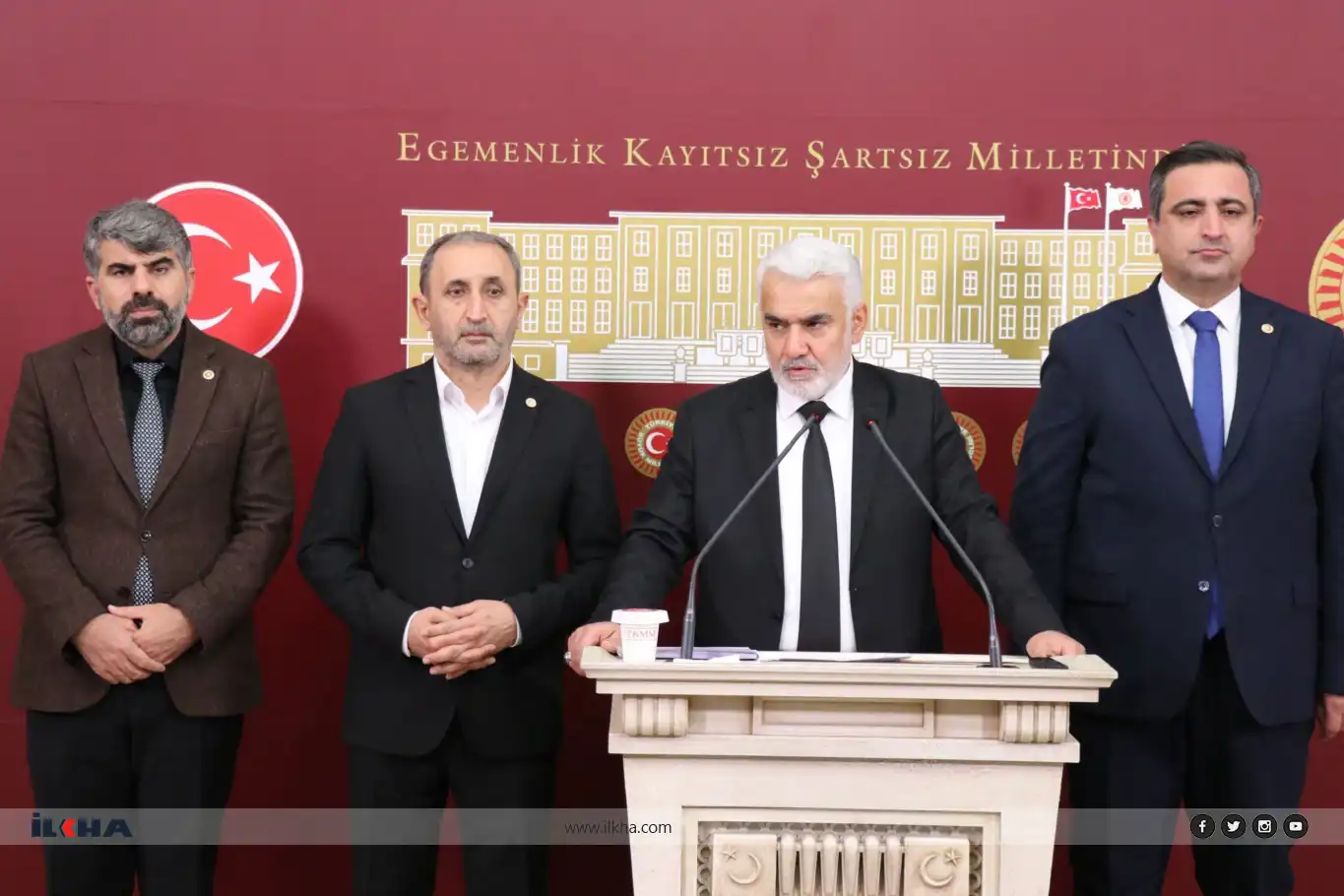
HÜDA PAR Chairman Zekeriya Yapıcıoğlu has presented a comprehensive policy report to the National Solidarity, Brotherhood and Democracy Commission, calling for the complete and unconditional end of armed violence in Türkiye and urging a rights-based, justice-centered approach to the Kurdish issue grounded in the historic “Spirit of Manzikert.”
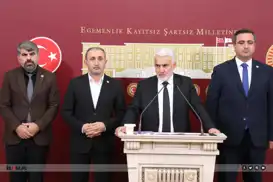
Speaking at a press conference held at the Turkish Grand National Assembly (TBMM), Yapıcıoğlu outlined the key findings and proposals of the report, stressing that Türkiye’s long-running problem of armed violence must be addressed decisively, while the Kurdish issue should be discussed independently of terrorism and weapons.
“The model that should serve as a reference for resolving the Kurdish issue is the spirit of Manzikert,” Yapıcıoğlu said, referring to the 1071 Battle of Manzikert, which he described as the foundation of a shared historical destiny between Turks and Kurds based on Islamic brotherhood.
Parliamentary Commission Seen as Historic Turning Point
Yapıcıoğlu described the National Solidarity, Brotherhood and Democracy Commission—established within parliament—as a rare and historic opportunity to bring an end to nearly half a century of armed conflict, terrorism, and bloodshed.
Recalling that the commission held its first meeting on August 5, 2025, he said the armed conflict that has persisted for decades has caused tens of thousands of deaths, the loss of vast economic resources, deep social trauma, and enduring security challenges.
“At this stage, the political will demonstrated to end violence, together with the process being carried out and the commission established within parliament, must be seen as an important and valuable opportunity to finally end Türkiye’s violence problem,” Yapıcıoğlu stated.
Clear Rejection of Violence, Without Reducing the Kurdish Issue to Terrorism
Yapıcıoğlu emphasized that HÜDA PAR’s position is unambiguous in rejecting violence, terrorism, and armed struggle, while also warning against reducing the Kurdish issue to a mere security problem.
“Our stance is clear and unequivocal. We sincerely defend ending violence and stopping the bloodshed,” he said. “However, we do not believe it is right to reduce the Kurdish issue solely to a problem of violence.”
He stressed that the continued presence of weapons not only undermines politics but also overshadows the legitimate demands of Kurdish citizens, making a just and lasting solution impossible.
Two-Part Report with Legal and Political Roadmap
According to Yapıcıoğlu, the report prepared by HÜDA PAR consists of two main sections.
The first section focuses on ending violence entirely and includes concrete proposals for legal reforms needed to ensure the success of the process. This section also examines past counterterrorism policies, aiming to draw lessons from mistakes that contributed to prolonged conflict.
“We aimed to demonstrate why the definitive and irreversible end of violence is a vital necessity,” Yapıcıoğlu said, “and to provide a framework that helps prevent the repetition of past failures.”
The second section addresses the Kurdish issue independently of violence. It examines the historical background of the issue, including periods of denial, assimilation, and social engineering, evaluating them through the lens of fundamental rights, justice, and equality.
At its core, Yapıcıoğlu said, the Kurdish issue is a matter of rights and justice—not a security problem.
Criticism of Assimilation Policies and Top-Down Governance
Yapıcıoğlu argued that Turkish-Kurdish brotherhood suffered severe damage over the past century due to top-down governance and policies shaped by Westernization and ethnic nationalism, particularly during the early Republican period.
He said these policies ignored the sociological and historical realities of Anatolia and led to exclusion, uniformity, denial, and assimilation, weakening centuries-old bonds of brotherhood.
“This top-down approach damaged the historical brotherhood between Turks and Kurds,” he said, adding that ideological pressure and coercive policies turned the issue into an increasingly intractable problem.
11-Article Legislative Proposal to End Violence
Yapıcıoğlu announced that the report’s main body spans 46 pages, and reaches 56 pages including annexes. In addition, an 11-article legislative proposal specifically aimed at ending violence has been prepared and published on HÜDA PAR’s official website.
The proposal includes mechanisms for disarmament, reintegration, and legal clarity to ensure that the process is transparent, just, and socially acceptable.
“Weapons Are Not a Method of Seeking Rights”
Reiterating a central message of the report, Yapıcıoğlu said armed struggle can never be a legitimate means of seeking rights.
“At this point, it has become clear to everyone that weapons are not a method of seeking rights,” he said. “Violence itself is a problem and must be resolved absolutely.”
He called for weapons to be removed “immediately, unconditionally, and permanently” from political life, stressing that meaningful dialogue and democratic politics cannot function under the shadow of arms.
Reintegration and Judicial Oversight for Former Combatants
Addressing one of the most sensitive aspects of the process, Yapıcıoğlu called for fair and inclusive legal arrangements to reintegrate individuals who were previously involved in armed groups but did not participate directly in violent acts.
He proposed revising statutes of limitations and legal procedures to facilitate the return of individuals from abroad at a time when social acceptance has formed. For those who lay down arms, return to the country, or are released from prison, he advocated a reasonable and reassuring judicial supervision mechanism—neither punitive nor arbitrary.
Shared Destiny and “Century of Türkiye” Vision
Referring to President Recep Tayyip Erdoğan’s “Century of Türkiye” vision, Yapıcıoğlu said this vision can only be realized if Türkiye confronts the reality that the previous century was marked by deep losses caused by conflict and division.
He argued that the next century must be built on the same Islamic brotherhood that united Turks and Kurds at Manzikert in 1071.
“The destiny of the Turkish and Kurdish peoples is shared,” he said. “Each one’s security, peace, freedom, and justice are inseparable from the other’s.”
Call for Unity Against Division and External Manipulation
Yapıcıoğlu warned that those who seek to turn Turks against Kurds or Kurds against Turks are, in reality, enemies of both peoples. He said strengthening the country’s “internal front” depends on recognizing this shared threat.
He concluded by stressing that resolving the Kurdish issue is not merely about neutralizing armed groups, but about building a just, peaceful, and fully independent country where all citizens live with dignity and equality.
“There is no scenario in which Turks are sacrificed for Kurds or Kurds for Turks,” he said. “A future is possible in which both peoples win—and only imperialism, chaos planners, and the politics of violence lose.”
Final Appeal: Renew the Covenant of Brotherhood
In his closing remarks, Yapıcıoğlu called on all segments of society to seize what he described as a historic opportunity.
“Let us not squander this chance,” he said. “As the ancient peoples of this geography—Turks, Kurds, and Arabs—let us uproot the seeds of discord sown among us and renew our thousand-year covenant of brotherhood.” (ILKHA)
LEGAL WARNING: All rights of the published news, photos and videos are reserved by İlke Haber Ajansı Basın Yayın San. Trade A.Ş. Under no circumstances can all or part of the news, photos and videos be used without a written contract or subscription.
Radio contact was lost on Tuesday with a jet carrying Libya’s Chief of General Staff, Mohammed Ali Ahmed al-Haddad, shortly after it departed from Türkiye’s capital Ankara en route to Tripoli, Turkish Interior Minister Ali Yerlikaya said.
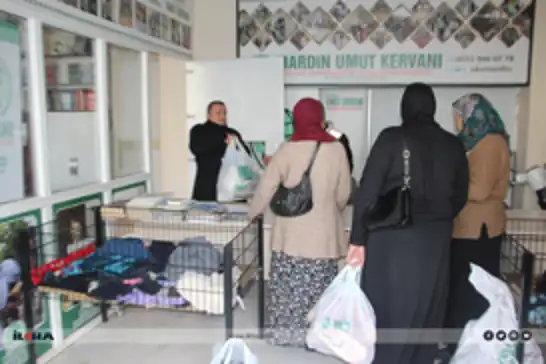
As the Islamic world enters the spiritually significant Three Sacred Months, the Hope Caravan Association (Umut Kervanı Derneği) has launched a wide-scale humanitarian initiative, delivering essential food aid to hundreds of vulnerable families across Mardin.
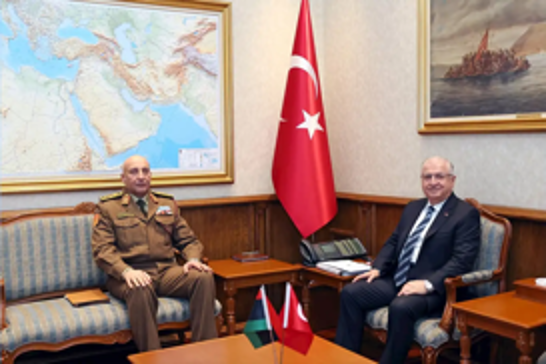
Turkish National Defense Minister Yaşar Güler on Tuesday held talks in Ankara with Libyan Chief of General Staff Lieutenant General Muhammad Ali Ahmad al-Haddad, amid ongoing efforts to deepen defense and security cooperation between Türkiye and Libya.