Türkiye's vehicle registrations decline in May despite expanding automotive fleet
 13 oC
13 oC 
Güneşli

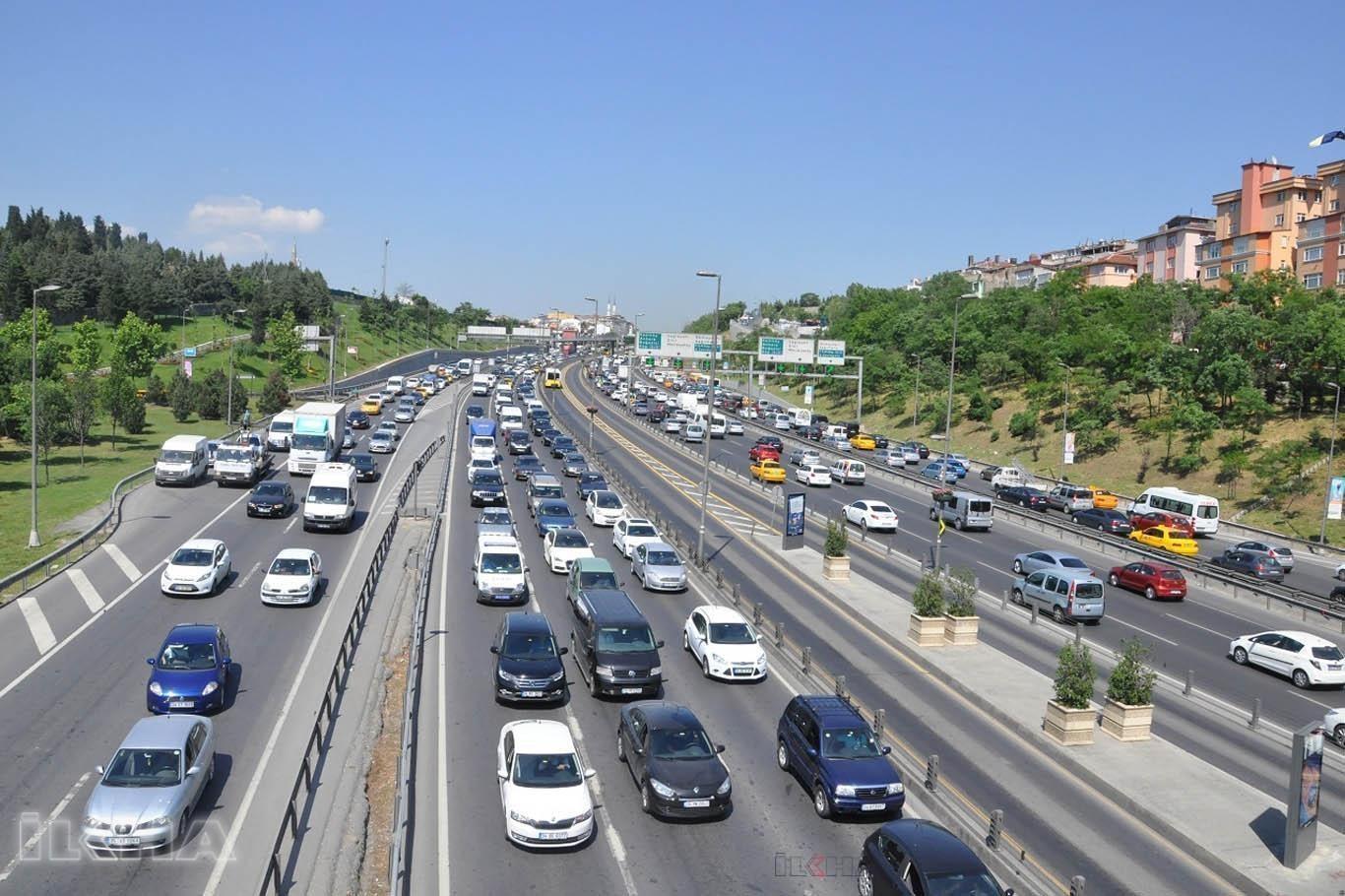
The Turkish automotive market experienced a notable slowdown in May, with road motor vehicle registrations dropping sharply on both a monthly and annual basis, according to the latest official data.
The Turkish Statistical Institute (TURKSTAT) announced on Tuesday that a total of 159,623 road motor vehicles were registered in May. While the influx of new vehicles continues to push the country's total registered fleet to record highs, the latest figures reflect a cooling demand across almost all vehicle segments.
The total number of vehicle registrations in May saw a 12.3% decline compared to the previous month. The drop-off was even more pronounced when compared to the same period last year, plummeting by 24.1% year-on-year.
Cars and Motorcycles Dominate Registrations
Passenger cars continued to account for the largest share of new registrations, representing 47.5 percent of all vehicles added to traffic in May. Motorcycles followed closely with 37.2 percent, while small trucks accounted for 11.0 percent.
The remaining registrations consisted of tractors (1.7 percent), trucks (1.6 percent), minibuses (0.5 percent), buses (0.4 percent) and special-purpose vehicles (0.1 percent).
Compared with the previous month, registrations fell across all vehicle categories. The steepest monthly declines were recorded in special-purpose vehicles, down 38.3 percent, followed by minibuses (27.2 percent) and trucks and buses, both declining by 23.9 percent.
Annual Declines Across Nearly All Categories
On an annual basis, tractor registrations posted the sharpest drop, plunging 50.9 percent compared to May of the previous year. Minibuses declined by 42.4 percent, motorcycles by 37.0 percent, and trucks by 22.6 percent.
Passenger car registrations fell by 12.9 percent, while buses, special-purpose vehicles and small trucks recorded more modest declines.
Türkiye's Vehicle Fleet Surpasses 34 Million
Despite weaker registration figures, Türkiye's total number of registered road motor vehicles continued to expand.
By the end of May, the country's vehicle fleet had reached 34,361,085 vehicles.
Passenger cars made up the majority of registered vehicles at 51.8 percent, followed by motorcycles (21.4 percent) and small trucks (14.5 percent). Tractors accounted for 6.8 percent, trucks 3.0 percent, minibuses 1.6 percent, buses 0.6 percent, and special-purpose vehicles 0.3 percent.
More Than 750,000 Vehicles Changed Hands
TurkStat data also showed continued activity in the second-hand market.
A total of 752,150 vehicles were transferred in May. Passenger cars represented 66.9 percent of all ownership transfers, while small trucks accounted for 14.5 percent and motorcycles 11.6 percent.
Tractors, trucks, minibuses, buses and special-purpose vehicles comprised the remaining share of transactions.
Renault Tops New Car Registrations
Among the 75,851 passenger cars registered in May, French automaker Renault remained the market leader with a 16.4 percent share.
Volkswagen ranked second with 10.3 percent, followed by Hyundai (7.5 percent), Toyota (6.7 percent) and Peugeot (5.7 percent).
Türkiye's domestic electric vehicle manufacturer TOGG secured a 5.2 percent share of new car registrations, placing it among the country's top-selling brands.
Skoda, Fiat, Opel, Citroen, Mercedes-Benz, Kia, BMW, Chery, Nissan, Audi, Mini, Volvo, Dacia and Ford also featured prominently in the market.
Registrations Down in the First Five Months of the Year
During the January-May period, a total of 767,999 vehicles were newly registered, representing a 14.7 percent decrease compared with the same period last year.
Meanwhile, the number of vehicles withdrawn from traffic increased by 19.5 percent to 22,837.
As a result, Türkiye's net increase in motor vehicles during the first five months of the year stood at 745,162 vehicles.
Gasoline Cars Lead, Electric Vehicles Gain Ground
Of the 382,385 passenger cars registered between January and May, gasoline-powered vehicles accounted for the largest share at 40.7 percent.
Hybrid vehicles followed with 32.2 percent, while fully electric cars represented a growing 18.4 percent of registrations. Diesel vehicles accounted for 7.8 percent, and LPG-powered cars made up 0.9 percent.
However, when considering the entire passenger car fleet of 17.8 million vehicles, diesel-powered cars remained dominant with a 32.2 percent share, followed by gasoline vehicles at 31.0 percent and LPG-powered cars at 29.5 percent.
Hybrid cars represented 4.6 percent of the fleet, while electric vehicles accounted for 2.5 percent.
Grey Remains Türkiye's Favorite Car Color
The data also revealed consumer preferences in vehicle specifications.
Among newly registered passenger cars during the January-May period, 32.7 percent had engine capacities of 1,300 cubic centimeters or less, making them the most common choice among buyers.
Grey remained Türkiye's most popular car color. Of all newly registered cars, 41.9 percent were grey, followed by white (25.6 percent), black (11.6 percent) and blue (9.9 percent).
Green, red, brown, orange and yellow accounted for smaller shares, reflecting the continuing preference for neutral colors among Turkish motorists.
The latest figures indicate that while Türkiye's automotive market has experienced a slowdown in new registrations, the country's vehicle fleet continues to grow steadily, with hybrid and electric vehicles increasingly gaining traction among consumers. (ILKHA)
LEGAL WARNING: All rights of the published news, photos and videos are reserved by İlke Haber Ajansı Basın Yayın San. Trade A.Ş. Under no circumstances can all or part of the news, photos and videos be used without a written contract or subscription.

Türkiye’s retail sector posted strong annual growth in April 2026, while overall trade activity showed a mixed and slightly weakening monthly performance, the Turkish Statistical Institute (TurkStat) said in a statement on Tuesday.

The construction cost index in Türkiye increased by 28.58% year-on-year in April 2026, while rising 2.73% on a monthly basis, according to data released on Monday by the Turkish Statistical Institute (TurkStat).

Gold prices jumped more than 2% on Monday, reaching their highest level in nearly a week, after the United States and Iran announced an initial framework agreement to end their conflict, reopen the Strait of Hormuz, and lift the U.S. blockade on Iran.