Ankara NATO summit a turning point for alliance’s future, says Duran
 13 oC
13 oC 
Güneşli

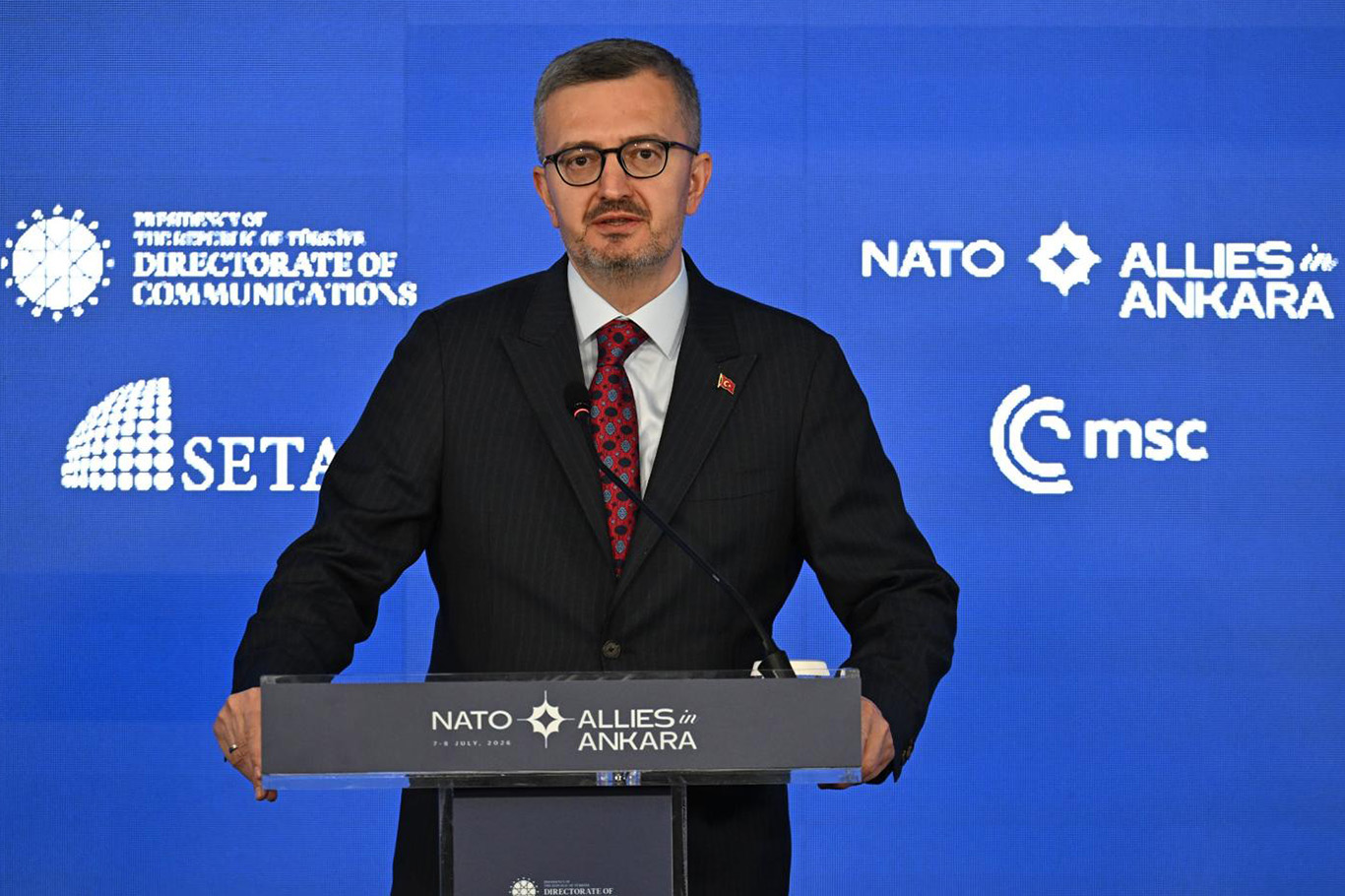
Turkish Communications Director Burhanettin Duran said on Tuesday the NATO Summit in Ankara represents a critical moment in the alliance’s evolution, urging member states to adapt to an increasingly complex security environment shaped by regional conflicts, technological transformation, hybrid threats, and growing geopolitical competition.
Speaking at the “Allies in Ankara” program, organized by the Presidency’s Directorate of Communications in cooperation with the Munich Security Conference and the Foundation for Political, Economic and Social Research (SETA), Duran highlighted the significance of the 36th NATO Summit, which is being hosted by Türkiye with the participation of allied leaders.
Duran noted that the international security landscape has changed dramatically since the last NATO summit held in Türkiye in 2004, arguing that the alliance must reassess its threat perceptions and redefine its priorities.
“As allies, we face a security environment that is increasingly complex, fragmented, and unpredictable,” Duran said, adding that NATO must determine what collective defense requires in an era when threats emerge from multiple directions and take various forms.
Call for a Broader Security Vision
Referring to the ongoing Russia-Ukraine war, Duran said the conflict has exposed vulnerabilities in Europe’s security architecture while demonstrating the changing nature of modern warfare. He also pointed to tensions involving Iran and the Gulf region, stressing that developments affecting energy routes and maritime security have direct implications for Euro-Atlantic stability.
According to Duran, NATO can no longer treat challenges on its eastern and southern flanks separately. He argued that regions including the Gulf, Syria, Iraq, the Eastern Mediterranean, North Africa, and the Sahel are interconnected parts of the same security equation.
He described this comprehensive approach as “NATO 3.0,” emphasizing the need for coherent policy tools and a shared understanding of how military and non-military instruments can work together to address emerging threats.
Türkiye’s Strategic Role in NATO
Duran underlined Türkiye’s longstanding contribution to the alliance since joining NATO in 1952, noting that the country possesses NATO’s second-largest military and has played key roles in operations ranging from Afghanistan and Kosovo to Bosnia and Iraq.
He highlighted Türkiye’s participation in NATO’s Steadfast Dart 2026 exercise, where Turkish forces deployed approximately 2,000 personnel alongside domestically produced defense equipment.
Duran also emphasized Ankara’s diplomatic reach, noting that Türkiye maintains dialogue with both Ukraine and Russia and remains one of the few countries capable of engaging simultaneously with Iran and the United States.
“Türkiye is often described as a bridge between East and West. Yet in many of today’s crises, Türkiye is positioned between West and West, using diplomacy and de-escalation efforts to support regional and global stability,” he said.
Defense Industry Gains Highlighted
The communications chief pointed to significant growth in Türkiye’s defense sector under the leadership of President Recep Tayyip Erdoğan, noting that the country’s defense spending has increased from $13 billion in 2021 to approximately $32 billion by 2025.
He said defense, aerospace, and space exports have surpassed $10 billion, while domestic production in the defense industry has reached 82 percent.
Duran stressed that the true strength of Türkiye’s defense industry lies not only in spending levels but also in what he described as “four-dimensional depth” — quality, quantity, combat-tested performance, and sustainability.
New Threats Require New Responses
Addressing emerging security challenges, Duran warned that modern conflicts increasingly target public opinion, communication networks, financial systems, and social cohesion rather than solely military infrastructure.
He said cyberattacks, disinformation campaigns, and artificial intelligence-enabled manipulation have become central features of strategic competition, requiring NATO to integrate resilience, cybersecurity, AI, and critical infrastructure protection into its defense doctrine.
“Public opinion must be protected against systematic manipulation,” Duran said, emphasizing Türkiye’s experience in countering disinformation, cyber threats, terrorism, and the weaponization of migration.
He concluded by expressing hope that the Ankara Summit would help bridge the gap between NATO’s strategic ambitions and its practical capabilities, while strengthening allied cooperation in the face of evolving global security challenges. (ILKHA)
LEGAL WARNING: All rights of the published news, photos and videos are reserved by İlke Haber Ajansı Basın Yayın San. Trade A.Ş. Under no circumstances can all or part of the news, photos and videos be used without a written contract or subscription.
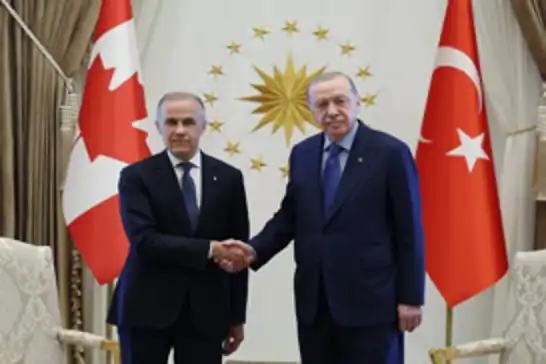
Turkish President Recep Tayyip Erdoğan met with Canadian Prime Minister Mark Carney in Ankara on Tuesday as leaders gathered for the 36th NATO Summit.
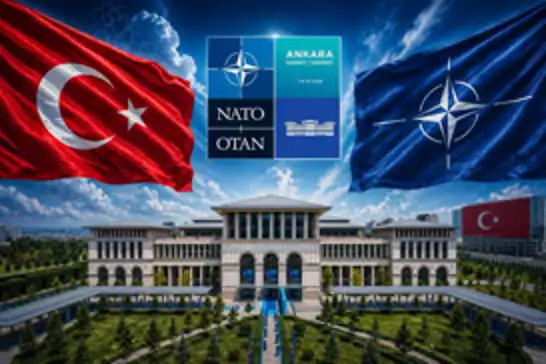
Turkish Foreign Minister Hakan Fidan said the NATO Summit in Ankara represents a pivotal moment for the alliance, emphasizing that decisions taken during the gathering will influence the future of Euro-Atlantic security for years to come.
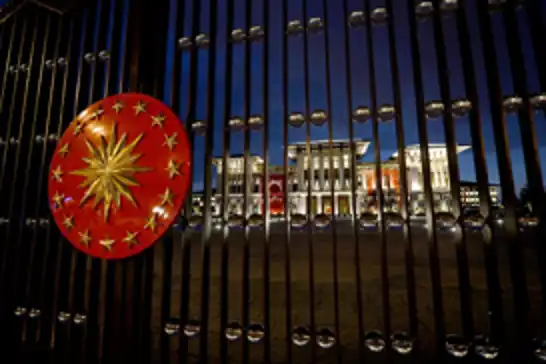
The 36th NATO Summit is getting underway in Ankara on Tuesday, bringing together leaders of the alliance's 32 member states at a time of mounting geopolitical tensions and rapidly evolving security challenges.