Roboski Massacre: 34 civilians killed in 2011 airstrike still await justice

 13 oC
13 oC 
Güneşli

On the night of December 28, 2011, Türkiye witnessed one of the gravest civilian tragedies in its recent history when Turkish Armed Forces (TSK) fighter jets bombed a group of Kurdish villagers in Roboski (Ortasu), a village in the Uludere district of Şırnak province, near the Iraqi border.
The airstrikes killed 34 civilians, 19 of them children, most of whom were teenagers struggling to support their families in one of the country’s poorest regions.
The incident—officially termed the Uludere airstrike and widely remembered as the Roboski massacre—occurred at 9:37 p.m. local time, as the villagers were returning from Iraqi territory after purchasing basic goods such as diesel fuel, cigarettes, sugar, and tea. These goods were transported on mules along mountainous trails, a form of cross-border smuggling that had persisted for generations due to chronic unemployment, economic deprivation, and lack of state investment in the region.
A Routine Journey That Ended in Tragedy
The group consisted of around 40 villagers, all Turkish citizens, from the neighboring villages of Ortasu (Roboskî) and Gülyazı. Most were under the age of 20, including several boys as young as 12 and 13, accompanying older relatives to earn modest income during the harsh winter months.
Residents later stated that these routes and activities were well known to border security forces, and similar crossings had occurred for years without incident. According to villagers, Iraqi traders typically transported goods close to the border by vehicle, after which Turkish villagers carried them by mule over narrow mountain paths—a journey taking more than two hours in freezing temperatures.
Intelligence Failure and Deadly Misidentification
According to official statements, the Turkish military received intelligence reports on suspicious movement along the border that night, including surveillance imagery provided by U.S. intelligence through drone reconnaissance. After reviewing the unmanned aerial vehicle (UAV) footage, military commanders concluded—incorrectly—that the group consisted of PKK militants preparing to cross into Türkiye.
Despite the visible presence of pack animals and the absence of weapons, fighter jets were dispatched, and multiple airstrikes were launched against the group. Bombs struck the villagers repeatedly, killing most instantly.
Thirty-four people died during and shortly after the bombardment. Two villagers managed to flee back into Iraq, while only one survivor, Servet Encü, made it back alive to Roboski. Of the dead, 28 belonged to the same extended family, the Encü family, leaving entire households devastated.
A Scene of Horror Discovered at Dawn
When the villagers failed to return home, relatives set out at first light to search for them. What they found was described by witnesses as indescribable devastation. Bodies were scattered across the mountainside, many burned beyond recognition or torn apart by the explosions.
Due to the inaccessible terrain, the victims’ remains were loaded onto mules and carried back to the villages, a harrowing journey that became one of the most enduring images of the massacre. Autopsies were conducted at Uludere State Hospital, after which the victims were buried in a newly established cemetery between Ortasu and Gülyazı.
A massive funeral procession followed, with around 1,000 vehicles and nearly 10,000 mourners traveling the 20-kilometer route from Uludere district center to the cemetery. The funerals turned into silent protests, marked by grief, anger, and demands for accountability.
Investigations Marked by Secrecy and Impunity
In response to public outrage, a special investigative commission was established in January 2012 at the Turkish Grand National Assembly (TBMM). However, opposition lawmakers repeatedly criticized the process, accusing the Ministry of Defense of hiding behind confidentiality orders and refusing to provide critical information.
The commission’s 85-page report, released on March 22, 2013, concluded that the military operation resulted in civilian deaths “without deliberate intent.” Opposition members filed dissenting opinions, arguing that the investigation failed to address command responsibility, intelligence failures, and violations of engagement rules.
Parallel criminal investigations were carried out by the Diyarbakır Chief Public Prosecutor’s Office, which later acknowledged that essential military documents were submitted late and that no meaningful interrogation of military personnel took place. Nevertheless, prosecutors confirmed on August 6, 2012, that the UAV footage clearly showed civilians, contradicting the claim that the victims could not be distinguished from militants.
Despite this, on January 7, 2014, the General Staff Military Prosecutor’s Office ruled that no prosecution was necessary for senior military officials, stating that while a “grave mistake” had occurred, those involved acted within the scope of their orders.
It was later revealed that the operation had been authorized at the highest levels, including approval by then–Chief of General Staff Necdet Özel, approximately 90 minutes before the first airstrike, following clearance from the air force command center in Ankara.
Punishment Without Justice
While no senior officials were convicted for the deaths, legal action was taken against villagers and families of the victims, and 17 active-duty soldiers were prosecuted for facilitating border smuggling. Human rights groups criticized this outcome as criminalizing poverty while absolving state responsibility.
International human rights organizations, including the European Court of Human Rights, were petitioned, but procedural rulings prevented the case from being fully examined on its merits, deepening families’ sense of abandonment.
A Wound That Never Healed
Fourteen years later, Roboski remains a symbol of unresolved injustice, particularly for Türkiye’s Kurdish population. Annual commemorations are held every December 28, with families gathering at the cemetery to honor the dead and renew calls for accountability.
For relatives of the victims, the massacre is not merely a tragic error but a preventable crime rooted in structural discrimination, militarized border policies, and decades of neglect. Many families continue to live in poverty, having lost their primary breadwinners in the attack.
As one grieving father once said at a commemoration, “They were not terrorists. They were our children, our brothers, our future.”
Despite the passage of time, the demand remains unchanged: Truth, accountability, and justice for Roboski. (ILKHA)
LEGAL WARNING: All rights of the published news, photos and videos are reserved by İlke Haber Ajansı Basın Yayın San. Trade A.Ş. Under no circumstances can all or part of the news, photos and videos be used without a written contract or subscription.
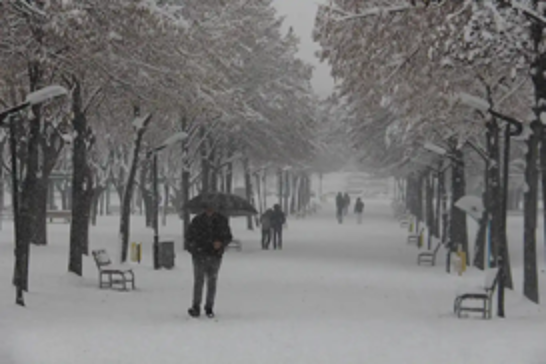
A severe winter system sweeping in from Russia has brought daily life to a standstill across large parts of eastern and central Türkiye, cutting off hundreds of rural roads, stranding vehicles, and isolating remote settlements as temperatures plunged and heavy snowfall intensified.
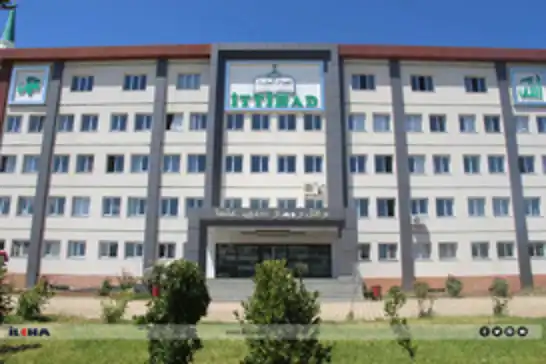
The Union of Scholars and Madrasas (ITTIHADUL ULEMA) has issued a strong written statement condemning the growing trend of mocking and belittling prayer on social media platforms, warning that such attitudes pose a serious threat to Islamic identity, faith, and social cohesion.
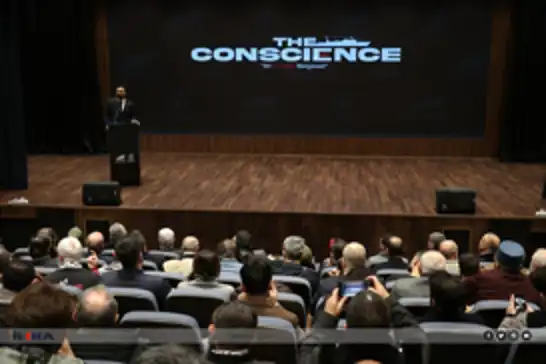
The ordeal of the Vicdan (Conscience) Ship, which set sail into the Mediterranean in an effort to break Israel’s blockade on Gaza and was later targeted in a drone attack by the occupying regime, has been brought to the screen in a powerful new documentary.