Islamic scholars issue strong warning over mockery of salah

 13 oC
13 oC 
Güneşli

The Union of Scholars and Madrasas (ITTIHADUL ULEMA) has issued a strong written statement condemning the growing trend of mocking and belittling prayer on social media platforms, warning that such attitudes pose a serious threat to Islamic identity, faith, and social cohesion.
In the statement, titled “Prayer Is Our Red Line,” ITTIHADUL ULEMA emphasized that prayer (salah) is not a secondary or optional practice, but the cornerstone of Islam and a defining feature of a believer’s identity. The union stressed that prayer represents the most profound bond between a servant and Allah and serves as a clear and visible manifestation of faith.
“Prayer is the strongest connection between the servant and his Lord,” the statement said, adding that it is far more than a personal ritual. Rather, it is a public, moral, and spiritual marker that shapes the believer’s life, character, and sense of responsibility.
Recalling a well-known hadith of the Prophet Muhammad (peace and blessings be upon him), “The boundary between a person and shirk and disbelief is abandoning prayer,” ITTIHADUL ULEMA underlined that prayer draws a clear line between faith and disbelief. Any attempt to trivialize or ridicule prayer, the scholars warned, risks eroding the very foundations of belief.
The statement described recent trends on digital platforms—where prayer is treated as a subject of mockery or casual humor—as deeply alarming, particularly because of their influence on young people.
ITTIHADUL ULEMA warned that making prayer an object of ridicule is not an innocent or harmless act, but a sign of serious spiritual and moral decay. The union stressed that such behavior extends beyond individual freedom and creates a collective responsibility for families, educators, religious leaders, and opinion-makers.
“This is not merely a personal preference,” the statement noted. “It is a societal issue that affects the religious consciousness of future generations.”
The scholars reaffirmed that the obligation of prayer is clearly and explicitly commanded in the Qur’an, leaving no room for ambiguity. Referring to Surah Yusuf, verse 65, the statement emphasized that true servitude to Allah must shape every aspect of life, not be confined to private moments.
ITTIHADUL ULEMA strongly rejected the normalization of turning sacred Islamic values into entertainment or humor in digital spaces, calling such practices unacceptable and harmful to the dignity of religion.
Rather than calling for punitive or restrictive measures, the union highlighted that the solution lies in education, awareness, and spiritual revival. The statement called for raising a generation that understands its faith, embraces its Islamic identity, and lives in harmony with its beliefs.
Strengthening prayer awareness, the scholars said, must be a shared effort across all areas of life—from schools and families to mosques, media, and social platforms.
Concluding the statement, ITTIHADUL ULEMA recalled the Qur’anic principle that Allah does not change the condition of a people unless they change what is within themselves. The union warned that if society fails to protect its core religious values, moral degeneration becomes inevitable.
The statement ended with a firm call for Muslims to take responsibility, resist the normalization of attacks on faith, and defend the sanctity of prayer as a red line that cannot be crossed. (ILKHA)
LEGAL WARNING: All rights of the published news, photos and videos are reserved by İlke Haber Ajansı Basın Yayın San. Trade A.Ş. Under no circumstances can all or part of the news, photos and videos be used without a written contract or subscription.
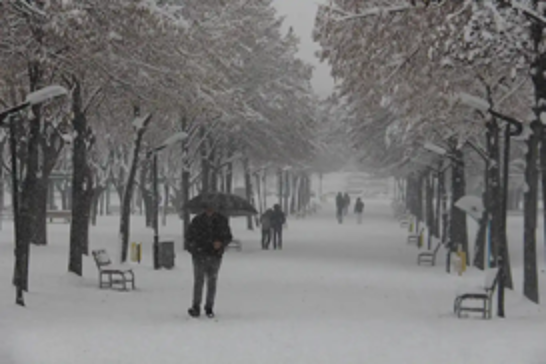
A severe winter system sweeping in from Russia has brought daily life to a standstill across large parts of eastern and central Türkiye, cutting off hundreds of rural roads, stranding vehicles, and isolating remote settlements as temperatures plunged and heavy snowfall intensified.
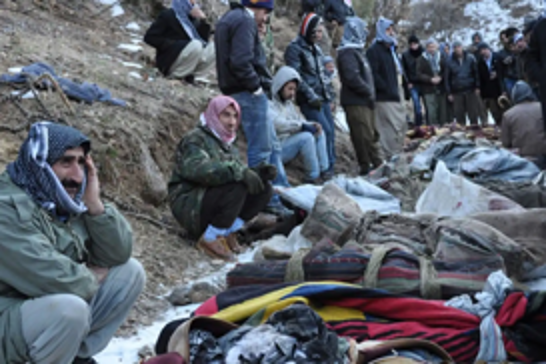
On the night of December 28, 2011, Türkiye witnessed one of the gravest civilian tragedies in its recent history when Turkish Armed Forces (TSK) fighter jets bombed a group of Kurdish villagers in Roboski (Ortasu), a village in the Uludere district of Şırnak province, near the Iraqi border.
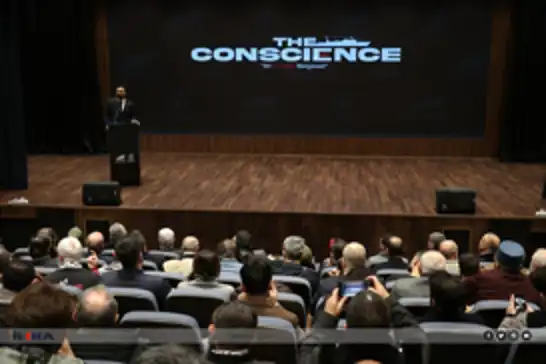
The ordeal of the Vicdan (Conscience) Ship, which set sail into the Mediterranean in an effort to break Israel’s blockade on Gaza and was later targeted in a drone attack by the occupying regime, has been brought to the screen in a powerful new documentary.