Scientists discover 5.3-million-year-old whale graveyard in the Indian Ocean
 13 oC
13 oC 
Güneşli

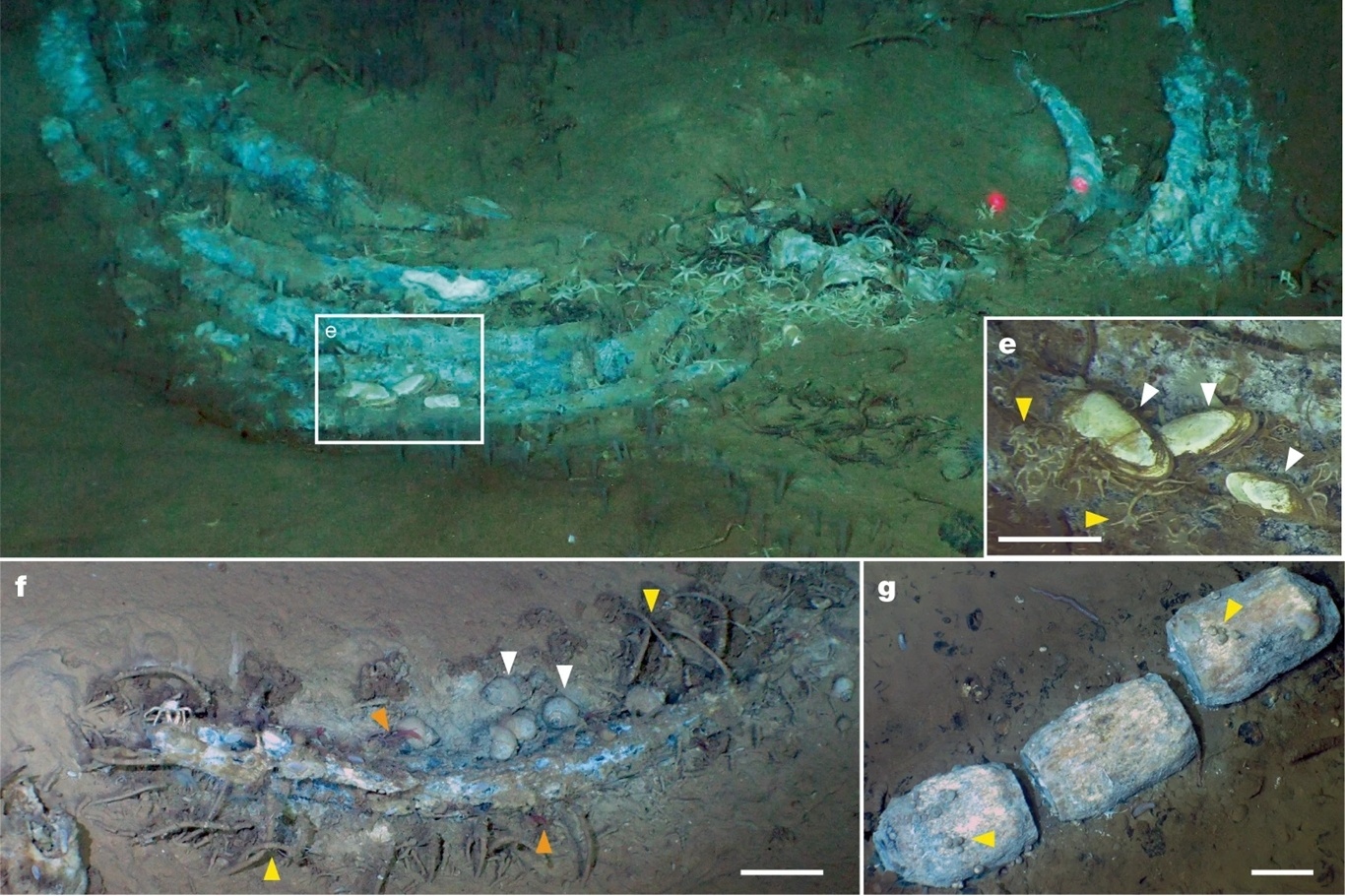
Scientists have discovered what is believed to be the world's deepest and largest collection of whale remains on the floor of the southeastern Indian Ocean, uncovering both ancient fossils and active whale-fall ecosystems that have existed for at least 5.3 million years.
The discovery was made in the Diamantina Trench region at depths reaching 7,000 meters and was detailed in a study published in the journal Nature.
The research was conducted by the Institute of Deep-sea Science and Engineering (IDSSE) of the Chinese Academy of Sciences in collaboration with the University of Pisa in Italy and Earth Sciences New Zealand.
World's deepest whale-fall ecosystems discovered
Whale falls occur when the carcass of a dead whale sinks to the ocean floor, creating a nutrient-rich habitat that supports a wide range of deep-sea organisms, including bone-eating worms, crustaceans and starfish.
Until now, the deepest active whale-fall ecosystem ever documented was found at a depth of 4,204 meters. During the latest expedition, however, researchers identified active whale-fall sites between 4,616 and 7,001 meters.
Among them was a site at a depth of 6,789 meters containing the vertebrae of three beaked whales, making it the deepest active whale-fall ecosystem ever recorded.
More than 10 million whale remains may exist
In 2023, researchers carried out 32 dives using the crewed deep-sea submersible Fendouzhe (Striver) from the research vessel Tansuo-1.
Exploring a 1,200-kilometer section of the Diamantina region, the team discovered five active whale-fall ecosystems and 476 fossil sites.
The concentration of whale remains reached as many as 759.5 individuals per square kilometer.
Professor Peng Xiaotong of IDSSE said that if similar densities exist throughout the wider area, the region could contain more than 10 million whale remains.
Fossils date back at least 5.3 million years
Using strontium isotope dating, researchers confirmed that some of the fossils date to at least 5.3 million years ago, during the Early Pliocene epoch.
The fossil collection includes remains of both living and extinct whale species. Among them are Andrews' beaked whale, the strap-toothed whale and a newly identified extinct species named Pterocetus diamantinae.
The findings provide one of the most extensive records of whale evolution and deep-sea ecosystems ever discovered.
Why are so many whale remains found in one area?
Researchers believe the Diamantina region may have served as an important feeding ground for beaked whales over millions of years.
Some whales are thought to have died during deep dives, while the V-shaped topography of the seafloor likely directed their carcasses into the trench.
Scientists also noted that extremely low sedimentation rates in the area allowed the bones to remain exposed and preserved on the seabed for millions of years.
The discovery is expected to provide valuable insights into whale evolution, deep-sea biodiversity and the long-term ecological processes that shape some of the planet's most remote marine environments. (ILKHA)
LEGAL WARNING: All rights of the published news, photos and videos are reserved by İlke Haber Ajansı Basın Yayın San. Trade A.Ş. Under no circumstances can all or part of the news, photos and videos be used without a written contract or subscription.

Safety concerns surrounding the V-BAT military drone developed by U.S.-based defense technology company Shield AI have resurfaced after a Romanian naval officer suffered severe injuries during a training exercise in the United States.

China has put into operation what is being described as the world's first underwater data center powered entirely by offshore wind energy, marking a new step in efforts to meet the rapidly growing energy demands of artificial intelligence while reducing the environmental footprint of digital infrastructure.

Ilke News Agency (ILKHA) has expanded its digital publishing activities with the launch of its new mobile application, aiming to provide faster, more practical, and uninterrupted access to news for its readers.