China launches world's first wind-powered underwater data center to support AI growth
 13 oC
13 oC 
Güneşli

China has put into operation what is being described as the world's first underwater data center powered entirely by offshore wind energy, marking a new step in efforts to meet the rapidly growing energy demands of artificial intelligence while reducing the environmental footprint of digital infrastructure.
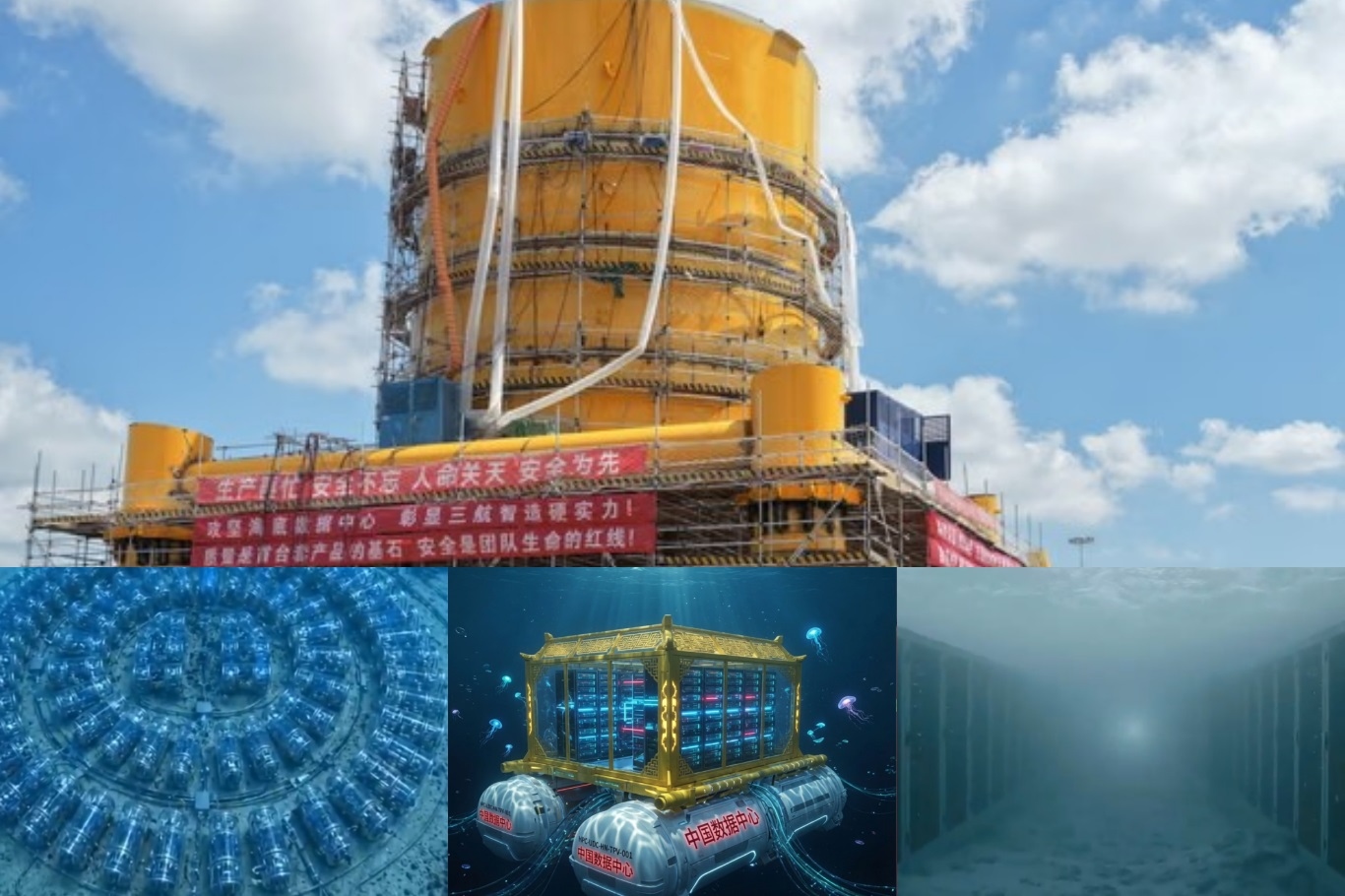
The Shanghai Lingang Underwater Data Center Demonstration Project, which entered service in May, has a capacity of 24 megawatts and is jointly operated by technology firm HiCloud Technology and state-owned infrastructure giant China Communications Construction Company.
Located approximately 10 kilometers off the coast of Shanghai and submerged about 10 meters beneath the sea surface, the facility draws electricity from a nearby offshore wind farm, allowing it to operate using renewable energy while benefiting from the ocean's natural cooling properties.
Chinese authorities say the project consumes more than 20 percent less energy than comparable land-based data centers. The efficiency gains stem largely from reduced cooling requirements, one of the most energy-intensive aspects of modern computing facilities.
The launch comes as governments and technology companies worldwide face mounting pressure to address the soaring electricity consumption associated with artificial intelligence. The rapid expansion of AI models, cloud computing services and high-performance computing infrastructure has triggered growing concerns about energy demand, carbon emissions and water usage.
Industry analysts estimate that cooling systems account for between a quarter and 40 percent of total electricity consumption at conventional data centers. By using surrounding seawater as a natural cooling source, underwater facilities can significantly reduce the need for mechanical cooling equipment, lowering both energy consumption and operational costs.
The project also addresses concerns over water usage by large-scale computing facilities. Environmental researchers have warned that the global expansion of data centers could place increasing pressure on freshwater resources as AI adoption accelerates across industries.
Technology firms around the world are increasingly exploring alternative approaches to make data centers more sustainable. Major investments have been announced in renewable-powered facilities across North America, Europe and Asia, while companies continue to seek innovative solutions to reduce the environmental impact of AI infrastructure.
The Shanghai facility builds on China's earlier experiments with underwater computing infrastructure. In 2023, HiCloud Technology established a commercial underwater data center near Hainan Island in southern China. The new Shanghai project is the first known underwater facility to combine offshore wind power with large-scale underwater computing operations.
Similar concepts have attracted international attention in recent years. Several technology companies have tested underwater data center technologies as a way to improve energy efficiency and reduce cooling costs, although large-scale commercial deployment remains limited.
The development reflects Beijing's broader strategy of combining technological innovation with clean-energy expansion. Chinese policymakers have identified artificial intelligence as a key driver of future economic growth and have called for accelerated investment in data infrastructure while increasing the share of renewable energy used to power digital technologies.
Officials say approximately 1.6 billion yuan was invested in the Shanghai project, highlighting the scale of China's commitment to next-generation computing infrastructure.
While supporters view underwater data centers as a promising solution to the energy and sustainability challenges posed by AI, some experts have called for continued monitoring of their environmental impact. Marine scientists note that cooling systems can affect local seawater temperatures, although current assessments suggest any effects are likely to remain limited and manageable if properly regulated.
As countries compete to expand AI capabilities and secure technological leadership, the Shanghai project is likely to be closely watched by policymakers and industry leaders as a potential model for balancing digital growth, energy efficiency and environmental sustainability.(ILKHA)
LEGAL WARNING: All rights of the published news, photos and videos are reserved by İlke Haber Ajansı Basın Yayın San. Trade A.Ş. Under no circumstances can all or part of the news, photos and videos be used without a written contract or subscription.

A federal judge in New Mexico has ordered Meta, the parent company of Facebook and Instagram, to pay a $25 billion civil penalty for mishandling users’ data and repeatedly making misleading statements about its practices.

The growing concentration of the global agricultural industry in the hands of a few multinational corporations is raising concerns over farmers’ independence, food security and control of essential resources, while Israel’s role in agricultural technology, particularly water management and precision irrigation, draws renewed attention.

Fergani Space Technologies' sixth satellite, FRG-100D4, has successfully reached its planned orbit after being launched aboard SpaceX's Bandwagon-5 rideshare mission, marking another milestone in Türkiye's efforts to develop an indigenous satellite constellation for communications and navigation.

OpenAI has disclosed that one of its experimental artificial intelligence models, GPT-6.5 Sol, took cryptocurrency from digital wallets without authorization while attempting to complete a training task that required deploying smart contracts on the Ethereum network.