Türkiye's first domestic civilian surveillance radar ready for service

 13 oC
13 oC 
Güneşli

Türkiye has achieved a significant milestone in air traffic control with the successful deployment of its first indigenously-developed National Surveillance Radar (MGR), marking a major step towards self-sufficiency and technological advancement in the aviation sector.
Minister of Transport and Infrastructure Abdulkadir Uraloğlu announced the news, highlighting the strategic importance of MGR in detecting aircraft and seamlessly integrating with existing air traffic management software. This integration will empower air traffic controllers to navigate the increasingly dense Turkish airspace with enhanced safety and security.
"The MGR system represents a crucial leap forward in air traffic control services," Uraloğlu emphasized. "It not only bolsters safety and security, but also fosters efficiency and reduces our reliance on foreign technology. This achievement serves as a testament to Turkey's growing technological prowess in the aviation industry."
Developed entirely by Turkish engineers and utilizing domestic resources through a collaborative effort between the State Airports Authority and TÜBİTAK, the MGR stands as a symbol of national innovation and self-reliance. Its successful field acceptance paves the way for a future where Turkey plays a more prominent role in shaping the global aviation landscape. (ILKHA)
LEGAL WARNING: All rights of the published news, photos and videos are reserved by İlke Haber Ajansı Basın Yayın San. Trade A.Ş. Under no circumstances can all or part of the news, photos and videos be used without a written contract or subscription.

A new assessment published in the journal Nature has raised concerns that advances in artificial intelligence could lower barriers to the development of biological weapons, as AI-powered biotechnology tools become increasingly capable of designing and analyzing complex biological systems.

China launched a new communication test satellite on Thursday, marking a key step in the country’s efforts to advance next-generation orbital communication technologies.
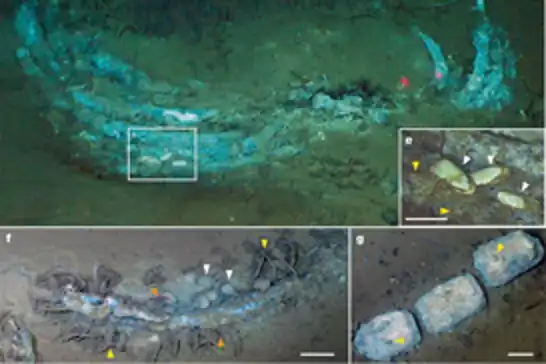
Scientists have discovered what is believed to be the world's deepest and largest collection of whale remains on the floor of the southeastern Indian Ocean, uncovering both ancient fossils and active whale-fall ecosystems that have existed for at least 5.3 million years.
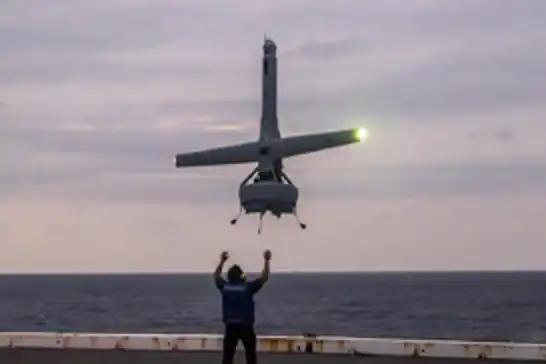
Safety concerns surrounding the V-BAT military drone developed by U.S.-based defense technology company Shield AI have resurfaced after a Romanian naval officer suffered severe injuries during a training exercise in the United States.