Abu Obeida: The voice of resistance that echoed beyond Gaza
 13 oC
13 oC 
Güneşli

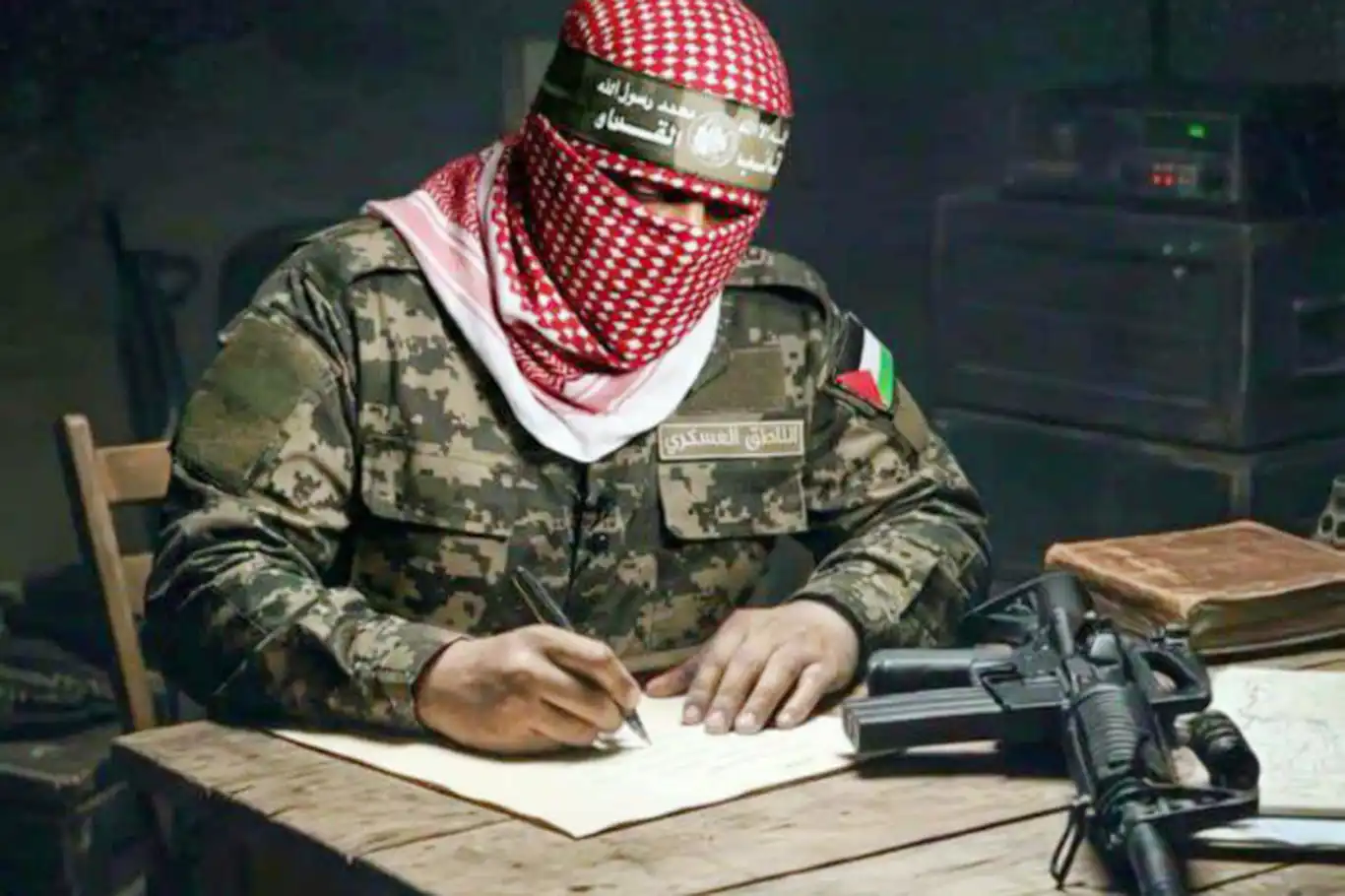
For more than two decades, a masked figure speaking in measured tones came to embody the voice of Palestinian resistance, shaping narratives that resonated far beyond the besieged Gaza Strip.
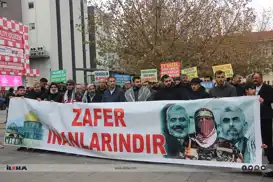
Known by his nom de guerre Abu Obeida, the longtime spokesperson of the Izz ad-Din al-Qassam Brigades was announced martyred in August 2025, marking the end of an era in the media history of the Palestinian struggle.
Referred to widely as al-Mulatham—“the Masked One”—Abu Obeida emerged not through battlefield footage but through carefully delivered statements that framed successive confrontations with Israel as part of a broader struggle against occupation. His first known public appearance dates back to late September 2004, when he addressed journalists from the Jabalia refugee camp, reportedly at just 18 years old.
Opening his remarks with a verse from the Qur’an permitting resistance against oppression, Abu Obeida set a tone that would define his public role. His message contrasted the overwhelming military power deployed against Gaza with what he described as the resolve and endurance of Palestinian fighters, highlighting Israeli setbacks in northern Gaza at the time.
Abu Obeida was officially named spokesperson of the al-Qassam Brigades in 2007, a role that placed him at the center of the resistance’s public messaging during repeated Israeli military campaigns on Gaza. Over the years, he became the voice announcing major developments, including the capture of Israeli soldier Gilad Shalit and later the fate of Israeli soldiers during the 2014 assault on the enclave.
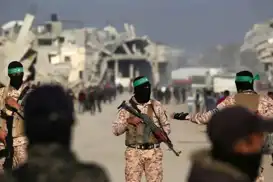
His appearances—marked by a red keffiyeh, concealed face, and deliberate cadence—became widely anticipated across the Arab world and beyond. During periods when Gaza’s infrastructure was devastated and communications were disrupted, Abu Obeida’s statements continued to circulate, offering updates that supporters viewed as morale-boosting amid relentless bombardment.
Observers noted his distinctive style, which combined religious references, literary language, and political messaging. His remarks frequently emphasized steadfastness (sumud), portraying resistance as a collective national duty rather than a military tactic.
Throughout his career, Abu Obeida consistently rejected political normalization with Israel, warning that negotiations conducted under occupation undermined Palestinian rights. He framed military confrontations as chapters in a long struggle for liberation, rather than isolated escalations.
During the May 2021 confrontation, known as the Battle of Seif al-Quds, his declarations regarding resistance capabilities were widely shared, with supporters interpreting them as evidence of shifting balances and deterrence. Israeli officials, meanwhile, monitored his statements closely as part of the broader information war accompanying the conflict.
Following October 7, 2023, and the ensuing large-scale Israeli military campaign on Gaza, Abu Obeida continued to issue statements amid a deepening humanitarian catastrophe. His visibly weakened appearance became symbolic for many Palestinians, reflecting the toll of siege, displacement, and famine while reinforcing messages of endurance.
Abu Obeida’s enduring influence was closely tied to his anonymity. By remaining masked for more than 20 years, he avoided becoming an individual political figure, instead presenting himself as the voice of a collective struggle. This anonymity transformed him into a cultural and political symbol rather than a personal leader.
Across Palestine and the wider region, his image became familiar, particularly among younger generations who saw him as a representation of defiance. Analysts often described him as a “media commander,” highlighting his role in shaping public perception and framing events during times of war.
He concluded each statement with a consistent refrain, emphasizing a binary of victory or martyrdom—language that resonated deeply with supporters while reinforcing the ideological foundations of the resistance.
Abu Obeida was reported killed on August 30, 2025. While details of his personal life, including his birthdate, remain unknown, his supporters argue that his legacy lies not in biography but in impact. For them, he was never merely a spokesperson, but a voice articulating Palestinian grievances, resilience, and aspirations under occupation.
As debates over his role continue internationally, within pro-Palestinian circles Abu Obeida is remembered as a defining figure in the media history of the conflict—one whose words shaped perceptions, sustained morale, and ensured that the Palestinian narrative remained present amid war, siege, and global indifference. (ILKHA)
LEGAL WARNING: All rights of the published news, photos and videos are reserved by İlke Haber Ajansı Basın Yayın San. Trade A.Ş. Under no circumstances can all or part of the news, photos and videos be used without a written contract or subscription.
Rear Admiral Ali Shamkhani, a senior advisor to the Leader of the Islamic Revolution, has issued a stern warning that any act of aggression against the Islamic Republic of Iran would be met with a swift, decisive, and overwhelming response, underscoring Tehran’s independent and non-negotiable defensive capabilities.
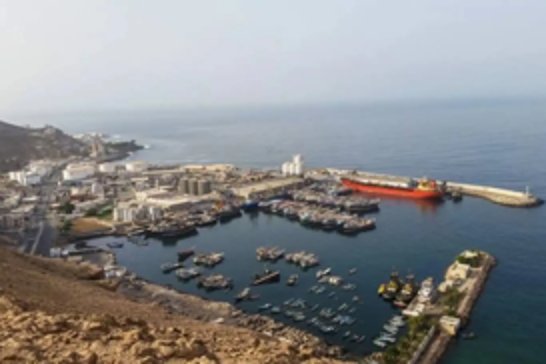
The Saudi-led coalition announced on Tuesday that it carried out a “limited” airstrike targeting two ships at Yemen’s Mukalla port, amid escalating tensions in the country’s eastern provinces following the expansion of the Southern Transitional Council (STC).
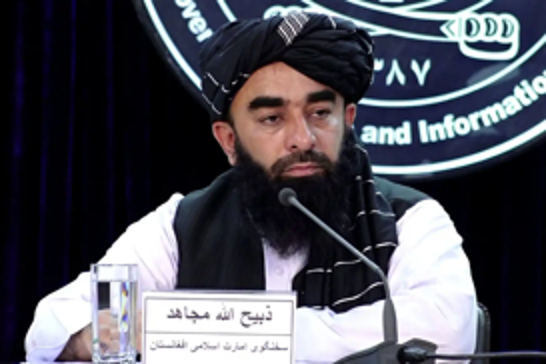
Mawlavi Zabihullah Mujahid, spokesperson for the Islamic Emirate of Afghanistan, has expressed condolences over the martyrdom of Huthaifa al-Kahlout, known as Abu Obaida, the spokesperson of Hamas’ military wing, along with several senior commanders of the Palestinian resistance movement.