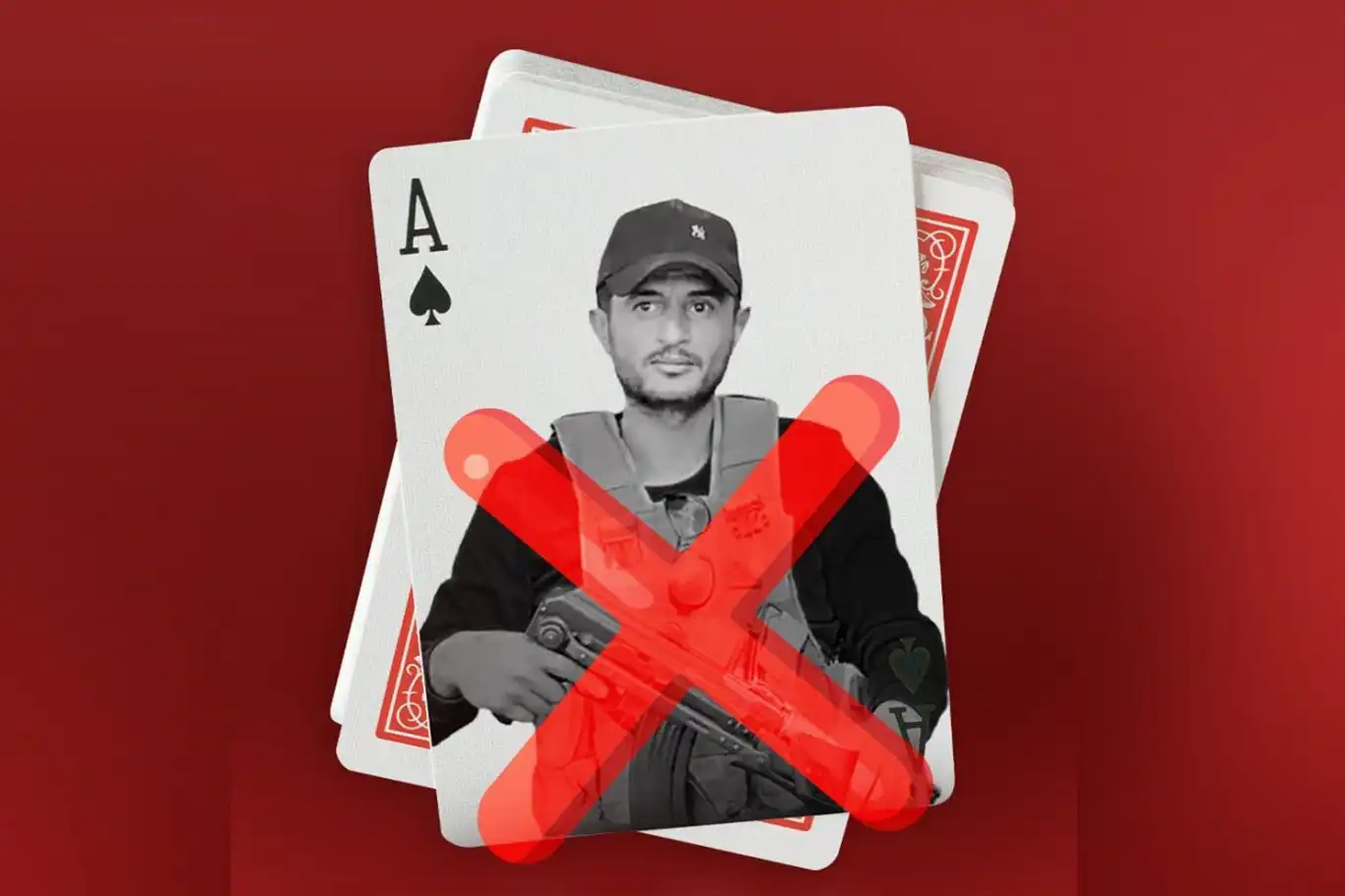
Hamas hails killing of Israeli-backed militia leader Abu Shabab in Gaza
 13 oC
13 oC 
Güneşli

Hamas issued a statement Thursday following the killing of Gaza’s most notorious militia leader, Yasser Abu Shabab, declaring his death “the inevitable fate of anyone who betrays their people and homeland.”
The movement praised Gaza’s families and clans who had publicly disowned Abu Shabab and revoked all tribal protection from him and his group. Hamas said this united stance served as a critical line of defense against attempts to fracture Gaza’s internal cohesion.
According to the statement, the Israeli occupation’s growing reliance on “discredited gangs” to advance its agenda in the Strip underscores its strategic failure in the face of Palestinian resistance. “An occupation unable to protect its own agents cannot shield those who serve it,” the movement said.
Israel Acknowledges Setback After Assassination
Israeli media outlets described Abu Shabab’s killing in Rafah as “bad for Israel,” noting that authorities are now examining whether Hamas operatives infiltrated the area under his control and carried out the assassination.
Israeli Army Radio reported that senior military officials had long opposed the creation of Gaza-based militias collaborating with Israel, warning that “their fate is inevitable, that is, death,” pointing to the collapse of the Israeli-backed South Lebanon Army as a historical parallel.
Abu Shabab’s Meeting With Kushner Revealed
In a striking revelation, Israel’s Kan Channel reported that Abu Shabab met with U.S. envoy Jared Kushner on November 11 at a U.S. command site in southern occupied Palestine. The meeting reportedly focused on the role his militia could play in areas outside Hamas control.
Abu Shabab had been imprisoned by Gaza authorities for drug-related and theft charges, but escaped during an Israeli raid early in the 2023 escalation. He later emerged as the head of an Israeli-backed armed group seeking to undermine Hamas governance in Gaza.
Israeli Weapons and Support to the Militia
Israeli Army Radio confirmed that Israel supplied weapons to members of Abu Shabab’s militia—some of which had originally been seized from Hamas—before being transferred to the Popular Forces operating mainly in Rafah. The support reportedly included rifles, logistical assistance, and operational coordination.
Who Was Yasser Abu Shabab?
Yasser Abu Shabab rose to prominence as the commander of the Popular Forces, a new armed group operating primarily in southern Gaza. International reporting widely identifies the Popular Forces as an Israeli-backed militia functioning as a proxy force inside the Strip.
His background includes past criminal activity, particularly drug trafficking, for which he had been jailed before the war. Following his escape amid the chaos of Israeli attacks, he leveraged tribal ties and the breakdown of centralized authority to build an alternative power base aligned with Israeli interests.
The group has been accused of systematically looting humanitarian convoys, particularly aid trucks entering Rafah and surrounding areas. Observers note that Abu Shabab’s ability to operate so freely—using weapons, vehicles, and logistical tools—was only possible due to direct Israeli backing. (ILKHA)
LEGAL WARNING: All rights of the published news, photos and videos are reserved by İlke Haber Ajansı Basın Yayın San. Trade A.Ş. Under no circumstances can all or part of the news, photos and videos be used without a written contract or subscription.
Heavy rains have triggered flash floods and mudslides in Chile's capital, Santiago, and surrounding areas, injuring at least six people, forcing the evacuation of hundreds of households and damaging thousands of homes, according to authorities.
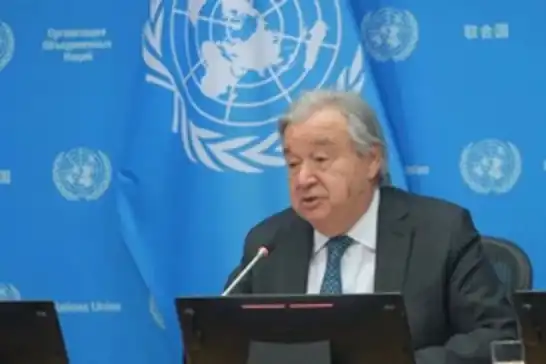
United Nations Secretary-General António Guterres has strongly condemned new US sanctions targeting the International Criminal Court (ICC) as an institution, warning that the measures could undermine its ability to pursue international criminal justice.

A powerful earthquake with a magnitude of 7.7 struck southern Panama on Friday, shaking buildings in the capital, prompting evacuations and triggering tsunami alerts for parts of the Pacific coast of Central and South America.

The European Commission will represent the European Union at the latest round of Ukraine peace talks on October 9, with Björn Seibert, chief of staff to Commission President Ursula von der Leyen, attending on behalf of the bloc, diplomatic sources told the Kyiv Independent.