Iran signals readiness for comprehensive cooperation pact with Iraq

 13 oC
13 oC 
Güneşli

Iran is prepared to deepen relations with Iraq across all sectors and work toward a comprehensive bilateral cooperation agreement, Iranian Foreign Minister Abbas Araghchi said on Sunday, underscoring what both sides described as a new phase in strategic ties between the neighboring countries.
Speaking at a joint press conference in Tehran with Iraqi Foreign Minister Fuad Hussein, Araghchi said he had provided Iraqi officials with “comprehensive explanations” regarding recent developments inside Iran and stressed the importance of close coordination amid rapidly evolving regional conditions.
Araghchi welcomed the complete withdrawal of United States forces from the Ain al-Assad air base in western Iraq, calling it “an important indicator” of Iraq’s growing independence and national sovereignty. He said Baghdad has demonstrated an increasing ability to play a constructive and stabilizing role in the region through dialogue and cooperation, noting that Iran and Iraq share common perspectives on security challenges and broader regional issues.
He added that officials from both countries are currently working toward organizing a joint security cooperation agreement, aimed at institutionalizing coordination and addressing shared threats.
For his part, Iraqi Foreign Minister Fuad Hussein said his visit to Tehran reflects the deep and longstanding ties between Iraq and Iran, spanning economic, cultural, political, and security fields. He emphasized the necessity of sustained communication between Baghdad and Tehran to manage regional developments and prevent escalation.
“Our relationship is built on geography, history, and mutual interests,” Hussein said, stressing that continued dialogue remains essential as the Middle East faces ongoing instability.
The diplomatic talks coincided with a major security development in Iraq. The Iraqi Armed Forces have fully assumed control of the Ain al-Assad air base following the complete withdrawal of US forces, Iraqi officials confirmed on Saturday, marking a significant step in the implementation of a bilateral agreement to end the US military presence in the country.
According to Iraqi military officials, all US personnel have departed the base and removed their equipment. Chief of the General Staff of the Iraqi Armed Forces, Lieutenant General Abdul Amri Rashid Yarallah, personally oversaw the reassignment of tasks and duties to Iraqi military units following the handover.
In a statement, the Iraqi military said Yarallah instructed commanders to intensify efforts, strengthen coordination among all units stationed at the base, and fully utilize its capabilities and strategic location.
A senior Ministry of Defense official, speaking to The Associated Press on condition of anonymity, confirmed that the withdrawal was complete. There was no immediate comment from the US military.
Washington and Baghdad agreed in 2024 to gradually wind down the US-led coalition’s presence in Iraq, with US forces scheduled to leave key bases by September 2025. The agreement followed dozens of attacks on US positions carried out by Iraqi Resistance factions, which reject the presence of foreign troops in the country.
Ain al-Assad was a primary target of these operations, which included one-way attack drones and rocket strikes. Although the agreement initially called for a full withdrawal by September, a small contingent of US advisers and support personnel—estimated at between 250 and 350—remained temporarily.
Iraqi Prime Minister Mohammed Shia al-Sudani said in October that “developments in Syria” had necessitated a limited, temporary presence at the base. Those remaining forces have now also departed, completing the handover to Iraqi control.
US forces, however, continue to maintain a presence in Iraq’s Kurdistan region and in neighboring Syria.
The withdrawal comes amid intensified debate within Iraq over arms control and the state’s monopoly on weapons. Political and security circles in Baghdad have increasingly pushed to limit the possession of arms exclusively to state-affiliated institutions.
In a July interview with the Associated Press, Prime Minister al-Sudani said that once the coalition withdrawal is complete, “there will be no need or no justification for any group to carry weapons outside the scope of the state.”
In a speech on January 4 commemorating the martyrdom of Lieutenant General Qasem Soleimani and former deputy head of the Popular Mobilization Forces Abu Mahdi al-Muhandis, al-Sudani reiterated that consolidating weapons under state authority is intended to strengthen Iraq, not weaken it.
“The mission of the state monopoly over weapons is not meant to weaken Iraq, as some portray it, but to strengthen and unify it,” he said, stressing that the policy would be a purely Iraqi decision taken in accordance with guidance from the country’s supreme religious authority and without external pressure.
He added that the move does not target any specific group, but aims to protect Iraq and “cut off the pretexts of aggressors.”
The convergence of diplomatic engagement between Tehran and Baghdad and the full Iraqi takeover of Ain al-Assad is widely seen as a symbolic and practical shift in Iraq’s post-occupation trajectory. Officials in both countries frame the developments as steps toward enhanced sovereignty, regional cooperation, and a security architecture less dependent on foreign military presence. (ILKHA)
LEGAL WARNING: All rights of the published news, photos and videos are reserved by İlke Haber Ajansı Basın Yayın San. Trade A.Ş. Under no circumstances can all or part of the news, photos and videos be used without a written contract or subscription.
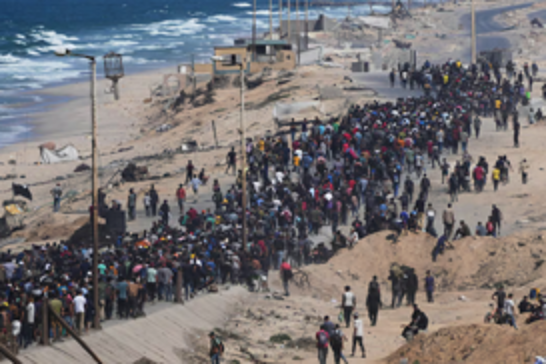
UN High Commissioner for Refugees Barham Salih has called on the international community to focus on ending the conflicts and political crises that are forcing millions of people from their homes, warning that humanitarian agencies cannot solve displacement without addressing the wars that cause it.

US President Donald Trump has reportedly rejected an Iranian proposal aimed at ending the conflict between Washington and Tehran and reopening the strategically vital Strait of Hormuz within seven days.
At least seven people, including a 14-year-old boy, were killed and 59 others injured in a series of Russian drone attacks on Kyiv on Friday, Ukrainian authorities said, as repeated waves of strikes hit residential, commercial and administrative buildings across the capital.
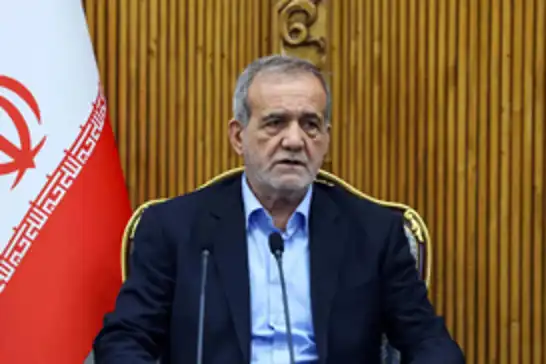
Iranian President Masoud Pezeshkian has welcomed Chinese President Xi Jinping’s support for reviving the Islamabad Memorandum of Understanding between Iran and the United States, stressing that Tehran remains committed to resolving outstanding differences through dialogue.