Israel regime builds new military line in Syria’s Quneitra countryside
 13 oC
13 oC 
Güneşli

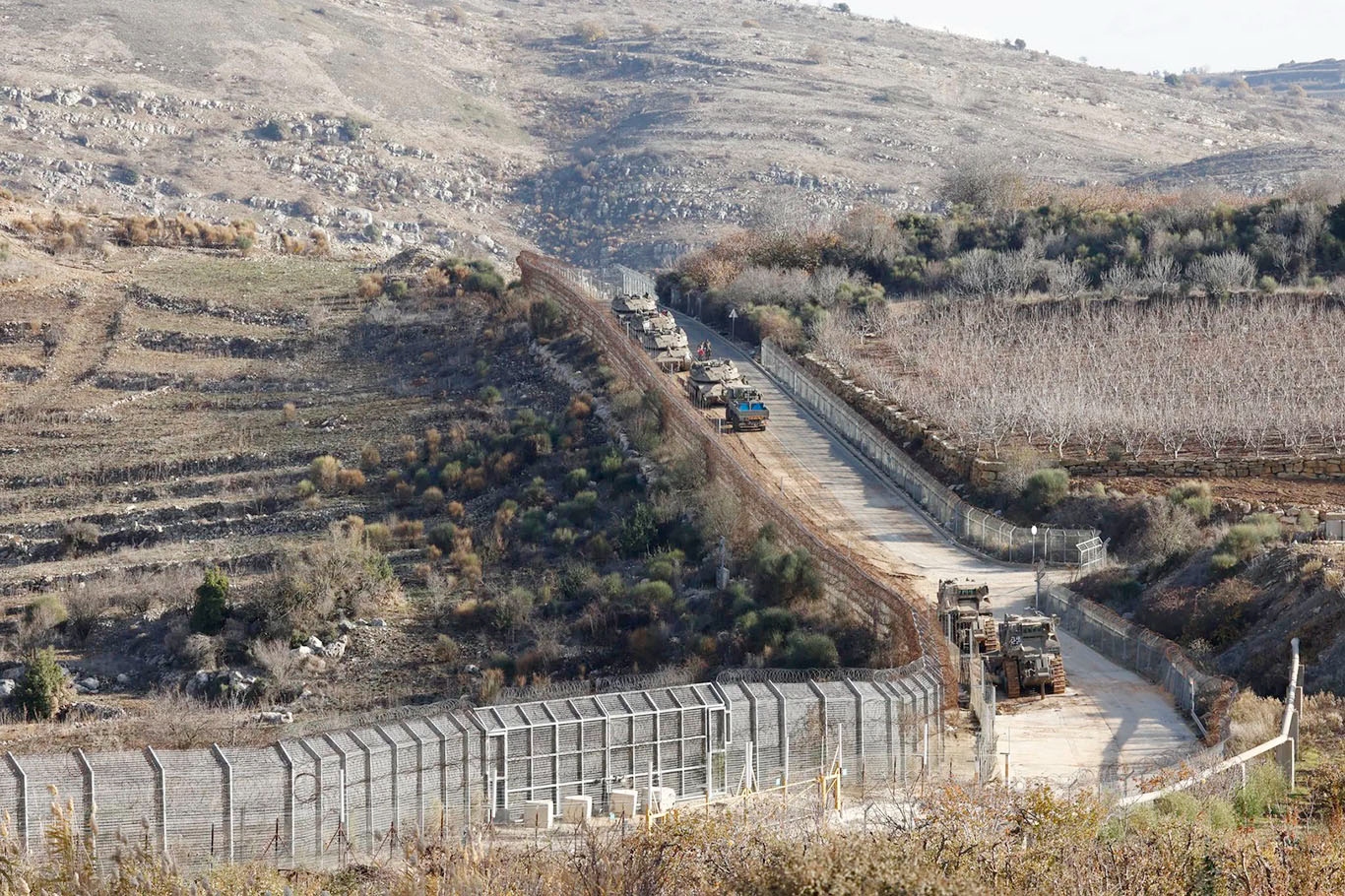
The Israel regime has accelerated military fortification activities in Syria’s Quneitra countryside, including the construction of trenches, earth barriers and military positions, raising concerns over attempts to create a new security line inside Syrian territory.
The regime’s activities in the area, including excavation works, land levelling and the construction of military infrastructure, have intensified in recent months.
The project, referred to as “Sufa 53,” reportedly includes military roads, deep trenches, high earth embankments and surveillance systems aimed at creating an expanded defensive line around the occupied Golan Heights.
The developments have raised concerns that the Israel regime is seeking to establish a new de facto situation in the region beyond the framework of the 1974 Disengagement Agreement between Syria and the Israel regime.
Activities extend beyond 1974 agreement area
The fortification works are reportedly being carried out in areas covered by the buffer zone established under the 1974 agreement, with construction activities extending along parts of the Quneitra countryside.
The project reportedly includes the construction of a military road stretching between 70 and 90 kilometres, along with trenches, earth barriers, observation towers and surveillance cameras.
Local reports said the works began around mid-2022 near the village of Hadar in northern Quneitra and later expanded toward areas including Jubata al-Khashab, Hamidiya, Qahtaniyah, Bi’r Ajam and Bureiqa.
Recent activity has reportedly intensified around the village of Asheh in southern Quneitra.
Concerns over permanent military presence
The Sufa 53 project has been compared by some observers to the Bar-Lev Line, a system of military fortifications built by Israel in the Sinai Peninsula after the 1967 war.
However, analysts say the main concern is not only the military nature of the structures but also the possibility that they could alter the situation on the ground and create a new reality that may affect future negotiations.
The Israel regime has reportedly justified the works as measures against possible attacks by Iran-backed armed groups. However, the continuation of the project after the fall of Bashar al-Assad’s government in Syria on December 8, 2024, has raised questions over this justification.
Damascus rejects violations of sovereignty
The Syrian administration has objected to the military activities, describing them as violations of the 1974 Disengagement Agreement and a breach of Syria’s sovereignty.
Damascus has called for a return to the arrangements established under the existing agreement and an end to actions that could change the status of the buffer zone.
The expansion of military infrastructure in southern Syria is being viewed not only as a security issue but also as a matter concerning Syria’s territorial integrity and sovereignty.(ILKHA)
LEGAL WARNING: All rights of the published news, photos and videos are reserved by İlke Haber Ajansı Basın Yayın San. Trade A.Ş. Under no circumstances can all or part of the news, photos and videos be used without a written contract or subscription.

Iranian President Masoud Pezeshkian has reaffirmed Tehran’s commitment to diplomacy while accusing Washington of undermining negotiations through military attacks, telling Russian President Vladimir Putin that Iran would not abandon the negotiating table.

Mandatory evacuation orders have been issued in parts of the United States as Hurricane Isaias strengthens while moving toward the country’s Gulf Coast.
At least 28 people were killed when a passenger bus collided head-on with a truck in Tanzania’s eastern Morogoro Region, local media reported.