Powerful 7.6 magnitude earthquake strikes northern Japan, triggers tsunami warnings

 13 oC
13 oC 
Güneşli

A powerful magnitude 7.6 earthquake struck northeastern Japan late Tuesday night, prompting tsunami warnings, mass evacuations and emergency response measures across coastal regions.
According to the Japan Meteorological Agency (JMA), the earthquake occurred at 23:15 local time (14:15 GMT) at a depth of 50 kilometers, with the epicenter located about 80 kilometers offshore from the Aomori region.
The strong tremor triggered tsunami warnings, which were later downgraded to advisories, though waves of up to 40 centimeters (16 inches) were recorded in some coastal areas. Authorities ordered the evacuation of approximately 90,000 residents in vulnerable zones as a precaution, according to local sources.
Local media reported that a number of people were injured in the affected areas. A hotel employee in Hachinohe told public broadcaster NHK that several people had been hurt during the quake.
Rail services in parts of the region were suspended as a safety measure while infrastructure inspections were carried out.
The Japanese government swiftly established a response office within the prime minister’s crisis management center. Chief Cabinet Secretary Minoru Kihara said an emergency task force had been convened.
“We are making every effort to assess the damage and implement emergency disaster response measures, including rescue and relief operations,” Kihara said.
Television stations broadcast urgent warnings reading “Tsunami! Run!” and “Tsunami warning issued for central Hokkaido’s Pacific Coast”, urging residents to move to higher ground immediately.
Authorities confirmed that no abnormalities were detected at the Higashidori and Onagawa nuclear power plants, according to Tohoku Electric Power. Japanese officials also informed the International Atomic Energy Agency (IAEA) that no irregularities were reported at the Fukushima Daiichi nuclear plant.
The Fukushima facility was severely damaged during the catastrophic March 11, 2011 earthquake and tsunami, when a magnitude 9.0 quake devastated Japan’s east coast and caused the deaths of more than 18,000 people.
Japan is one of the world’s most earthquake-prone countries, with tremors occurring extremely frequently due to its position on the Pacific “Ring of Fire.” Authorities continue to monitor aftershocks and assess structural damage as emergency teams remain on high alert. (ILKHA)
LEGAL WARNING: All rights of the published news, photos and videos are reserved by İlke Haber Ajansı Basın Yayın San. Trade A.Ş. Under no circumstances can all or part of the news, photos and videos be used without a written contract or subscription.

Sales of new electric vehicles (EVs) in Russia surged 57 percent year-on-year in November, marking the second consecutive month of growth, according to data released Monday by the automotive analytics agency Autostat.

Four people affiliated with France’s National School of Civil Aviation (ENAC), including one instructor and three students, were killed after a light aircraft crashed in the Pyrenees mountains, French authorities confirmed on Monday.
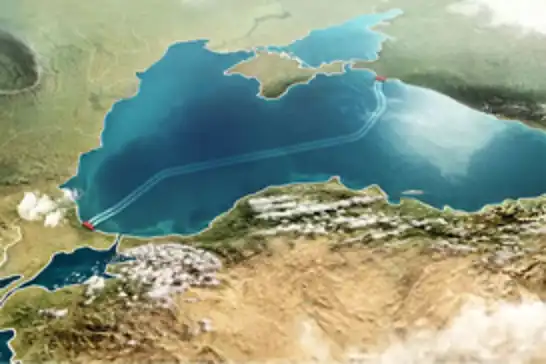
A Dutch court has frozen the assets of South Stream Transport, the operator of the TurkStream natural gas pipeline, as part of legal efforts by Ukrainian companies to recover losses linked to Russia’s 2014 annexation of Crimea, Russian newspaper Vedomosti reported on Monday.