US military launches deadly strikes on alleged drug-trafficking vessels in Eastern Pacific
 13 oC
13 oC 
Güneşli

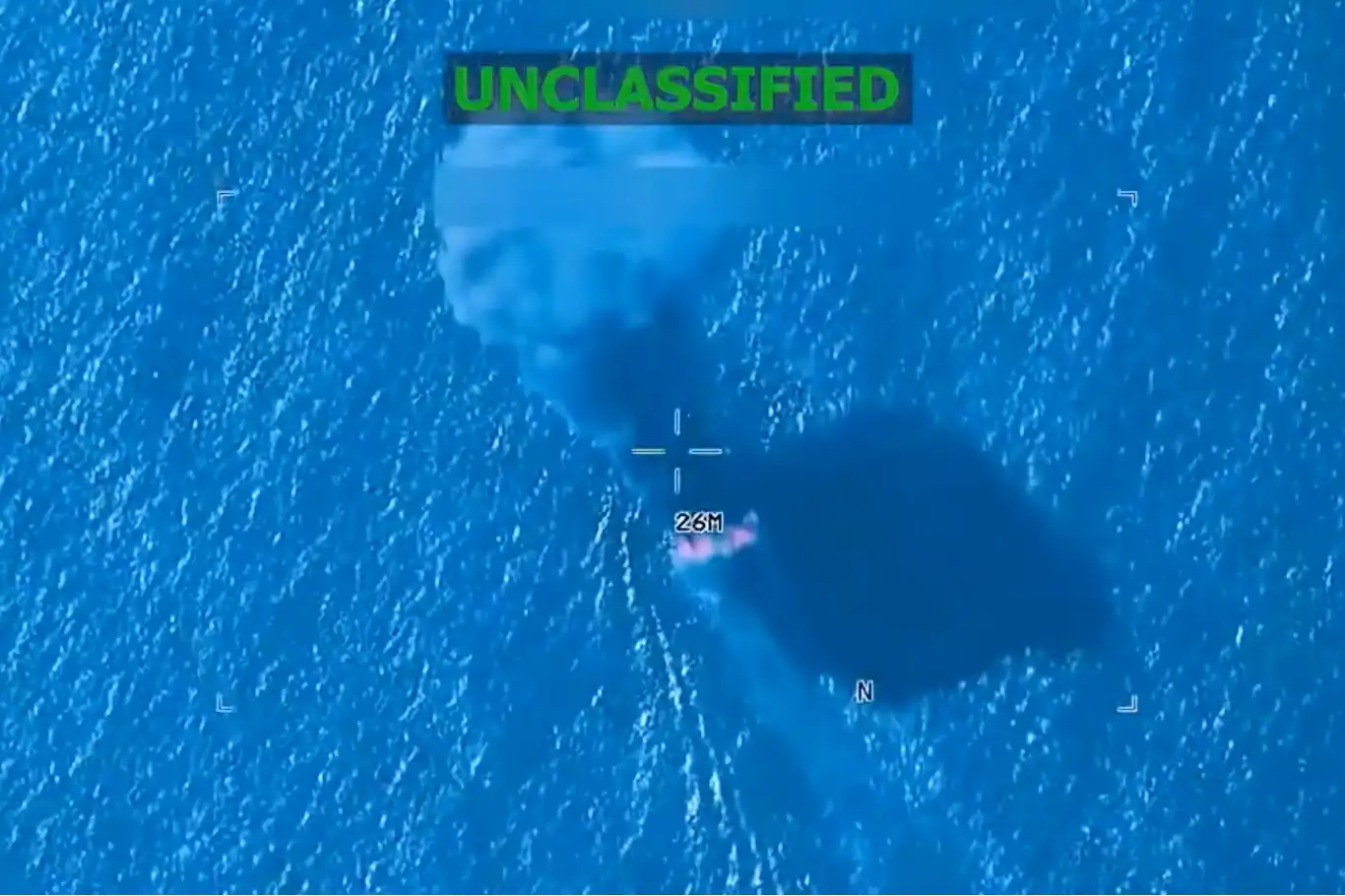
The United States Southern Command (SOUTHCOM) has confirmed that it carried out lethal military strikes on three vessels in international waters in the Eastern Pacific Ocean, killing eight people, in an operation that has intensified legal, political, and international concerns over Washington’s expanding use of force at sea.
According to a statement posted by SOUTHCOM on December 15, the strikes were conducted under the orders of US Secretary of War Pete Hegseth. The military claimed that Joint Task Force Southern Spear carried out “lethal kinetic strikes” against three vessels allegedly operated by “Designated Terrorist Organizations” and involved in drug trafficking.
SOUTHCOM reported that all those killed were adult males, with three fatalities on the first vessel, two on the second, and three on the third. However, US authorities have not provided independent verification or publicly released evidence linking the targeted vessels to terrorism or narcotics trafficking.
The incident is part of a broader US military campaign initiated under President Donald Trump, aimed at what the administration describes as drug smuggling routes in the Pacific Ocean and Caribbean Sea, including waters near Venezuela. US officials claim that more than 20 vessels have been struck as part of the campaign, with at least 90 suspected drug smugglers reported killed so far.
The operations mark a significant escalation and a departure from previous US counter-narcotics strategies, which traditionally relied on maritime interdictions, arrests, and criminal prosecutions rather than the direct use of military force. Critics argue that the campaign has done little to address the opioid crisis in the United States, noting that Venezuela is neither a major source nor a key transit route for drugs entering the country.
Despite these criticisms, Trump and senior administration officials have continued to accuse Caracas of involvement in narcotics trafficking, claims that regional experts and analysts describe as unsubstantiated. At the same time, Washington has reinforced its military presence in the Caribbean, deploying a substantial naval force that includes its most advanced aircraft carrier, the USS Gerald R. Ford.
The Pentagon has defended the legality of the strikes. Earlier this month, Pentagon Press Secretary Kingsley Wilson stated that US operations in the SOUTHCOM area are lawful under both US and international law and are conducted in compliance with the Law of Armed Conflict.
Legal experts and lawmakers have sharply disputed this position. Critics question whether the Law of Armed Conflict can be applied outside a formally declared armed conflict, particularly in international waters and against individuals not recognized as combatants. Under the United Nations Charter, the use of force by one state against another state’s vessels on the high seas is generally prohibited unless the action is authorized by the UN Security Council, conducted in legitimate self-defense following an armed attack, or otherwise justified under international law.
Analysts note that US authorities have presented no credible evidence that the targeted vessels carried out or were preparing an armed attack against the United States, casting doubt on the legal basis for the strikes.
Further controversy has emerged over a separate September incident in the Caribbean, in which US forces struck a suspected drug-smuggling vessel, killing most of those on board. According to multiple reports, surveillance later identified two survivors in the water. The operation’s commander allegedly authorized a second strike against the survivors, based on a directive that no survivors should be left.
Legal scholars and members of Congress have warned that targeting individuals who are no longer actively participating in hostilities or posing an imminent threat—classified as hors de combat under international humanitarian law—constitutes a war crime. Such actions, they argue, would violate the Geneva Conventions and the customary international law prohibition against denying quarter.
As Washington expands its military operations under the banner of counter-narcotics enforcement, international legal experts continue to warn that the use of lethal force in international waters without clear legal justification risks undermining international law and setting a dangerous precedent for the global maritime order. (ILKHA)
LEGAL WARNING: All rights of the published news, photos and videos are reserved by İlke Haber Ajansı Basın Yayın San. Trade A.Ş. Under no circumstances can all or part of the news, photos and videos be used without a written contract or subscription.
Three migrants, including a 10-year-old child, died Monday after a small boat carrying more than 100 people encountered difficulties while attempting to cross the English Channel from northern France to the United Kingdom, French authorities said.

The death toll from severe flooding triggered by heavy monsoon rains in India's northern Uttar Pradesh state has risen to 81, while 62 others have been injured.
Eight US Marines were injured during an operation carried out by the Islamic Republic of Iran against a vessel in the Strait of Hormuz on September 14, according to reports.

Hundreds of Muslims gathered inside the historic Shahi Masjid in Ujjain, Madhya Pradesh, to oppose plans to remove part of the mosque as part of a road-widening project being carried out ahead of the 2028 Simhastha Kumbh pilgrimage.