Ankara hosts 10th annual ‘Peace for the Ummah, Freedom for Jerusalem’ gathering
 13 oC
13 oC 
Güneşli

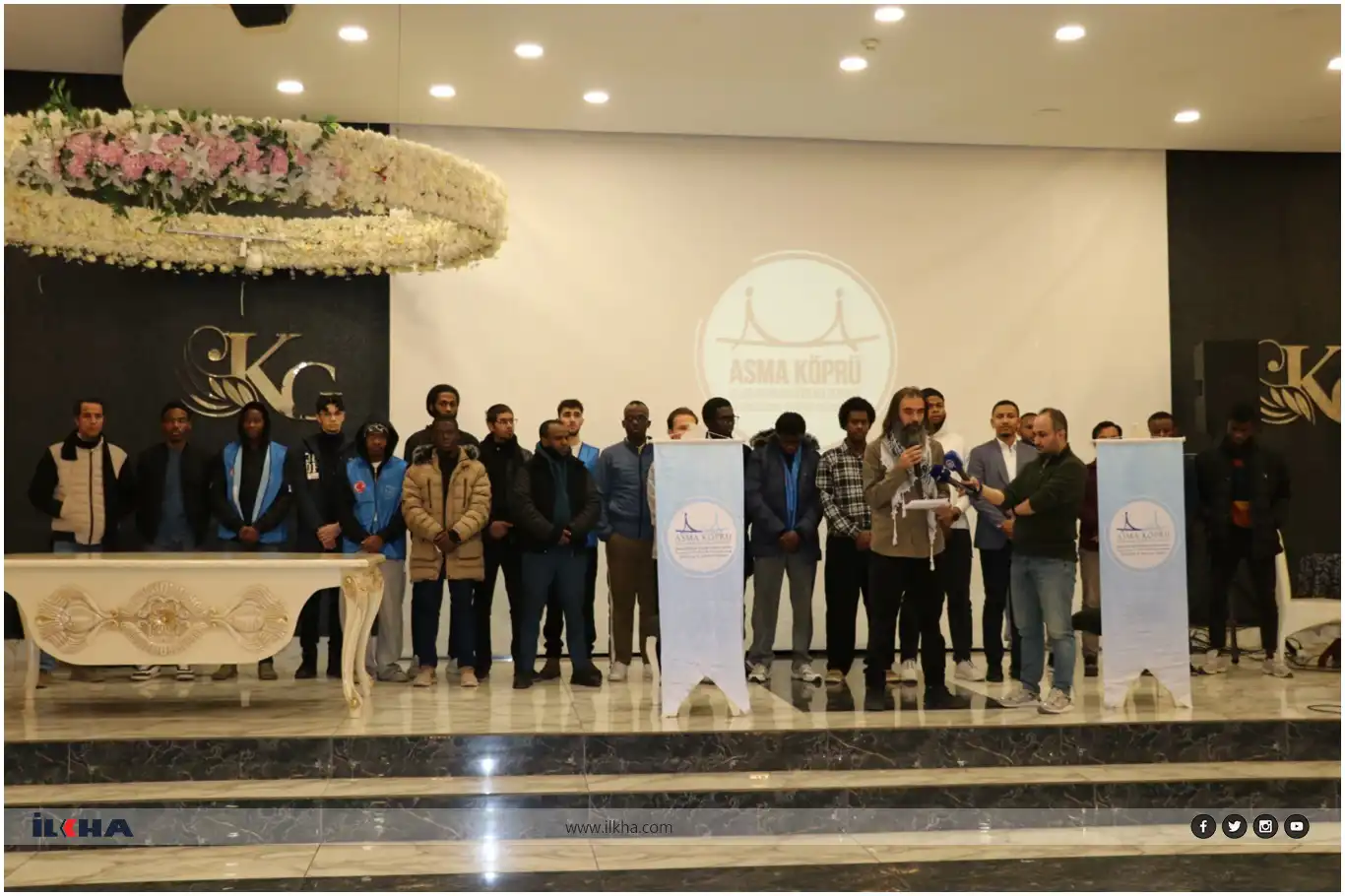
The Asma Köprü International Students Association convened its 10th annual program titled "Peace for the Ummah, Freedom for Jerusalem" in Ankara.
Held to mark the beginning of the sacred three months—Rajab, Sha‘ban, and Ramadan—the program brought together civil society representatives, academics, activists, citizens, and international students from dozens of countries.
Organized for the 10th consecutive year, the event has become a symbolic and institutional tradition aimed at renewing Ummah consciousness and drawing attention to the ongoing oppression faced by Muslims worldwide, particularly in Palestine. The program was conducted in Turkish, English, and Arabic, reflecting its international character and inclusive message.
The gathering took place in Ankara’s Keçiören district, with separate halls arranged for men and women. Participants filled the venues, demonstrating strong public interest and solidarity with the cause of Jerusalem and oppressed Muslim communities.
The event began with a communal breakfast, after which the program continued with a recitation of the Holy Qur’an by an international student named Foudeoul. The recitation set a spiritual tone, emphasizing the sacred nature of the occasion and the moral responsibility associated with the holy months.
Following the Qur’an recitation, Hanefi Sinan, President of the Asma Köprü International Students Association, delivered the keynote address.
In his speech, Sinan welcomed the participants and prayed that the sacred months would be a means of salvation for Muslims across the world.
“Every year, on the first day of Rajab, we gather with a call under the theme ‘Peace for the Ummah, Freedom for Jerusalem,’” Sinan said. “We all know that the liberation of Jerusalem passes through the peace of the Ummah, and that Jerusalem’s current condition can only be corrected through unity, solidarity, and alliance among Muslims.”
Sinan stressed that political fragmentation, sectarianism, and national divisions have weakened the collective will of the Ummah, allowing injustice to persist in Palestine and elsewhere.
He emphasized that Jerusalem is not merely a political issue, but a civilizational, moral, and faith-based responsibility shared by the entire Muslim world.
A significant portion of Sinan’s address focused on the role of international students in shaping the future of both Türkiye and the wider Islamic world.
Through the Federation of International Student Associations, Sinan said, efforts are ongoing to reach 20,000 international students in Ankara and approximately 350,000 across Türkiye.
“Our main objective is to build Ummah awareness,” he said. “We aim to nurture a generation that understands responsibility, solidarity, and justice, and that can contribute to making the world livable again.”
He highlighted the association’s 15-year history of working with students from Africa, the Balkans, Central Asia, and the Middle East, noting that many graduates have returned to their home countries and are now engaged in educational, social, and humanitarian initiatives inspired by their experience in Türkiye.
“This is not a temporary effort,” Sinan said. “It is a long-term investment in the moral and intellectual future of the Ummah.”
Sinan also drew attention to the difficult living conditions faced by international students, particularly in the context of rising inflation and increasing education costs.
“There are approximately 5,000 international student houses in Ankara, and many of them are in urgent need of both financial and moral support,” he said.
According to the figures shared during the program, only 8 percent of international students in Türkiye receive Türkiye Scholarships, while around 10 percent find alternative sources of support. The remaining more than 80 percent struggle to survive with limited means.
“Some students are forced to freeze their education, while others try to survive through part-time or seasonal jobs,” Sinan said. “This is not merely a social issue—it concerns the future of our country and the entire Ummah.”
He called on civil society organizations, foundations, and community groups to take greater responsibility and deepen their engagement with international students.
Following the speech, a press statement prepared under the theme “Peace for the Ummah, Freedom for Jerusalem” was read by Zeynel Abidin Özkan, a member of the association’s Board of Directors.
The statement strongly condemned Israel’s ongoing attacks on Gaza, describing them as a systematic policy of annihilation carried out before the eyes of the world.
“Hospitals are bombed, children are starved, humanitarian aid is blocked, and all of this is justified with the false narrative of ‘self-defense,’” the statement said. “This is not a war—it is genocide.”
The statement accused the international system of complicity, arguing that global powers normalize the violence through silence, selective outrage, and political interests.
Beyond Gaza, the statement highlighted the suffering of Muslims in Sudan, Yemen, Arakan (Myanmar), and East Turkestan, stressing that the Ummah faces a multi-front crisis.
In Sudan, Muslims are left to hunger and death amid civil war.
In Yemen, years of blockade and bombardment have devastated an entire generation.
In Arakan, Muslims have been forcibly displaced and stripped of their identity.
In East Turkestan, Muslims face forced assimilation, mass detention, and cultural erasure.
“The oppressors are organized,” the statement said. “The oppressed are scattered.”
Asma Köprü issued a clear and direct call to the Muslim world, urging unity beyond internal debates and divisions.
The statement called on Islamic governments to take concrete diplomatic, economic, and political action against the genocide in Gaza, urged civil society organizations, youth, scholars, and opinion leaders to come together on a common platform for coordinated action, and emphasized the need for sustained boycotts, legal initiatives, awareness campaigns, and continuous public pressure to confront injustice and hold perpetrators accountable.
“Silence is complicity,” the statement emphasized. “Today, speaking alone is not enough—action is an obligation.”
The program concluded with a strong declaration of commitment and resistance.
“We proclaim once again: Gaza is not alone. Al-Quds is not forsaken,” the statement read. “Until occupation ends, oppression ceases, and justice is established, we will continue to raise our voices, speak the truth, and stand with the oppressed.”
Participants left the program with prayers, renewed determination, and a call to transform words into sustained action throughout the sacred months and beyond. (ILKHA)
LEGAL WARNING: All rights of the published news, photos and videos are reserved by İlke Haber Ajansı Basın Yayın San. Trade A.Ş. Under no circumstances can all or part of the news, photos and videos be used without a written contract or subscription.
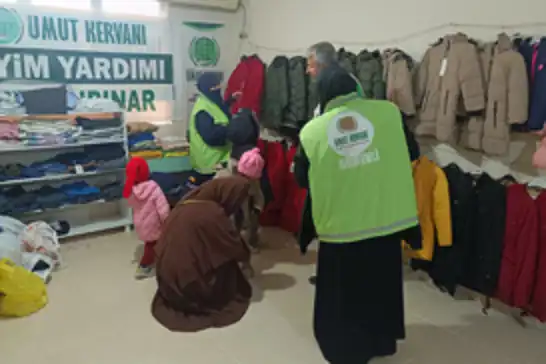
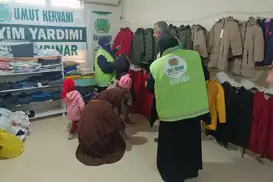
The Hope Caravan Foundation (Umut Kervanı Vakfı) has delivered vital winter aid to vulnerable families in the Ceylanpınar district, providing a crucial lifeline as temperatures drop.

Türkiye’s Minister of Transport and Infrastructure Abdulkadir Uraloğlu has announced that the Touristic Eastern Express (Turistik Doğu Ekspresi) will resume its journeys for the 2025–2026 season starting tomorrow.
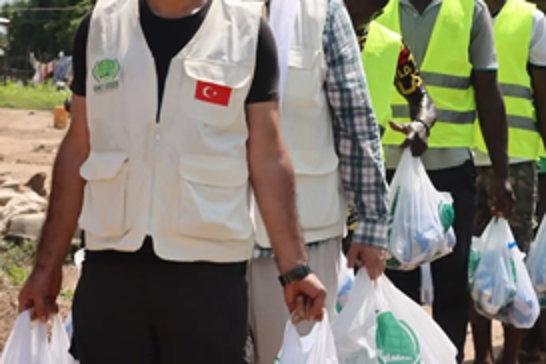
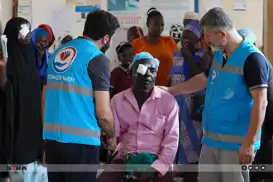
The Hope Caravan Foundation (Umut Kervanı Vakfı) is preparing to dispatch a humanitarian aid convoy to Sudan on December 25, aiming to provide critical assistance to communities facing severe hardship amid the country’s deepening humanitarian crisis.