Schengen rules disrupt Türkiye-EU freight transport as truckers protest
 13 oC

Güneşli

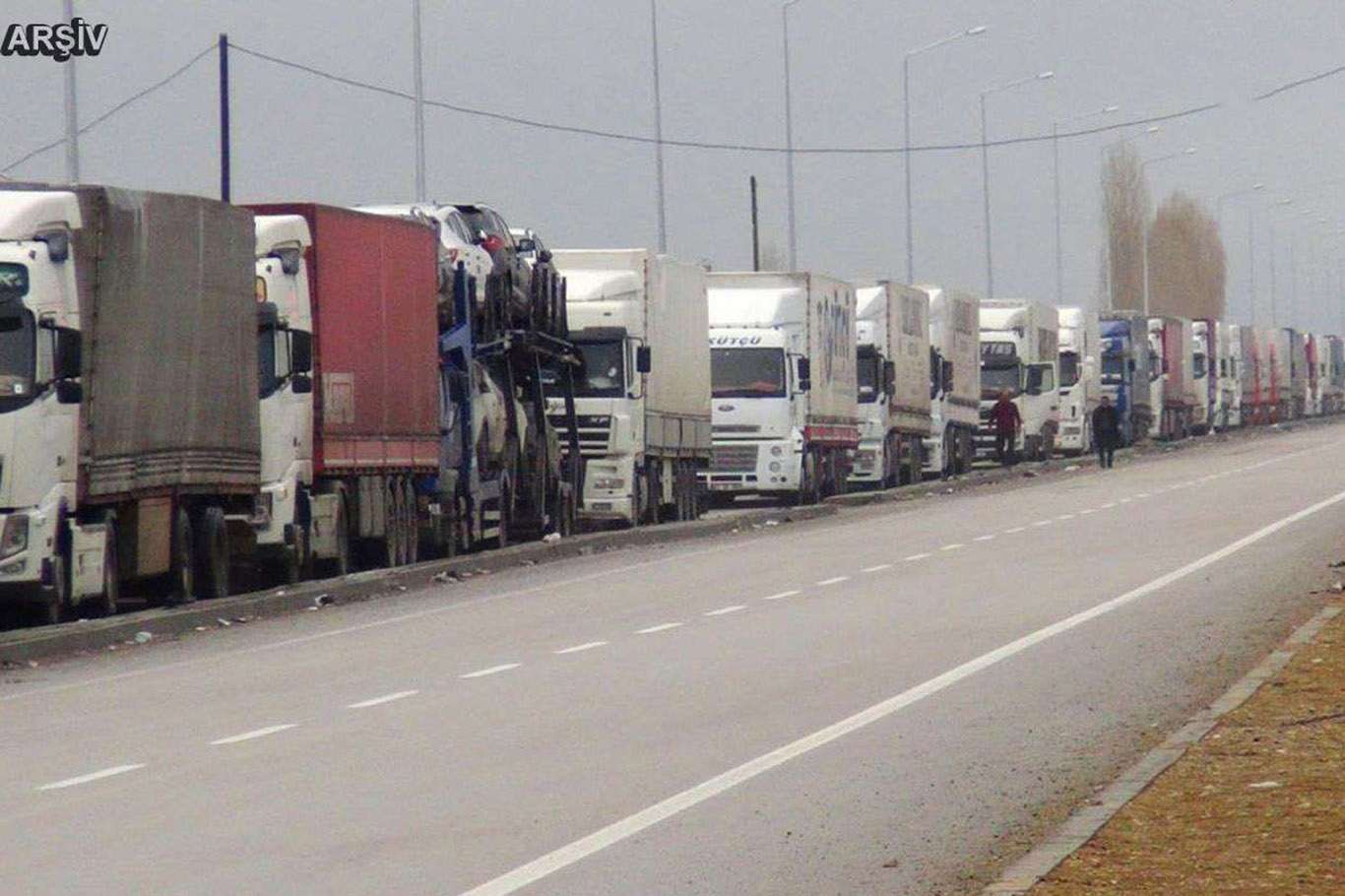
Thousands of Turkish truck drivers transporting goods between Türkiye and the European Union are facing growing difficulties at European border crossings due to the Schengen area's 90-day stay limit, disrupting freight operations and raising concerns about the impact on bilateral trade.
The restrictions have reportedly affected around 25,000 of Türkiye's approximately 50,000 international truck drivers, according to Şerafettin Aras, president of the International Transporters Association (UND).
The issue has intensified in recent months, with drivers being turned back at key crossings, including Italy's Trieste port and the Kapıkule border gate between Türkiye and Bulgaria.
The growing disruption has prompted protests at Turkish border crossings. On Wednesday, October 28, truck drivers launched a shutdown protest at Kapıkule and Hamzabeyli, halting outbound freight movements towards Europe in a bid to secure a solution to the visa restrictions. The action continued on Thursday, with reports indicating that thousands of trucks were waiting at the crossings.
The dispute centres on the Schengen rule allowing visitors to remain in the area for a maximum of 90 days within any rolling 180-day period. Turkish transport operators argue that the limit is incompatible with the demands of international freight transport, which requires drivers to make frequent journeys and spend considerable time loading and unloading cargo and waiting at border crossings.
The disruption threatens a major transport corridor connecting Türkiye's manufacturing sector with European markets.
Goods worth approximately $111 billion were transported from Türkiye to the EU by road in 2025, according to figures cited by the Turkish transport sector.
Around 42 percent of Türkiye's exports to the EU are carried by road, making international truck drivers essential to the supply chains linking Turkish producers with European businesses.
Aras has warned that the restrictions are affecting not only Turkish exporters but also European companies that rely on Turkish transport operators to move goods across the continent and beyond.
He said Turkish hauliers also transport goods from EU countries to destinations including Syria, Saudi Arabia and Dubai, meaning the restrictions could have consequences for freight operations extending beyond Türkiye-EU trade.
Transport operators have warned that delays are increasing the risk of cancelled orders and delivery penalties. Some companies have reportedly begun treating the disruptions as force majeure circumstances when dealing with contractual obligations.
Turkish transport representatives are calling for professional truck drivers to be treated differently from tourists under the Schengen visa framework.
Aras has proposed the introduction of long-term national, or D-type, visas that would allow professional drivers to carry out their duties without repeatedly exhausting the short-stay allowance.
The sector argues that commercial drivers must regularly enter and leave the Schengen area to fulfil transport contracts, making the 90-day restriction particularly burdensome for their profession.
The issue is not confined to Türkiye. Trucking associations in several Western Balkan countries have also protested against the same restrictions, arguing that the rules are incompatible with the operational requirements of international road freight transport.
The European Commission has acknowledged the difficulties faced by highly mobile professionals, including truck drivers, and said it has been in contact with partner countries and EU member states to explore possible solutions.
The Commission has pointed to existing options under national rules, including long-term visas and residence permits, as well as limited circumstances in which drivers may be treated as cross-border workers.
Meanwhile, the EU's July 2025 decision to ease access to longer-validity, multiple-entry Schengen visas for eligible Turkish citizens explicitly excluded truck drivers from the new arrangements.
The dispute comes as trade between Türkiye and the EU continues to expand. According to the European Council, bilateral trade in goods exceeded €217 billion in 2025, underscoring the importance of efficient transport links between the two sides.
Türkiye remains a major manufacturing and trading partner for the bloc, while European companies have significant commercial interests in Turkish production and supply chains.
Transport operators warn that continued restrictions could increase logistics costs, delay deliveries and undermine the competitiveness of exporters on both sides.
They are urging Turkish and European authorities to reach an agreement that recognises the specific working conditions of international truck drivers while addressing the practical difficulties created by the current visa framework.
With protests now disrupting freight movements at major Turkish border crossings, pressure is mounting for a solution that would allow professional drivers to continue operating without the recurring threat of being turned back at the EU's external borders. (ILKHA)
LEGAL WARNING: All rights of the published news, photos and videos are reserved by İlke Haber Ajansı Basın Yayın San. Trade A.Ş. Under no circumstances can all or part of the news, photos and videos be used without a written contract or subscription.
Turkish Foreign Minister Hakan Fidan will host a meeting of foreign ministers from the Organization of Turkic States (OTS) in Ankara on Thursday as part of the organisation’s 13th summit, Türkiye’s Foreign Ministry announced.
Turkish President Recep Tayyip Erdoğan and US President Donald Trump discussed bilateral relations and regional and global developments during a phone call, the Turkish presidency said in a statement on Wednesday.
President Recep Tayyip Erdoğan on Wednesday welcomed Kazakh President Kassym-Jomart Tokayev with an official ceremony at the Presidential Complex in Ankara as the two leaders prepare to hold high-level talks aimed at further strengthening bilateral ties.