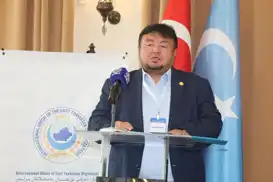
SDAM chairman: France protests reveal deeper social and economic crisis
 13 oC

Güneşli

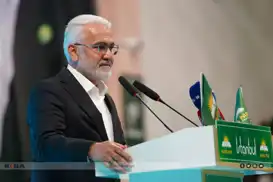
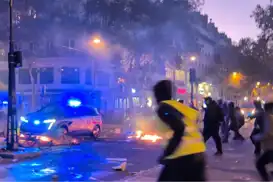
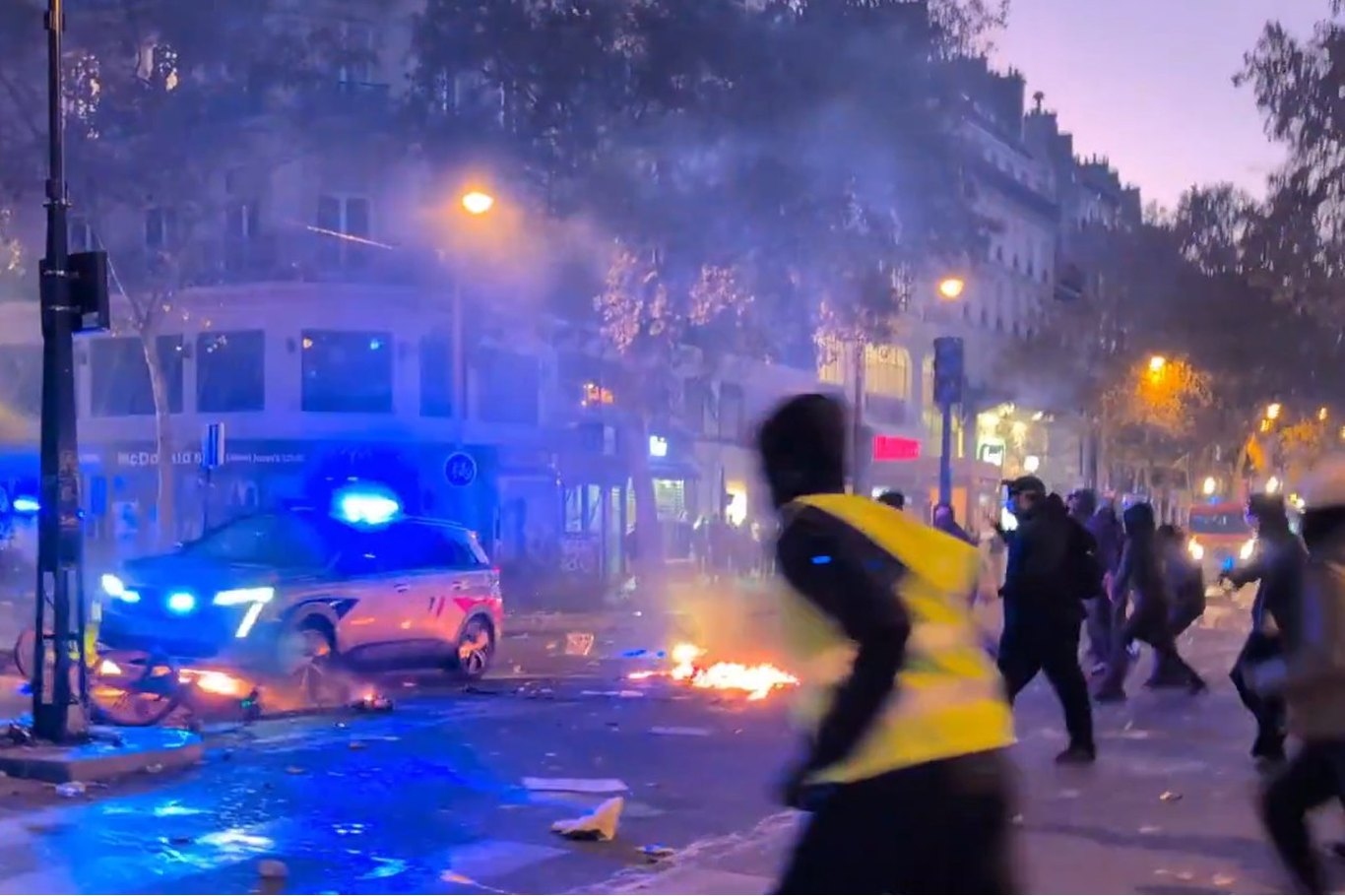
Recent protests in France that began over education-related problems and later escalated into violent clashes and looting reflect deeper social, economic and political tensions in the country, according to Abdulmuttalip Güngen, Chairman of the Strategic Thinking and Analysis Center (SDAM).
The demonstrations, which started in September in the suburbs of Paris over issues including teacher shortages, overcrowded classrooms, poor school conditions and concerns over university admission procedures, spread nationwide in October with the participation of trade unions and various social groups.
Speaking to ILKHA, Güngen said the protests should not be viewed only as a reaction to education problems but as part of a broader crisis affecting France and other European countries.
Protests expanded beyond education demands
Güngen said the demonstrations initially began among students demanding improvements in education but later transformed into a wider social movement after other groups joined.
"The protests first emerged in secondary schools on the outskirts of Paris because of shortcomings in the education system. As time went on, broader sections of society also turned to protests as a means of expressing their demands. Students initially organized demonstrations over educational issues, but the movement gradually evolved. Trade unions later called for wider participation, transforming local protests into mass demonstrations that eventually escalated into violence and looting," Güngen said.
Economic difficulties deepen public frustration
Güngen said economic problems, inequality in public services and dissatisfaction with government policies have increased social tensions in France and across Europe.
He noted that while some major cities have better educational opportunities, students in other regions continue to face serious disadvantages. According to Güngen, governments have failed to address the root causes of these problems and have instead focused mainly on security measures.
"France and other European countries are facing serious economic difficulties, and these problems are directly affecting citizens. In many areas, people feel that governments are unable to provide effective solutions. Instead of addressing the causes of social problems, authorities often prefer measures focused on controlling protests and preventing unrest," Güngen said.
Wars and energy crises affect European societies
Güngen also pointed to the impact of international conflicts, especially the Russia-Ukraine war and developments in the Middle East, on Europe's economic and political situation.
He argued that rising energy costs, disruptions in global markets and foreign policy decisions have increased the financial burden on European citizens.
"The effects of the Russia-Ukraine war on Europe must be evaluated in terms of economic pressure, security concerns and political consequences. The developments following October 7 also created significant reactions in many European countries. People are increasingly questioning the economic costs of their governments' policies and international relations. The attacks carried out by the United States and the Israeli regime against Iran also caused major fluctuations in energy markets, and these developments have affected ordinary citizens through higher costs," Güngen said.
Migration and political failures fuel dissatisfaction
Güngen said European governments have also struggled to manage migration-related challenges and social changes, contributing to growing public dissatisfaction.
He argued that the inability of traditional political parties to offer solutions has weakened trust in central governments.
"European countries have not managed migration processes effectively from a political perspective. Today, governments facing these crises are unable to produce realistic and lasting solutions. The preference for security-based responses instead of addressing the underlying causes of problems is creating deeper social tensions," he added.
Voters turn toward political extremes
Güngen said unresolved social problems have pushed voters in several European countries toward more radical political movements.
He noted that France, Germany, Italy and Portugal have all witnessed increasing support for parties outside the traditional political centre.
"The concepts of democracy and republicanism that spread after the French Revolution have created important expectations around the world. However, today there is a growing gap between these ideals and political practices. As central governments fail to solve people's problems, support for more extreme political movements is increasing. In France and other European countries, many citizens are turning toward alternatives because they believe traditional parties are unable to respond to their concerns," Güngen stated.(ILKHA)
LEGAL WARNING: All rights of the published news, photos and videos are reserved by İlke Haber Ajansı Basın Yayın San. Trade A.Ş. Under no circumstances can all or part of the news, photos and videos be used without a written contract or subscription.
The deputy secretary-general of the Islamic Jihad Movement, Mohammed al-Hindi, said the Al-Aqsa Flood operation fundamentally altered the strategic landscape of the region, arguing that the role assigned to the Israel regime has effectively come to an end and that its international standing has suffered irreversible damage.
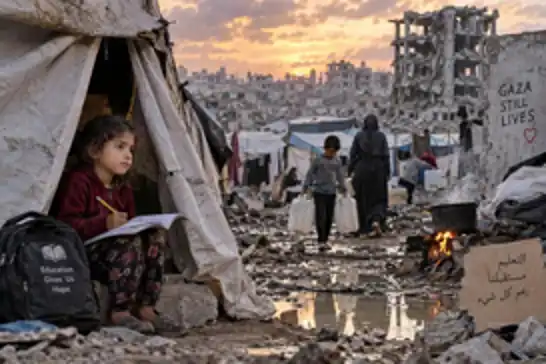
Professor Dr. Vechi Sönmez, a faculty member at Batman University's Faculty of Islamic Sciences, has called on Muslim countries to unite and establish a deterrent force against Israel's ongoing attacks on Palestinians, stressing that the resistance in Gaza continues despite years of bloodshed, destruction and immense suffering.
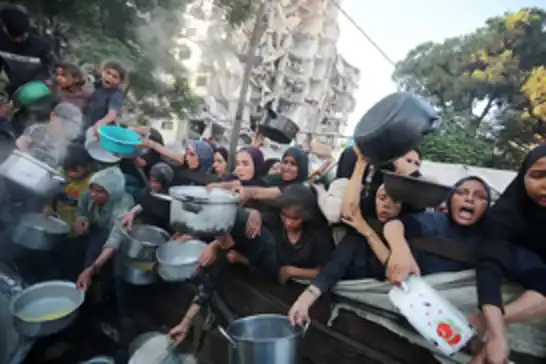
As the Israeli occupation's assault on Gaza enters its 1,000th day, humanitarian organizations are warning that waning international attention is taking a toll on relief efforts, with donations declining as the humanitarian crisis receives less global coverage.