WOLAS warns of settler colonialism and systematic rights violations in Jammu and Kashmir
 13 oC

Güneşli

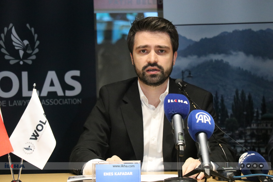
A new report by the World Organisation Against Law and State (WOLAS) has raised serious concerns over what it describes as India's systematic transformation of occupied Jammu and Kashmir through demographic engineering, military control, political repression and restrictions on fundamental freedoms.
Titled Longest Siege: Settler Colonialism and Structural Violence in Indian-Occupied Jammu and Kashmir, the report examines developments from August 2019 through 2026, arguing that India's policies have moved beyond military occupation toward a broader project that threatens the political identity, land rights and future of the Kashmiri people.
The report contends that the revocation of Jammu and Kashmir's special constitutional status in August 2019 marked a decisive turning point, paving the way for legal and administrative changes that have weakened protections for the local population.
Assessing the documented conduct against the “reasonable grounds to believe” standard used by United Nations fact-finding missions, WOLAS argues that the cumulative impact of these measures raises grave concerns under international humanitarian and human rights law. It concludes that the threshold for war crimes and crimes against humanity has been met, although these findings represent the report's legal assessment rather than a judicial ruling.
Revocation of special status raises fears over Kashmir's future
On August 5, 2019, the Indian government revoked Articles 370 and 35A of its Constitution, removing Jammu and Kashmir's special constitutional status and dismantling protections associated with residency and property rights.
According to WOLAS, the decision was taken without the consent of a representative body of the region's population. The former state was subsequently divided into two federally administered union territories, further centralizing New Delhi's control over the disputed territory.
The report argues that the changes fundamentally altered the relationship between the Kashmiri population and the territory in which it lives, raising concerns about the erosion of local political autonomy and the ability of Kashmiris to determine their own future.
Among the measures examined are new domicile rules extending residency rights to non-Kashmiris, the removal of restrictions on land acquisition by non-residents and changes to electoral constituency boundaries.
WOLAS warns that these policies could weaken the Kashmiri people's long-standing connection to their land and alter the region's demographic and political balance.
The report examines these developments in light of Article 49(6) of the Fourth Geneva Convention, which prohibits an occupying power from transferring parts of its own civilian population into occupied territory.
It also highlights disparities in electoral representation, claiming that the ratio of representation between Hindu-majority and Muslim-majority constituencies can reach as much as four to one.
The report argues that such changes risk undermining representative government and marginalizing Kashmiri voices in decisions affecting their homeland.
Military occupation and accountability concerns
WOLAS describes the military presence in Jammu and Kashmir as among the highest recorded globally relative to the population and examines the role of the Armed Forces Special Powers Act (AFSPA), which grants extensive powers to security personnel in designated areas.
According to the report, no prosecutions have been sanctioned under the law in 36 years, a situation it identifies as a major obstacle to accountability for alleged abuses.
The report also documents the deaths in custody of four senior political leaders since 2019 and the proscription of 10 local organisations under India's Unlawful Activities (Prevention) Act.
WOLAS argues that these developments have intensified concerns about political repression and the space available for peaceful opposition, independent civil society and public advocacy.
For Kashmiris seeking to defend their political rights and preserve their identity, the report suggests, the combination of extensive security powers and limited accountability creates significant barriers to justice.
Surveillance and restrictions threaten Kashmiri cultural identity
The report also raises concerns about surveillance and restrictions affecting the daily lives of Kashmiris.
It documents what it describes as an expanding surveillance infrastructure, including household-level biometric registration, and states that 4,249 books had been withdrawn from circulation by 2026.
WOLAS presents these measures as part of a broader pattern of control extending beyond security operations into cultural, intellectual and social life.
It also examines the use of tourism, cinema and staged international events to promote an image of normality in the region.
The report argues that such displays risk presenting an incomplete picture of conditions on the ground while leaving unresolved concerns over political rights, freedom of expression and local autonomy.
It emphasizes the importance of protecting Kashmir's cultural heritage and ensuring that the voices of its people are not overshadowed by official narratives.
Human rights defenders, journalists and lawyers face mounting pressure
WOLAS documents the prosecution of prominent Kashmiri human rights defenders and what it describes as the institutional displacement of the region's Bar Association.
It also alleges systematic passport denials affecting journalists, lawyers and academics, potentially restricting their ability to travel, communicate their findings and engage with international institutions.
The report argues that restrictions on these groups undermine independent scrutiny and make it harder for alleged human rights violations to be documented and brought before international bodies.
It warns that the weakening of independent legal and journalistic institutions can leave affected communities with fewer avenues to challenge abuses, seek remedies and defend their rights.
WOLAS calls for sustained international attention to the situation of Kashmiri civil society and for stronger mechanisms to support those documenting alleged violations.
Report examines India's military and security cooperation with Israel
Another section examines India's security relationship with Israel and its implications for occupied Jammu and Kashmir.
According to WOLAS, Israeli-supplied drones and weapons have been used by Indian forces, while plans have been developed for Israeli-backed agricultural centres in the territory.
The report also discusses allegations of Israeli involvement in interrogations, citing a submission made to the Metropolitan Police under the principle of universal jurisdiction.
WOLAS places these issues within a wider examination of the international partnerships that support India's security capabilities and considers their potential implications for human rights in Kashmir.
The allegations concerning Israeli involvement and the use of particular technologies require independent assessment and should not be treated as judicially established findings.
WOLAS cites international law in call for accountability
The report assesses the documented developments against international humanitarian law, the International Covenant on Civil and Political Rights, the International Covenant on Economic, Social and Cultural Rights and the Rome Statute of the International Criminal Court.
WOLAS concludes that the alleged conduct meets the threshold for war crimes and crimes against humanity. It further argues that India's domestic system is both unwilling and unable to prosecute the conduct documented in the report, invoking Article 17 of the Rome Statute.
These conclusions reflect the organisation's legal assessment and have not, on the basis of the supplied report summary, been established by a competent international court.
The report also highlights the political obstacles facing international accountability mechanisms, arguing that pressure from powerful states can undermine efforts to hold governments accountable for alleged serious violations.
For Kashmiris seeking justice, WOLAS argues, the challenge is not only documenting alleged abuses but also ensuring that credible evidence leads to meaningful scrutiny and accountability.
Seven recommendations for international action
WOLAS proposes seven parallel avenues for action that do not depend on India's consent:
The report argues that these measures could create complementary avenues for international scrutiny while helping preserve evidence and draw attention to the rights and concerns of Kashmiris.
Calls for sustained international attention
WOLAS concludes that the developments documented since 2019 demand sustained international engagement, independent monitoring and coordinated legal action.
At the centre of the report is the concern that changes to land laws, residency rules, political representation and civil liberties could have lasting consequences for Kashmir's demographic composition, cultural identity and political future.
The report calls on international institutions, governments, legal organisations and human rights advocates to examine its findings and pursue appropriate accountability mechanisms.
It argues that the rights of the Kashmiri people, including their civil liberties, cultural identity, land rights and political representation, must remain central to international discussions about the disputed territory.
For WOLAS, addressing these concerns requires moving beyond expressions of concern toward sustained efforts to document violations, protect affected communities and uphold international law. (ILKHA)
LEGAL WARNING: All rights of the published news, photos and videos are reserved by İlke Haber Ajansı Basın Yayın San. Trade A.Ş. Under no circumstances can all or part of the news, photos and videos be used without a written contract or subscription.
Senior officials from Türkiye, Saudi Arabia and Pakistan met Iranian leaders in Tehran on Monday for high-level talks focused on regional security, de-escalation efforts and ongoing crises across the Middle East, marking the first senior-level engagement between the Mecca Alliance and Iran.
The HÜDA PAR Family Affairs Directorate has called for the establishment of women-only obstetrics and gynaecology hospitals staffed entirely by female healthcare workers, saying that patient privacy and easier access to healthcare services must be protected.
Turkish Presidential Chief Adviser Oktay Saral has resigned from his position after criticising what he described as a headscarf ban in Azerbaijan, which sparked controversy between Ankara and Baku.