Türkiye–Azerbaijan joint economic commission to meet in Baku on Dec. 22–23

 13 oC

Güneşli

The 12th meeting of the Türkiye–Azerbaijan Joint Intergovernmental Commission (JIC), focusing on strengthening economic and trade cooperation between the two countries, will be held in Baku on December 22–23, 2025.
The meeting will be co-chaired by Türkiye’s Vice President Cevdet Yilmaz and Azerbaijani Prime Minister Ali Asadov, bringing together senior officials and business representatives from both sides to review existing cooperation and outline future priorities.
According to officials, bilateral and delegation-level meetings will focus on concrete steps toward achieving the trade volume target set by the presidents of Türkiye and Azerbaijan. Discussions will also address trade facilitation measures, removal of barriers, and ways to further integrate supply chains between the two closely allied countries.
As part of the program, the 2nd Türkiye–Azerbaijan Investment Forum will also be held, aiming to deepen economic ties and promote joint investment opportunities. The forum will be attended by Vice President Cevdet Yilmaz, Türkiye’s Minister of Trade Ömer Bolat, Azerbaijani Prime Minister Ali Asadov, and Azerbaijan’s Minister of Economy Mikayil Chabbarov.
Business representatives from both countries are expected to take part in meetings organized within the framework of the Independent Industrialists and Businessmen’s Association (MÜSİAD), with a focus on fostering partnerships in key sectors.
During his visit to Baku, Vice President Yilmaz is also scheduled to meet with the Speaker of Azerbaijan’s Milli Majlis, Sahiba Gafarova, to discuss parliamentary cooperation and broader bilateral relations.
Türkiye remains one of Azerbaijan’s most important trade partners. In 2024, Türkiye’s exports to Azerbaijan reached $3.1 billion, while imports from Azerbaijan amounted to $4.8 billion. Turkish investments in Azerbaijan are estimated at around $18 billion, while Azerbaijani investments in Türkiye stand at approximately $21 billion.
Economic ties are also reflected in the strong presence of businesses in both countries. Around 7,000 companies with Turkish partners operate in Azerbaijan, while about 3,100 companies with Azerbaijani partners are active in Türkiye. In addition, Turkish construction firms have completed 558 projects in Azerbaijan with a total value of $21.1 billion, playing a significant role in the country’s infrastructure development.
Officials said the protocol and action plan to be signed at the 12th JIC meeting will define a comprehensive roadmap for Türkiye–Azerbaijan cooperation across a wide range of sectors, including trade, energy, transport, healthcare, education, and culture.
The investment forum is also expected to enhance business-to-business interaction and contribute to broader regional economic cooperation, reinforcing the strategic partnership between Türkiye and Azerbaijan, often described by leaders of both countries as based on the principle of “one nation, two states.” (ILKHA)
LEGAL WARNING: All rights of the published news, photos and videos are reserved by İlke Haber Ajansı Basın Yayın San. Trade A.Ş. Under no circumstances can all or part of the news, photos and videos be used without a written contract or subscription.
Türkiye has projected a US$105 billion foreign trade deficit for 2027 under its 2027 Presidential Annual Programme, which outlines the government's economic targets for growth, inflation, employment and external trade.
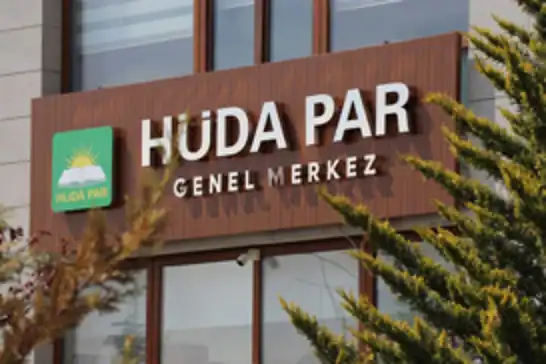
HÜDA PAR’s call for gynecology and obstetrics hospitals staffed entirely by women has reignited debate in Türkiye over patient privacy, religious sensitivities and women’s right to access healthcare in an environment that respects their beliefs and personal dignity.
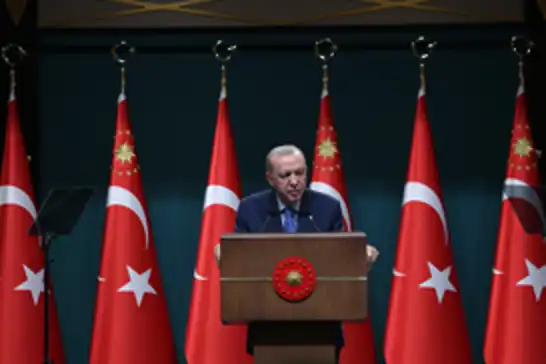
Turkish President Recep Tayyip Erdoğan said Türkiye would continue to defend its maritime jurisdiction rights and national interests in the Eastern Mediterranean, urging those seeking to exclude Ankara from the region to respect the “joint will” of Türkiye and Libya.
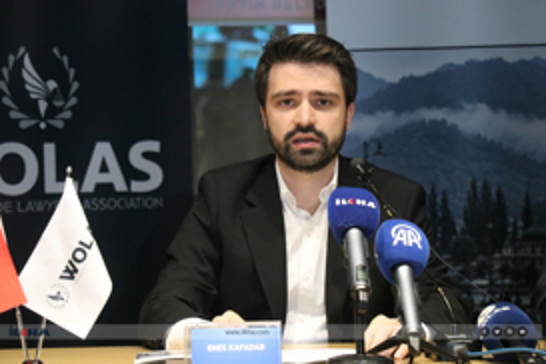
A new report by the World Organisation Against Law and State (WOLAS) has raised serious concerns over what it describes as India's systematic transformation of occupied Jammu and Kashmir through demographic engineering, military control, political repression and restrictions on fundamental freedoms.