Canada launches ‘AI for All’ strategy to create 250,000 jobs and add $200 billion in growth
 13 oC
13 oC 
Güneşli

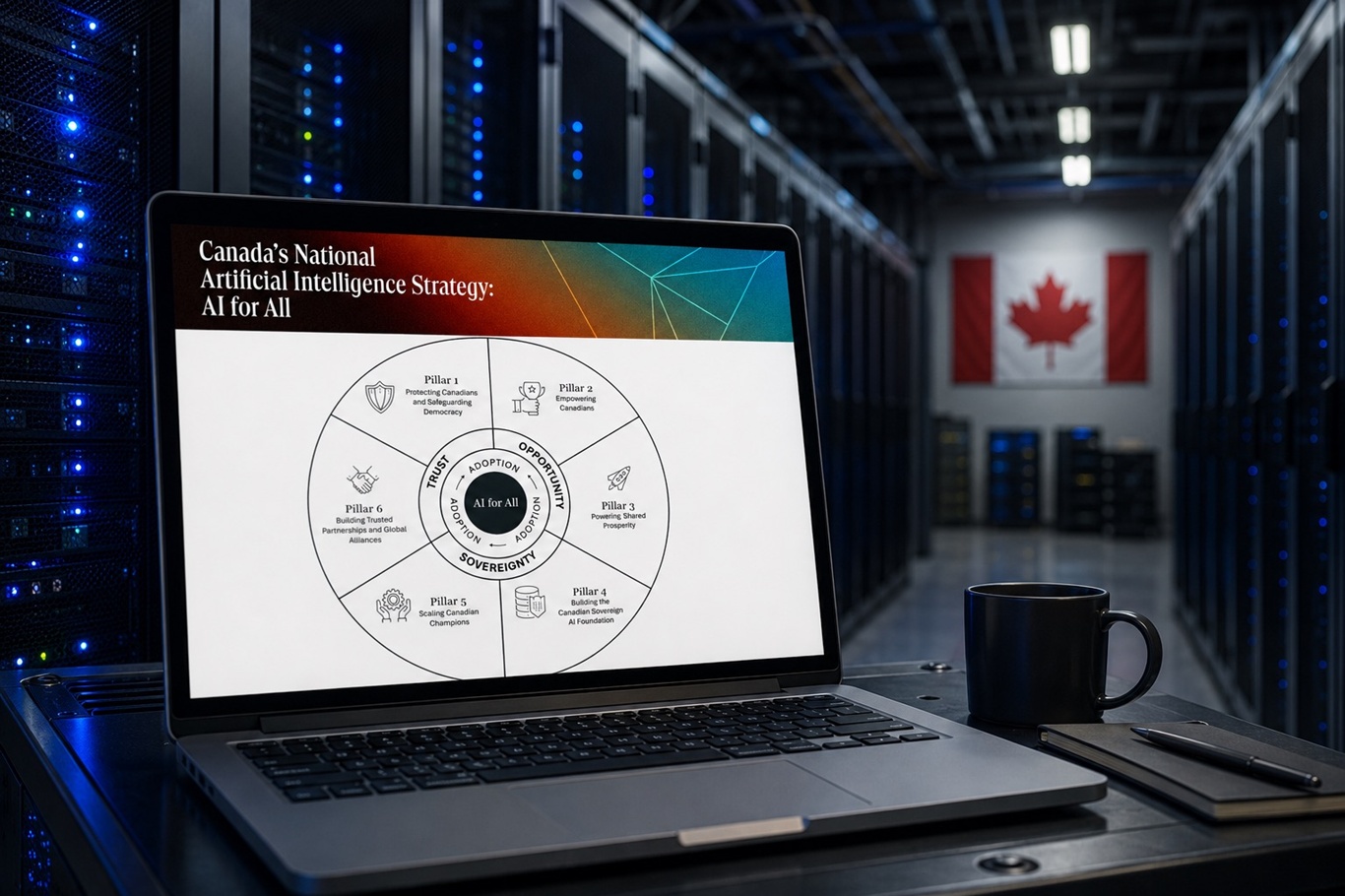
Canadian Prime Minister Mark Carney has unveiled AI for All, a comprehensive national artificial intelligence strategy aimed at transforming Canada's economy, accelerating AI adoption, and strengthening the country's technological sovereignty in an increasingly competitive global landscape.
Announcing the initiative, Carney said artificial intelligence is reshaping economies, industries, and national security worldwide, making it essential for Canada to act decisively to secure its place among global leaders in the AI era.
Despite possessing world-class researchers and one of the fastest-growing digital sectors in the G7, Canada currently lags behind many advanced economies in the widespread adoption of AI technologies. Government officials warn that failing to close this gap could weaken economic competitiveness, encourage the departure of top talent and startups, and increase foreign control over critical technological infrastructure.
The new strategy seeks to generate an additional $200 billion in economic growth over the next five years, create 250,000 new AI-related jobs, and increase AI adoption among Canadian businesses from just over 12 percent today to 60 percent by 2034.
Building Trust in Artificial Intelligence
A central pillar of the AI for All strategy focuses on ensuring Canadians can trust AI systems and the institutions deploying them.
The government plans to modernize digital legislation to address emerging risks associated with artificial intelligence, including stronger safeguards for personal data and protections against harmful practices such as deepfakes and surveillance-based pricing systems. New online safety measures are also expected to enhance protections for users of social media platforms and AI-powered chatbots.
Canada will further expand the role of the Canadian AI Safety Institute to conduct transparent evaluations of AI systems and improve public understanding of how AI technologies operate.
The strategy also emphasizes international cooperation. Through the newly established Sovereign Technology Alliance, Canada aims to attract foreign investment, promote Canadian innovation globally, and strengthen partnerships with trusted allies in areas such as research, computing infrastructure, talent development, and procurement.
Expanding Opportunities for Canadians
Another major objective of the initiative is ensuring that Canadians across all sectors can benefit from the opportunities created by artificial intelligence.
The government will establish a National AI Literacy Initiative designed to provide foundational AI education to citizens nationwide. Officials expect the program to reach one million post-secondary students while equipping more than 3,000 educators with specialized AI learning resources.
Under the strategy, every post-secondary student will gain access to trusted AI tools and assistants, regardless of their field of study, including arts, business, science, engineering, and medicine.
The government also plans to create up to 90,000 AI-related jobs, internships, and work placements for young Canadians, helping prepare the next generation of workers for an increasingly AI-driven economy.
Additional support will be directed toward small and medium-sized enterprises to accelerate AI adoption, improve productivity, and foster innovation across sectors including healthcare, energy, transportation, agriculture, manufacturing, robotics, and public services.
A flagship component of the strategy is the launch of Canada's first AI Missions Program, beginning with a healthcare initiative focused on improving diagnostics, patient care, and health-system efficiency through the responsible use of artificial intelligence.
Strengthening Canada's Technological Sovereignty
The third pillar of the strategy focuses on ensuring that Canada's AI future is built on domestic capabilities and infrastructure.
The federal government plans major investments in Canadian computing power, cloud services, connectivity, data resources, and talent development. A key project will be the construction of a world-leading public AI supercomputer designed to support researchers, businesses, and public institutions while aligning with Canada's clean energy goals and environmental standards.
Officials say the strategy will also strengthen Canadian AI companies by improving access to investment capital, government procurement opportunities, commercialization support, and intellectual property protections.
To maintain Canada's competitive edge in global talent recruitment, the government will expand investments in the Canadian Institute for Advanced Research AI Chairs program while streamlining pathways for highly skilled international workers through the Global Talent Stream.
Positioning Canada for the AI Era
The federal government describes AI for All as a long-term blueprint for converting Canada's scientific and technological strengths into economic growth, high-quality employment, improved public services, and greater national resilience.
Officials argue that by protecting privacy, investing in domestic infrastructure, supporting innovation, and expanding access to AI education, Canada can build a stronger and more sovereign digital economy while ensuring the benefits of artificial intelligence are shared broadly across society.
The strategy marks one of the most ambitious technology initiatives undertaken by Canada in recent years and reflects growing global competition to secure leadership in the rapidly evolving AI sector. (ILKHA)
LEGAL WARNING: All rights of the published news, photos and videos are reserved by İlke Haber Ajansı Basın Yayın San. Trade A.Ş. Under no circumstances can all or part of the news, photos and videos be used without a written contract or subscription.

China launched a new communication test satellite on Thursday, marking a key step in the country’s efforts to advance next-generation orbital communication technologies.
Scientists have discovered what is believed to be the world's deepest and largest collection of whale remains on the floor of the southeastern Indian Ocean, uncovering both ancient fossils and active whale-fall ecosystems that have existed for at least 5.3 million years.

Safety concerns surrounding the V-BAT military drone developed by U.S.-based defense technology company Shield AI have resurfaced after a Romanian naval officer suffered severe injuries during a training exercise in the United States.

China has put into operation what is being described as the world's first underwater data center powered entirely by offshore wind energy, marking a new step in efforts to meet the rapidly growing energy demands of artificial intelligence while reducing the environmental footprint of digital infrastructure.