China's Zhuque-2 Y-3 carrier rocket successfully launches three satellites into orbit
 13 oC
13 oC 
Güneşli

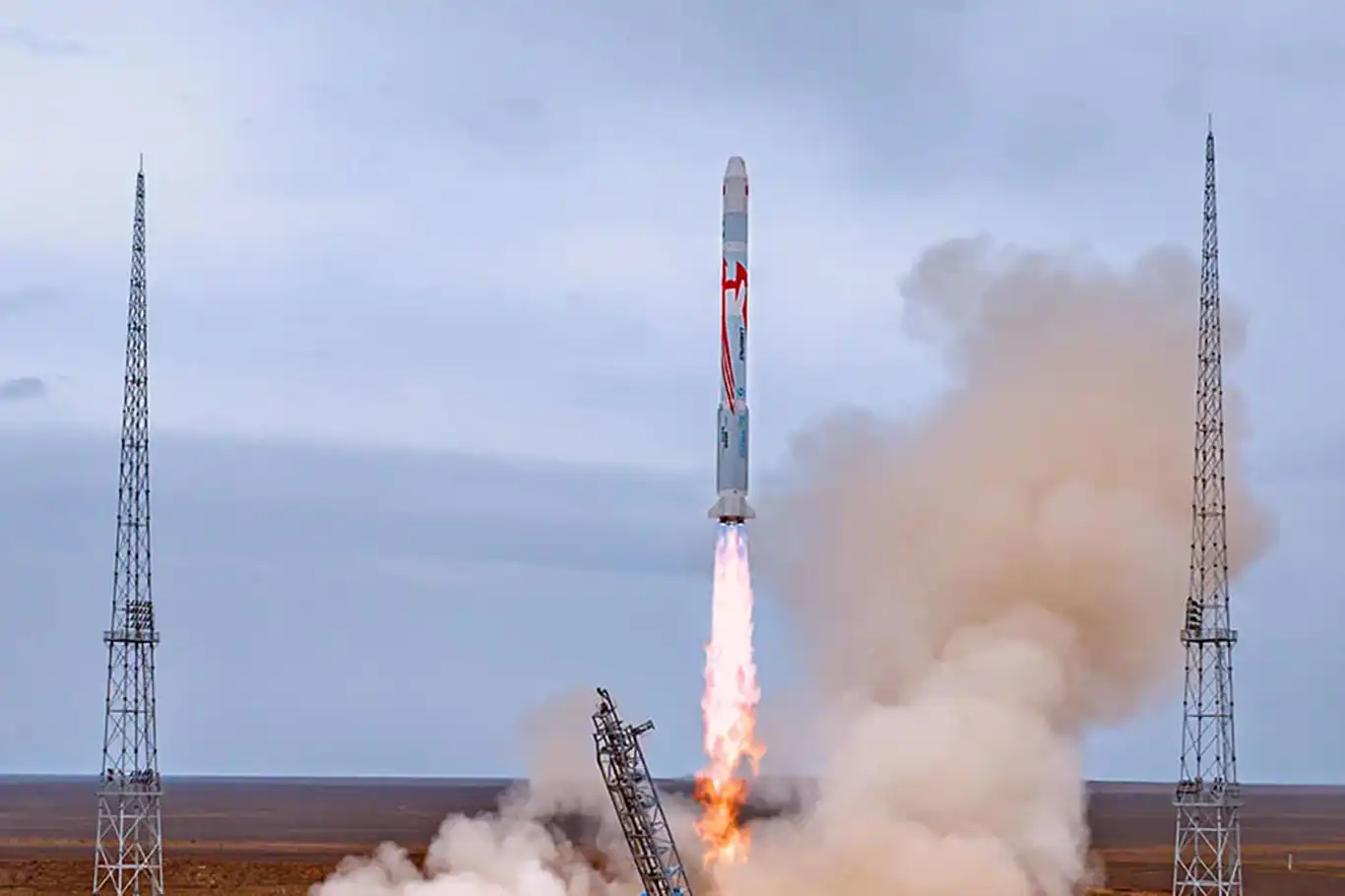
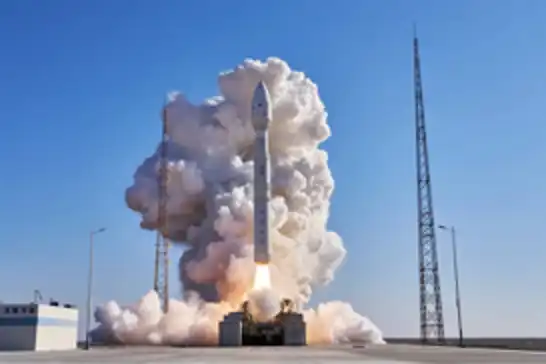
In a significant achievement for China's space program, the Zhuque-2 Y-3 carrier rocket was successfully launched from the Jiuquan Satellite Launch Center in northwest China on Saturday.
The launch, which took place at 7:39 a.m. Beijing Time, marked the third successful flight mission for the Zhuque-2 carrier rocket. The spacecraft carried three satellites—Honghu, Honghu-2, and TY-33—into their planned orbit.
This success establishes Zhuque-2 as China's first commercial liquid carrier rocket to achieve consecutive successful launches. The mission validated the technical maturity and stability of the rocket, meeting the requirements for commercial launch delivery. This achievement brings the rocket closer to the phase of mass production and delivery.
Developed independently by LandSpace, the Zhuque-2 is China's first medium and large-size liquid rocket using liquid oxygen and methane as propellants. The rocket aims to provide low-cost and highly reliable launch services to meet commercial requirements in various scenarios.
Liquid oxygen-methane fuel, a combination of liquid oxygen and methane, the primary component of natural gas, powers the Zhuque-2. With a height of 49.5 meters, a body diameter of 3.35 meters, and a takeoff weight of about 220 tonnes, the rocket boasts a takeoff thrust of approximately 268 tonnes.
For a 500-km sun-synchronous orbit, the rocket's carrying capacity is 1.5 tonnes, and an improved version can handle up to 4 tonnes for the same orbit. This capability meets the demands for low-Earth orbit satellite deployment and the launch of transport spacecraft.
In the latest mission, the Zhuque-2 Y-3 rocket successfully deployed three satellites into a sun-synchronous orbit at an altitude of 460 km. This accomplishment signifies the rocket's capability to execute a commercial multi-satellite launch mission, showcasing steady progress in the commercial operation of rockets by the developer.
Dai Zheng, deputy chief engineer and deputy chief commander of Zhuque-2, emphasized the industry trend toward large carrying capacity and low cost in the commercial space era. He highlighted the importance of achieving low-cost, large-scale manufacturing and delivery, along with continuous and stable launches, for the industrialization and commercialization of liquid rockets.
LandSpace, the developer of Zhuque-2, aims to continue building commercial launch vehicles characterized by high reliability, low cost, and large capacity. This effort supports China's construction of a low-orbit satellite network and contributes to the development of low-cost cargo transport for the space station, according to Dai. (ILKHA)
LEGAL WARNING: All rights of the published news, photos and videos are reserved by İlke Haber Ajansı Basın Yayın San. Trade A.Ş. Under no circumstances can all or part of the news, photos and videos be used without a written contract or subscription.
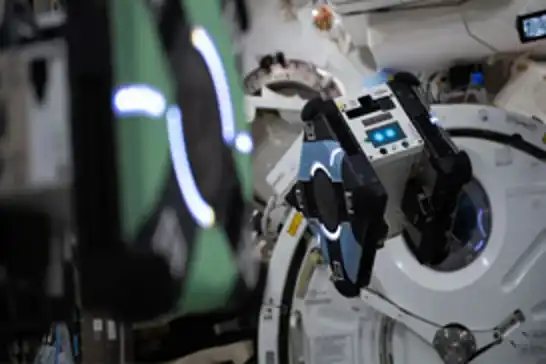
Artificial intelligence has, for the first time, been used to autonomously guide a free-flying robot aboard the International Space Station, marking a significant breakthrough in space robotics and autonomous mission operations.
China successfully placed nine satellites into orbit aboard its Lijian-1 (Kinetica-1 Y11) carrier rocket, including an Earth-observation satellite developed under the leadership of the United Arab Emirates (UAE).

A major new study by the Oxford Internet Institute and the AI Security Institute has revealed that conversational artificial intelligence systems can significantly influence people’s political beliefs, raising serious concerns about the future of democratic processes and election integrity.

The European Commission has imposed a €120 million fine on X (formerly Twitter) for multiple violations of the Digital Services Act (DSA), marking the first non-compliance decision issued under the landmark EU regulation.