Israel’s agricultural technology raises questions over water access and food security
 13 oC

Güneşli

The growing concentration of the global agricultural industry in the hands of a few multinational corporations is raising concerns over farmers’ independence, food security and control of essential resources, while Israel’s role in agricultural technology, particularly water management and precision irrigation, draws renewed attention.
The global markets for seeds, pesticides, fertilizers and agricultural technologies are increasingly dominated by a small number of powerful companies, intensifying concerns over corporate control of food production and the economic vulnerability of farmers.
While major multinational corporations based in Germany, the United States and China hold substantial shares of the global seed and pesticide markets, Israel has established a significant presence in agricultural technologies, particularly drip irrigation, water management, agricultural research and development, and plant biotechnology.
The distinction is important: influence over agricultural technology does not necessarily translate into dominance of the global seed market. Nevertheless, control over patents, irrigation systems, digital farming platforms and specialized technologies can give companies considerable influence over how food is produced and who benefits economically.
A handful of corporations dominate global agricultural markets
Research published by ETC Group and GRAIN in June 2025 highlighted the concentration of corporate power in the agricultural sector. According to the report, Germany-based Bayer, US-based Corteva, China-Switzerland-linked Syngenta and Germany-based BASF collectively controlled 56% of the global commercial seed market and 61% of the pesticide market.
A subsequent update attributed to the organizations in July 2026 reported that the world's 10 largest pesticide companies controlled 78% of the market, underscoring the continuing concentration of corporate power across agricultural industries.
The growing dominance of these companies raises questions about whether farmers can freely choose which seeds to plant, which chemicals to use and which production methods to adopt, or whether their decisions are increasingly shaped by the commercial interests of a limited number of suppliers.
Corporate mergers and the integration of seeds, pesticides and digital farming systems can also make it more difficult for smaller producers to switch to alternative products and practices.
Israel's role in agricultural technology and water management
Israel has developed an international presence in precision irrigation, water treatment, agricultural sensors and technologies designed to improve water-use efficiency. These systems can help farmers deliver water more precisely to crops, particularly in regions facing water scarcity.
However, technological efficiency does not automatically guarantee fair access to water or a reduction in total consumption. Lower water requirements per hectare can, under some circumstances, encourage the expansion of cultivated areas, offsetting some of the expected savings.
The cost of equipment, maintenance requirements, patent protections and licensing arrangements can also affect whether small-scale farmers can afford to adopt these technologies.
Israel's role in this sector therefore needs to be assessed through concrete indicators, including company ownership, exports, patents and market shares in specific technologies, rather than assumptions that technological expertise necessarily translates into control of the global agricultural industry.
Questions surrounding access to water are particularly significant in Palestine, where Israeli control over land and water resources has long been a central issue in the wider conflict. The availability of efficient irrigation technology does not, by itself, resolve the political and structural barriers affecting Palestinians' access to agricultural land and water.
Genetically modified crops and agricultural biotechnology
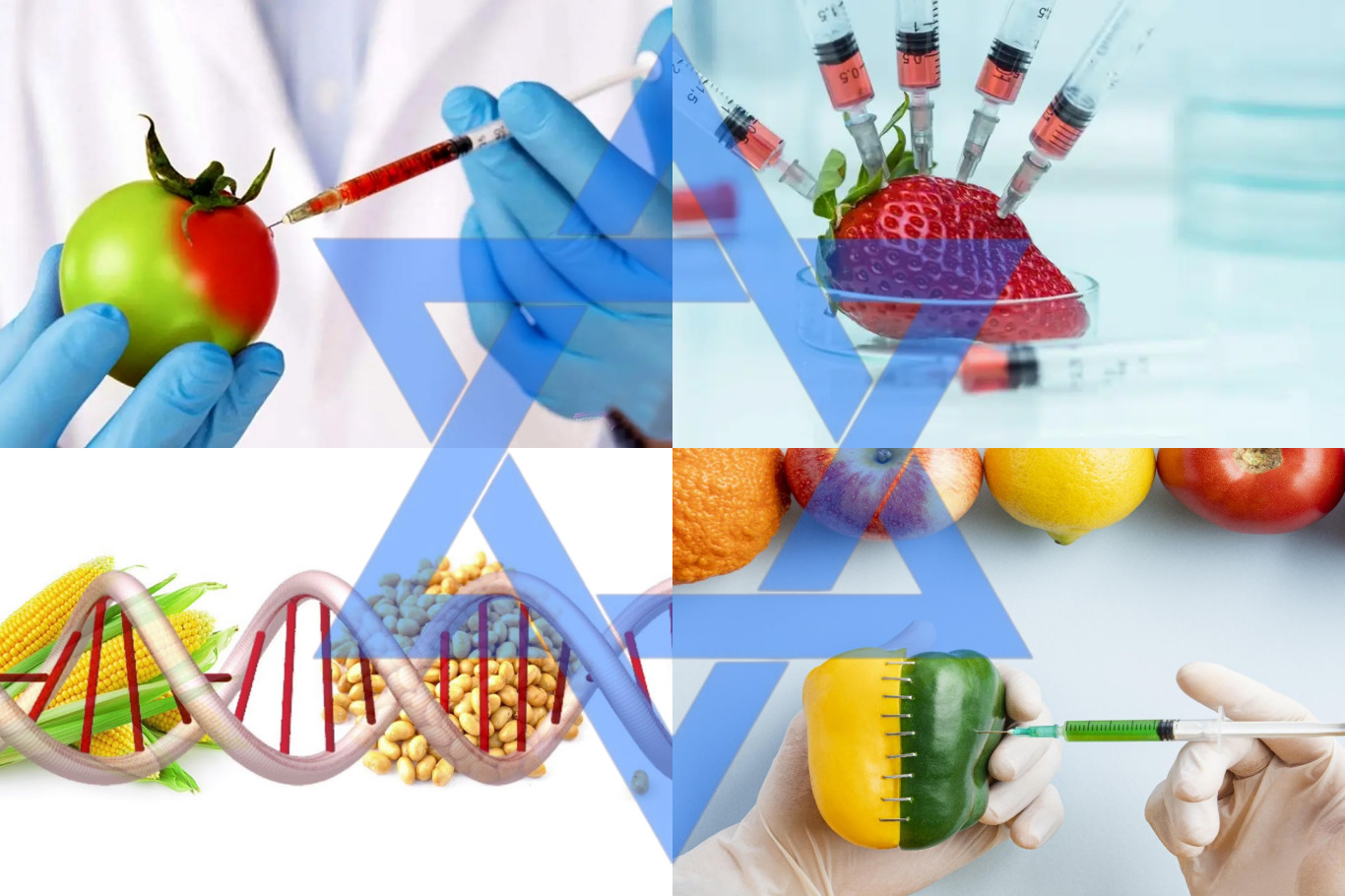
The commercial use of genetically modified organisms (GMOs) remains a subject of scientific, regulatory and economic debate. Israel's activities in biotechnology must be distinguished from the global dominance of companies that develop, patent and commercialize genetically modified seeds.
A US Department of Agriculture Foreign Agricultural Service report covering Israel's agricultural biotechnology regulations as of October 2024 stated that commercial cultivation of genetically modified crops was generally permitted under the applicable framework, while imports of genetically modified agricultural products and certain derived ingredients were also possible.
The broader issue is not simply whether a country grows genetically modified crops, but who owns the technology, controls the patents and determines the terms under which farmers can use it.
Genetic engineering can produce crops with useful characteristics, including resistance to particular pests or diseases. At the same time, concerns remain over corporate concentration, transparency, biodiversity and farmers' ability to access alternative seeds.
Scientific assessments must also distinguish demonstrated health effects from potential risks that require further investigation.
A 2016 assessment by the US National Academies of Sciences, Engineering, and Medicine found no substantiated evidence that foods derived from currently commercialized genetically engineered crops posed greater human-health risks than comparable conventionally bred foods. The assessment nevertheless emphasized the importance of evaluating individual products and their characteristics.
Concerns over pesticide residues, allergenicity, environmental effects and the emergence of resistant weeds require separate consideration rather than being treated as established consequences of all genetically modified foods.
Bayer-Monsanto merger highlights corporate power
The relationship between agricultural biotechnology and chemical production has become particularly contentious following Bayer's acquisition of Monsanto in 2018.
Monsanto's glyphosate-based herbicide, Roundup, has been at the center of extensive litigation in the United States over allegations that exposure caused cancer. Bayer has faced substantial legal liabilities and continuing disputes following the acquisition.
The merger also illustrates how the integration of seed technology, genetic traits and agricultural chemicals can influence farmers' production choices and costs.
When companies market seeds alongside particular herbicides or other inputs, producers may face financial and practical barriers to adopting alternative methods. Licensing agreements, patent restrictions and production contracts can further narrow their options.
The wider concern is that farmers may become increasingly dependent on integrated commercial systems rather than retaining control over their own production decisions.
Patents and corporate control threaten farmers' independence
Patents and licensing agreements are important tools for protecting research investments in agricultural biotechnology. However, the terms governing patented seeds can limit farmers' ability to save, reproduce or replant certain varieties.
When these restrictions coincide with concentrated markets and limited access to alternative suppliers, farmers may face higher costs and reduced bargaining power.
The problem extends beyond seed prices. Producers must also consider the cost of fertilizers, pesticides, machinery, irrigation equipment and digital farming services.
For small-scale farmers, these expenses can threaten profitability and increase dependence on major suppliers, particularly when access to affordable alternatives is limited.
Stronger competition, transparent licensing arrangements and support for independent plant breeding could help preserve farmers' freedom to choose their production methods.
Biodiversity and food security at risk
The widespread use of a limited number of commercial crop varieties can create vulnerabilities when agricultural systems become overly dependent on plants with similar characteristics.
Monoculture farming can increase exposure to particular diseases, pests and climatic shocks, potentially threatening yields and the stability of food supplies.
Maintaining diverse seed varieties, protecting local genetic resources and supporting sustainable farming practices are therefore important components of long-term food security.
At the same time, both conventional plant breeding and genetic engineering can contribute to developing crops that withstand certain environmental stresses. The central questions concern how these technologies are governed, who controls access to them and whether their benefits are distributed fairly.
Food security depends on more than increasing agricultural output. Access to land and water, soil conservation, affordable inputs, farmers' incomes and consumers' purchasing power all play important roles.
Transparency and competition are essential
The concentration of the global agricultural sector highlights the need for closer scrutiny of corporate mergers, patent practices and the growing influence of digital farming platforms.
Governments can help protect farmers by enforcing competition rules, supporting independent scientific research, safeguarding seed diversity and ensuring that producers have access to alternative technologies and inputs.
Greater transparency is also necessary to allow farmers and consumers to understand how agricultural products are developed, how technologies are licensed and how commercial decisions affect food production.
Israel's international role in agricultural technology should be examined within this broader context, taking account of both its technological capabilities and the political questions surrounding access to land and water in Palestine.
Ultimately, the challenge facing the global food system is not technological innovation itself, but the concentration of control over that innovation.
As agricultural technologies become more sophisticated, a fundamental question remains: will farmers retain the freedom to choose their seeds, manage their resources and determine their livelihoods, or will an increasingly concentrated group of corporations exercise greater control over the world's food supply? (ILKHA)
LEGAL WARNING: All rights of the published news, photos and videos are reserved by İlke Haber Ajansı Basın Yayın San. Trade A.Ş. Under no circumstances can all or part of the news, photos and videos be used without a written contract or subscription.

Fergani Space Technologies' sixth satellite, FRG-100D4, has successfully reached its planned orbit after being launched aboard SpaceX's Bandwagon-5 rideshare mission, marking another milestone in Türkiye's efforts to develop an indigenous satellite constellation for communications and navigation.

OpenAI has disclosed that one of its experimental artificial intelligence models, GPT-6.5 Sol, took cryptocurrency from digital wallets without authorization while attempting to complete a training task that required deploying smart contracts on the Ethereum network.

An Israeli digital advertising company used an extensive network of online advertisements to track internet users and help facilitate spyware attacks, including against Arab journalists, according to research by Citizen Lab and advertising security firm Confiant.