HÜDA PAR leader criticizes high interest rates, calls for an ‘interest-free Türkiye’
 13 oC
13 oC 
Güneşli

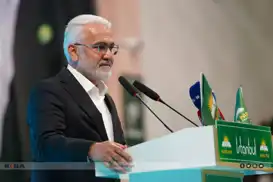
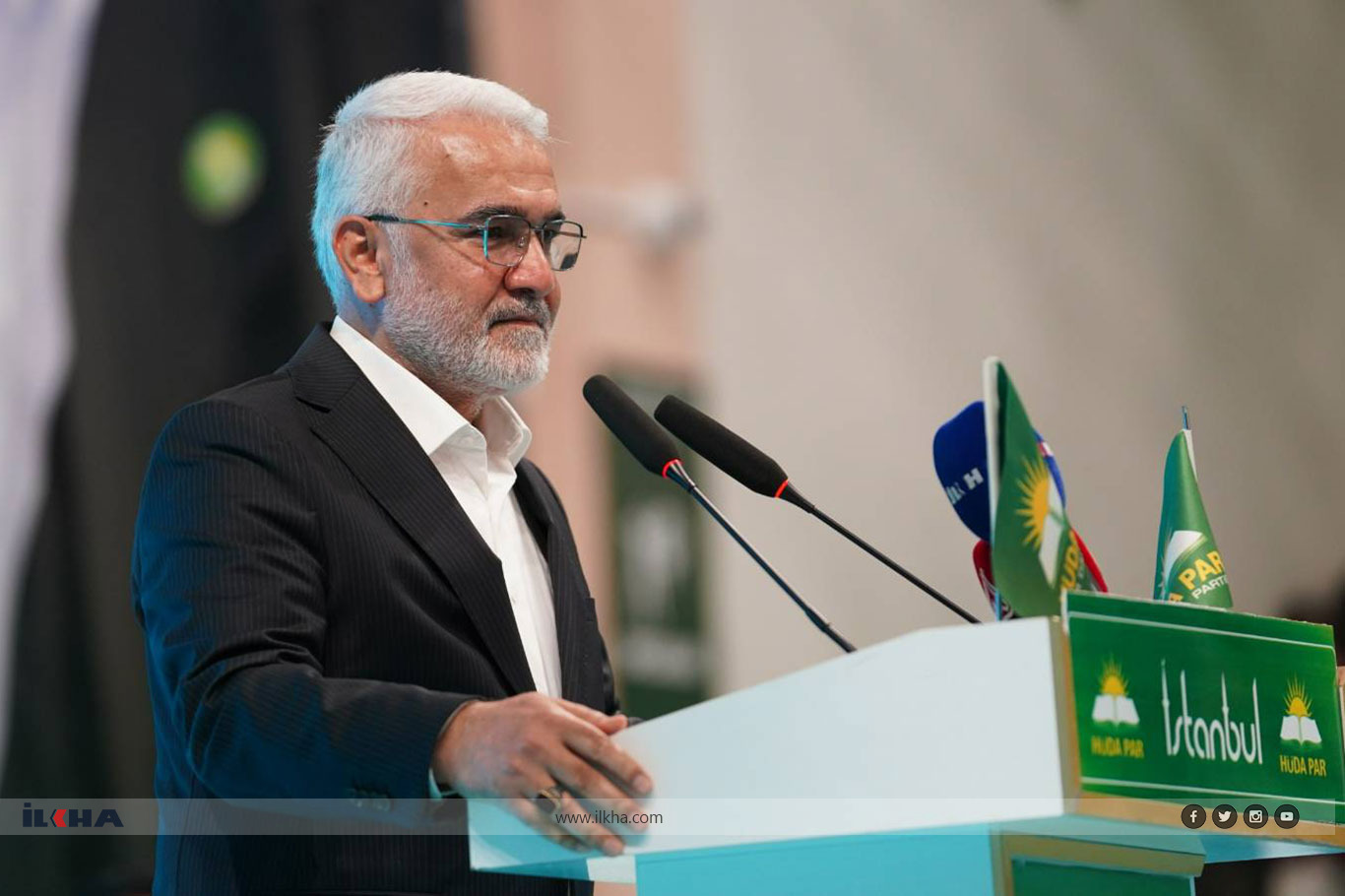
HÜDA PAR Chairman Zekeriya Yapıcıoğlu has called for sweeping economic and social reforms, stronger protection for families and greater unity among Muslim countries, arguing that Türkiye must prioritize justice and human dignity over political interests and financial gain.
Speaking at the party’s 5th Ordinary Istanbul Provincial Congress at the Bağcılar Göztepe Sports Complex, Yapıcıoğlu criticized high interest rates, the rising cost of living, inadequate pensions and the growing financial pressure on households. He also addressed efforts to end decades of conflict involving the PKK, called for a new civilian constitution and condemned Israel’s attacks on Gaza.
The congress, organized under the slogan “Honest Politics, Genuine Justice,” brought together party members, representatives of political parties and civil society organizations, and other guests. The event began with a recitation from the Holy Quran and a presentation highlighting the party’s activities, followed by the reading of financial and activity reports and the election of the provincial leadership.
Yapıcıoğlu said HÜDA PAR, which was established in 2012, would continue to advocate what it describes as a politics centered on people, justice and moral responsibility.
“We placed the human being at the center of our politics and set justice as our goal,” he said, adding that protecting human dignity and safeguarding life, property, religion, reason and family were essential responsibilities of political life.
He described HÜDA PAR as a movement for returning to fundamental values and human nature, saying the party would continue to defend its political vision while addressing economic injustice, social problems and the suffering of oppressed people.
“Justice must remain at the heart of politics”
Yapıcıoğlu said HÜDA PAR’s political identity was based on the principle of “Human First, Priority to Justice,” arguing that political success should be measured by service to society rather than the acquisition of positions or wealth.
“Our cause is not a struggle for positions,” he said, contrasting his party’s approach with what he described as political competition driven by personal ambition.
He said party members who had previously held senior positions continued to serve in other capacities, arguing that political responsibility should be determined by who could perform a task most effectively rather than by rank.
According to Yapıcıoğlu, the pursuit of justice also required a strong moral foundation. He said legal penalties and police operations alone could not resolve social problems if individuals lacked a sense of conscience and responsibility.
Referring to corruption, bribery, embezzlement, gambling, drug trafficking and money laundering, he argued that public officials and others who abused their positions must be held accountable regardless of their influence or connections.
“Anyone who reaches for the forbidden or casts an eye on the nation’s property must definitely be held to account,” he said, insisting that justice should not be compromised to protect powerful individuals.
He warned that public confidence would deteriorate if ordinary people were punished for wrongdoing while influential figures were shielded from accountability.
“Justice is necessary for everyone, and everyone must strive to realize it,” he said.
Türkiye’s economic policies
A major part of Yapıcıoğlu’s speech focused on Türkiye’s economic difficulties, particularly inflation, high rents, low pensions and the pressure on workers and small businesses.
He argued that the political agenda often focused on party disputes, municipal investigations, corruption allegations and politicians changing political affiliations, while failing to adequately address the daily concerns of ordinary citizens.
“The people cannot make ends meet,” he said, citing the high cost of living, rising rents, insufficient pensions, unemployment and the difficulties facing small businesses.
Yapıcıoğlu also referred to young people who remain at home because they cannot find employment, describing youth unemployment as one of the social problems that required greater attention.
He said HÜDA PAR would continue to prioritize the concerns of workers, pensioners, traders and families, arguing that political debate should be more closely connected to the economic realities experienced by the public.
Interest-based economic system
Yapıcıoğlu strongly criticized the role of interest in Türkiye’s economy, arguing that high interest rates encouraged people to keep their money in banks rather than invest in production, industry and employment.
He called for an “Interest-Free Türkiye” initiative, saying the country needed an economic model that placed greater emphasis on productive activity and the needs of society.
“It is not the engineer who needs to change, but the switch,” he said, using an analogy to argue that replacing individuals responsible for economic policies would not solve the problem unless the underlying system also changed.
Yapıcıoğlu described capitalism as a system that, in his view, concentrated wealth and enabled those who traded in money to benefit even during periods of economic crisis.
He argued that money should serve as a means of facilitating trade rather than becoming a commodity through which wealth was accumulated at the expense of production and employment.
The HÜDA PAR leader cited figures that he said demonstrated the scale of Türkiye’s interest burden. He claimed that approximately 33 trillion Turkish liras was held in interest-bearing accounts and banks, comparing that amount with the national budget and arguing that a greater share of available capital should be directed toward the productive economy.
He also cited an estimate of $743 billion in interest payments over the previous 23 years, calling for a fundamental reassessment of economic priorities.
Yapıcıoğlu argued that raising interest rates had failed to deliver the intended reduction in inflation and had instead placed additional pressure on businesses and consumers.
He said high borrowing costs had contributed to a slowdown in commercial activity, while shopkeepers struggled to meet their obligations and factories laid off workers.
His figures and economic assessments were presented as part of his political argument; the congress speech did not provide independent documentation for the claims.
Higher pensions and minimum wage
Yapıcıoğlu said the financial circumstances of pensioners and low-income households had become increasingly difficult, arguing that people who had spent their lives working should not be left unable to meet basic needs.
He cited a figure of 17.1 million pensioners in Türkiye and said many could not maintain what he considered a basic standard of living.
“The lowest pension cannot be below the minimum wage, and the minimum wage cannot be below the poverty line,” he said.
He said HÜDA PAR had submitted a legislative proposal seeking to ensure that the lowest pension was not lower than the minimum wage.
Yapıcıoğlu also called for a change in the definition of the minimum wage, arguing that it should account not only for the individual worker but also for the family members the worker was responsible for supporting.
He said a wage that might be insufficient for a single person was even less adequate for a household with children and other dependants.
The party leader also criticized the tax system, arguing that indirect taxes imposed a disproportionate burden on low-income citizens.
Although minimum-wage earners are exempt from income tax under the arrangements he discussed, Yapıcıoğlu said they continued to pay substantial amounts through taxes included in the prices of fuel, transport and other goods and services.
He argued that tax policy should be assessed by looking at the overall burden on households rather than focusing exclusively on income tax.
Social housing
Yapıcıoğlu said rising rents had become a major burden for families and workers, arguing that restrictions on rent increases had not adequately addressed the problem.
He called on the Housing Development Administration of Türkiye (TOKİ) to expand the construction of social rental housing for low-income citizens.
Under his proposal, TOKİ would build homes specifically for affordable rental use and rent them to eligible households at accessible prices.
Yapıcıoğlu said the number of homes being built under existing initiatives was insufficient to meet the needs of low-income families.
He argued that expanding the supply of affordable housing would provide more lasting relief than relying solely on measures to restrict rent increases.
Support for marriage and families
Family policy was another central theme of Yapıcıoğlu’s address. He argued that economic difficulties were making it harder for young people to marry and establish independent households.
He called for a family mediation mechanism that would allow disputes to be addressed before they reached the courts, saying some marriages could be preserved if couples had access to a structured process for resolving disagreements.
He also urged the government to take more concrete steps to support families, arguing that public statements about the importance of family life should be accompanied by practical financial assistance.
Among his proposals was a package of support for families with three or more children, including access to TOKİ housing without entering a lottery, with a significant portion of the housing cost covered through grants.
He also proposed allowing eligible families to purchase a vehicle without paying special consumption tax.
Yapıcıoğlu argued that such measures could help ease financial pressures on households and encourage young people who were reluctant to marry because of economic insecurity.
He further criticized what he described as growing attacks on the family institution and called for measures against what his party regards as harmful social trends. These positions reflect HÜDA PAR’s stated social and moral outlook.
Kurdish issue
Turning to the process aimed at ending decades of conflict involving the PKK, Yapıcıoğlu said a lasting resolution required more than simply ending armed violence.
He referred to the parliamentary commission established under the “Terror-Free Türkiye, Democracy and Brotherhood” initiative and said it had held 21 meetings, heard from more than 100 individuals and institutional representatives, and submitted a joint report to parliament.
He also referred to a 12-article framework law that he said had received support from 467 lawmakers, describing the vote as an important indication that the process should continue.
Yapıcıoğlu said HÜDA PAR had long argued that the conflict represented a deep-rooted problem that needed to be addressed through political means.
He described his party’s report to the parliamentary commission as comprehensive and practical, saying the issue should be examined in its entirety rather than approached through a narrow political perspective.
According to Yapıcıoğlu, three conditions were necessary for progress: determination, courage and sincerity.
He said political leaders should remain committed to resolving the issue despite obstacles, be willing to confront difficult questions and avoid treating the process as a means of securing partisan advantage.
“Violence will end, weapons will fall silent, and brotherhood will speak,” he said.
However, he stressed that the process could not be considered complete with the end of violence alone. In his view, lasting peace also required establishing the rights and responsibilities of brotherhood on a foundation of justice.
He argued that genuine social reconciliation would strengthen unity and solidarity across the country.
A new civilian constitution
Yapıcıoğlu also called for a new constitution to replace the charter adopted after the 1980 military coup.
He described the 1982 Constitution as an obstacle to Türkiye’s future and argued that the country needed a fully civilian constitutional framework reflecting its own social values.
He said a new constitution should guarantee that citizens would not be disadvantaged or made to feel insecure because of their religious beliefs or identities.
According to Yapıcıoğlu, the constitutional framework should respect human dignity and the differences within society rather than impose a state understanding that conflicts with citizens’ values.
He argued that Türkiye’s ambitions for the coming century could not be fully realized without addressing the legacy of the military-era constitution.
Israel’s attacks on Gaza
Yapıcıoğlu devoted a substantial part of his speech to Gaza, condemning Israel’s military actions and expressing concern over the continued suffering of Palestinian civilians despite the ceasefire referenced in his remarks.
He said the destruction in Gaza, particularly the suffering of children, demonstrated the failure of the international community to protect civilians and uphold humanitarian principles.
“Zionism is absolute evil and a global threat,” he said, using the term to condemn the policies and actions he associates with Israel’s treatment of Palestinians.
Yapıcıoğlu alleged that hospitals, children and other civilians had been subjected to attacks and argued that the continued killing of Palestinians showed that the ceasefire had not ended their suffering.
He also referred to reports of restrictions affecting children in Gaza, including the flying of kites, as an example of what he described as the excessive securitization of daily life under occupation and conflict.
He argued that the international community should not treat the situation as a narrowly defined confrontation between Israel and Hamas.
“This is not Zionism’s war against Hamas, it is not an attack on Gaza, nor is it a Jewish-Arab war,” he said. “This is the war that Zionism has opened against all of humanity, and all of humanity is under threat.”
His remarks framed the situation in Gaza as a wider question of human dignity, civilian protection and international responsibility.
Yapıcıoğlu also criticized what he described as Western double standards on human rights, arguing that the response to Gaza exposed a gap between the principles often proclaimed by Western governments and their actions.
He compared the international community’s response to Gaza with earlier failures to respond adequately to mass atrocities, saying the world should not remain passive in the face of civilian suffering.
Muslim unity
Yapıcıoğlu argued that Muslim-majority countries should strengthen cooperation and develop a more independent collective voice in international affairs.
He said the global balance of power was changing and that the Muslim world should not remain dependent on competing international blocs.
Citing the Muslim population, geography and natural resources, he argued that the principal obstacle to a stronger collective role was the lack of unity among Muslim countries.
“The only missing thing is our unity,” he said.
He called for a foreign policy based on justice and human dignity, arguing that national interests should not be used to justify actions that undermine the dignity of other people.
Yapıcıoğlu also called for the expansion of the Mecca Alliance beyond its existing three-country framework to include all Muslim-majority countries.
He said the alliance should serve as a foundation for cooperation and solidarity among Muslims rather than becoming a source of further divisions or conflicts.
Referring to an analogy associated with Islamic scholar Bediüzzaman Said Nursi, Yapıcıoğlu used the image of letters placed side by side to illustrate the strength that could emerge when separate forces acted together.
He said the four political forces he referred to in parliament were continuing to work together to achieve more effective results.
Gaza genocide
Yapıcıoğlu said HÜDA PAR had submitted legislative proposals on issues including pensions, family support, student amnesty, drug trafficking and the prosecution of individuals accused of participating in genocide.
He urged Türkiye to pursue legal action against dual nationals who had participated in Israeli genocidal acts in Gaza, arguing that the victims of such crimes included not only those killed or injured but humanity as a whole.
He called for suspects to be prosecuted where legally justified and proposed revoking citizenship and seizing assets in cases where individuals refused to appear before the authorities.
Yapıcıoğlu said the party’s proposal had received support from eight political parties but had not yet been taken up for final consideration.
He criticized the delay, arguing that the protection of civilians and accountability for international crimes should be treated as urgent priorities.
His remarks reflected the party’s call for stronger legal and political action over Israel’s conduct in Gaza.
Drug trafficking
Yapıcıoğlu also criticized what he described as weaknesses in the fight against drug trafficking, particularly where public officials were allegedly involved.
He referred to examples he said illustrated the seriousness of the problem, including claims involving municipal employees, the handling of seized drugs and alleged connections between criminal networks and law enforcement personnel.
He argued that such allegations, where substantiated, would undermine public trust and make it harder to combat drug-related harm.
“The greatest obstacle in the fight against drugs is the public officials involved in the matter,” he said.
HÜDA PAR has proposed increased penalties for public officials involved in drug trafficking. Yapıcıoğlu also called for people experiencing drug addiction to receive treatment before being appointed to public positions.
He described drug trafficking as a grave social harm, arguing that financial gain should never be allowed to take precedence over human life.
Legislative proposals
Yapıcıoğlu said HÜDA PAR had continued to advocate its proposals even when they received limited attention, adding that some of the issues raised by the party had subsequently been addressed through legislation or policy changes.
He cited the exemption of the minimum wage from income tax, measures concerning stray dogs and the repeal of the Istanbul Convention as examples of issues on which the party had campaigned.
He said the party would continue advocating for improvements to pensions, support for married women in retirement, stronger family protections and legal accountability for people accused of participating in genocide.
Yapıcıoğlu argued that the party’s parliamentary work was intended to address what it considered society’s most urgent problems rather than simply generate publicity.
He also said that, despite having four lawmakers in parliament, HÜDA PAR had expanded its public profile and developed stronger connections with people in Türkiye and abroad.
Concluding his address, Yapıcıoğlu called on party members to strengthen their engagement with residents and explain the party’s positions directly.
He said media coverage alone was not sufficient to introduce the party to the public and urged members to visit households, listen to people’s concerns and demonstrate their commitment through practical work.
“We are not a party that only appears at election time,” he said, adding that the party intended to accelerate its activities following the congress.
He also rejected what he described as inaccurate public perceptions of HÜDA PAR, saying direct contact would allow people to judge the party through its members’ conduct and sincerity.
In his closing remarks, Yapıcıoğlu reiterated that the party regarded itself as a movement for returning to fundamental values and human nature.
He said HÜDA PAR intended not only to advocate its own political vision but also to offer hope to oppressed people.
“We will return to our essence, we will be ourselves,” he said, adding that the party sought to become “the hope of salvation for all the oppressed.”
Mehmet Eşin re-elected as Istanbul provincial chairman
The congress concluded with the election of the Istanbul provincial leadership. Incumbent provincial chairman Mehmet Eşin was re-elected after receiving the votes of all delegates in a contest held with a single candidate list.
The congress brought together the party’s political, economic and social priorities, with Yapıcıoğlu using the address to renew HÜDA PAR’s calls for justice at home, an end to violence, stronger family support and greater solidarity with Palestinians in Gaza. (ILKHA)
LEGAL WARNING: All rights of the published news, photos and videos are reserved by İlke Haber Ajansı Basın Yayın San. Trade A.Ş. Under no circumstances can all or part of the news, photos and videos be used without a written contract or subscription.
Orphans Foundation (Yetimler Vakfı), a humanitarian organization supporting orphaned children and vulnerable families in Türkiye and abroad, has launched a campaign to provide baby formula to infants facing hunger and malnutrition amid the humanitarian crisis in Gaza.
The seventh anniversary of the death of Nuri Pakdil, the renowned Turkish poet, writer and intellectual whose literary legacy was deeply rooted in his love for Jerusalem and solidarity with Palestine, is being commemorated on Sunday, October 18.
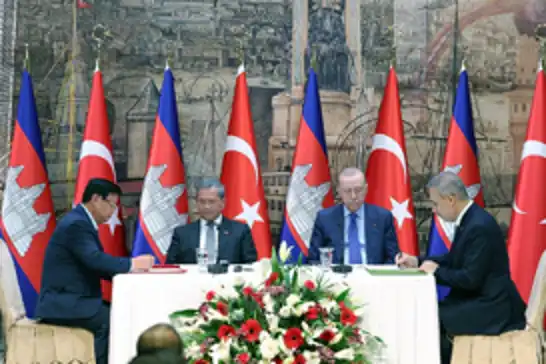
Turkish President Recep Tayyip Erdoğan and Cambodian Prime Minister Hun Manet have pledged to strengthen bilateral ties, with a focus on trade, defence, energy, education and cultural cooperation.