Japan prepares to launch world’s first wooden satellite to combat space pollution
 13 oC
13 oC 
Güneşli

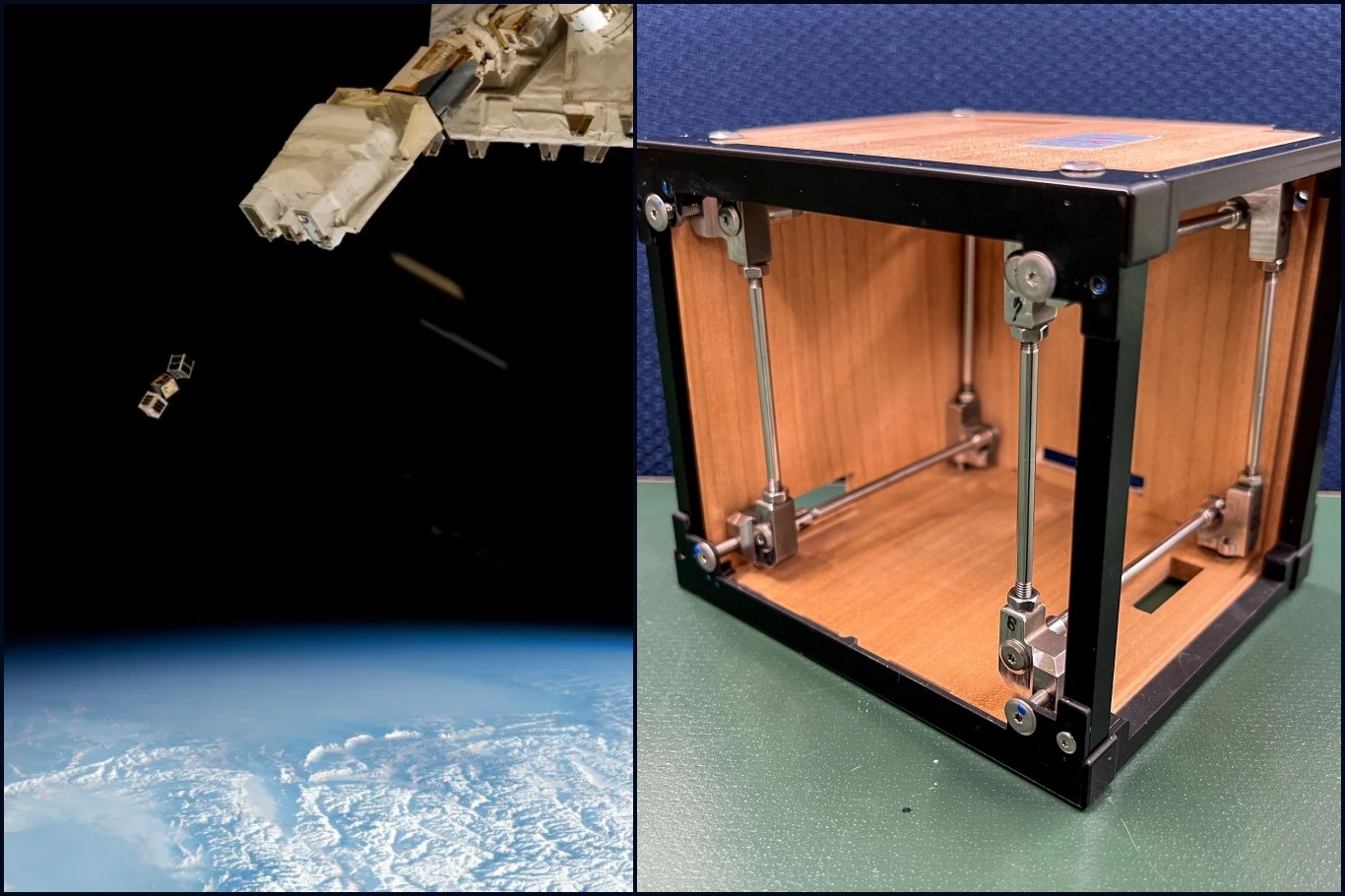
Japan is preparing to launch the world’s first wooden satellite this year, a pioneering project aimed at reducing space pollution caused by conventional metal satellites.
The satellite, named LignoSat, has been developed through a collaboration between Kyoto University researchers and Sumitomo Forestry. Made primarily from magnolia wood, the small satellite is designed to test whether biodegradable materials can serve as viable alternatives to metals in space technology.
Addressing the growing problem of space debris
One of the project’s central motivations is environmental. Traditional satellites, when re-entering Earth’s atmosphere, burn up and release fine aluminum oxide (alumina) particles. Scientists have warned that these microscopic particles can remain suspended in the upper atmosphere for extended periods, potentially affecting atmospheric chemistry and environmental balance.
Japanese astronaut and aerospace engineer Takao Doi has previously highlighted concerns about such particles accumulating in the atmosphere over time.
By contrast, a wooden satellite is expected to burn up more cleanly upon re-entry, potentially reducing the long-term environmental footprint of satellite missions.
Can wood survive space?
At first glance, using wood in space may appear unconventional. However, project leader Koji Murata explained that the concept is based on scientific research rather than symbolism.
Studies published in the journal Earth, Atmospheric and Planetary Sciences indicate that certain types of wood can withstand harsh space conditions without significant structural degradation. Wood samples exposed to the space environment aboard the International Space Station for nearly a year reportedly showed no major deterioration.
Researchers attribute this resilience to the absence of oxygen and living organisms in space—two primary causes of wood decay on Earth.
Traditional craftsmanship meets modern space technology
According to information shared by NASA, the final design of LignoSat incorporates 10-centimeter honoki magnolia panels assembled using traditional Japanese woodworking techniques. This approach merges advanced aerospace engineering with centuries-old craftsmanship.
Once launched, LignoSat will be subjected to extreme temperature variations, vacuum conditions and radiation exposure. One of its key missions is to measure structural deformation and assess how wooden materials behave under prolonged orbital stress.
Murata noted that while wood can be stable and durable along one grain direction, it may be susceptible to dimensional changes or cracking along another. The satellite will collect data to evaluate these characteristics in orbit.
Toward sustainable space exploration?
If successful, the LignoSat initiative could open the door to wider use of biodegradable materials in satellite production. As the number of satellites in orbit increases rapidly, concerns over space debris and atmospheric contamination continue to grow.
Japan’s wooden satellite project signals an attempt to reconcile technological advancement with environmental responsibility — potentially marking the beginning of a more sustainable era in space exploration. (ILKHA)
LEGAL WARNING: All rights of the published news, photos and videos are reserved by İlke Haber Ajansı Basın Yayın San. Trade A.Ş. Under no circumstances can all or part of the news, photos and videos be used without a written contract or subscription.

Google has suffered a significant legal setback after Europe's highest court upheld a multi-billion-euro antitrust penalty imposed by the European Union over the company's Android business practices, marking a major victory for European regulators in their efforts to curb the power of Big Tech.

The Australian government announced on Saturday that it will significantly strengthen its landmark social media minimum age law by doubling the maximum penalty for non-compliant platforms to $99 million.
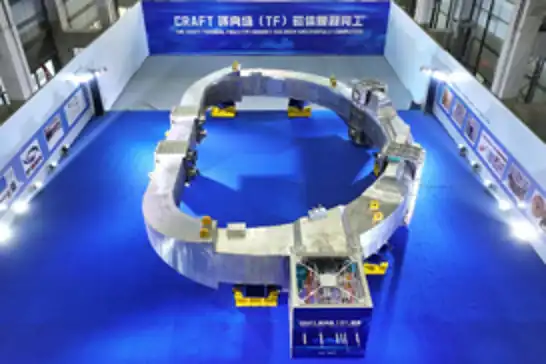
China has announced a significant advance in its quest to develop fusion energy, often described as the "holy grail" of clean power generation, after successfully completing development and testing of two critical superconducting magnet systems for a next-generation fusion reactor.

Chinese researchers have developed a ceramic-based lithium-ion microbattery capable of operating under extreme temperatures, a breakthrough that could expand the use of energy storage systems in harsh environments.