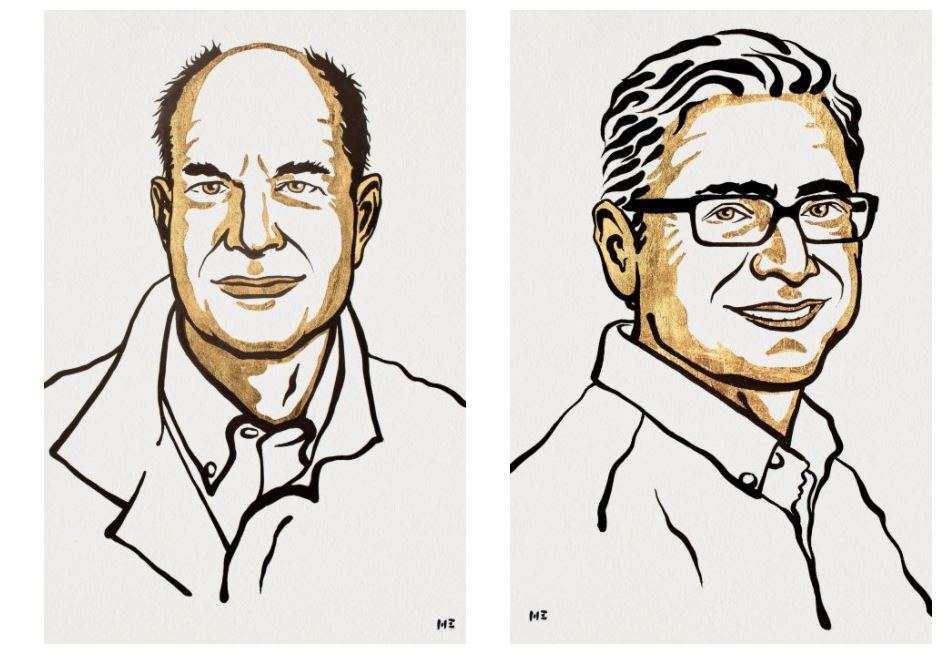
Nobel Prize in Medicine goes to U.S. scientists David Julius and Ardem Patapoutian
 13 oC
13 oC 
Güneşli

The Nobel Prize in Physiology or Medicine 2021 was awarded jointly to David Julius and Ardem Patapoutian “for their discoveries of receptors for temperature and touch”, announced Monday by Thomas Perlmann, secretary-general of the Nobel Committee.
“The 2021 Nobel Prize in Physiology or Medicine has been awarded jointly to David Julius and Ardem Patapoutian “for their discoveries of receptors for temperature and touch,” the Nobel Assembly tweeted.
BREAKING NEWS:
The 2021 #NobelPrize in Physiology or Medicine has been awarded jointly to David Julius and Ardem Patapoutian “for their discoveries of receptors for temperature and touch.” pic.twitter.com/gB2eL37IV7
The seminal discoveries by this year’s Nobel Prize laureates have explained how heat, cold and touch can initiate signals in our nervous system. The identified ion channels are important for many physiological processes and disease conditions.
David Julius was born in 1955 in New York, USA. He received a Ph.D. in 1984 from University of California, Berkeley and was a postdoctoral fellow at Columbia University, in New York. David Julius was recruited to the University of California, San Francisco in 1989 where he is now Professor.
Ardem Patapoutian was born in 1967 in Beirut, Lebanon. In his youth, he moved from a war-torn Beirut to Los Angeles, USA and received a Ph.D. in 1996 from California Institute of Technology, Pasadena, USA. He was a postdoctoral fellow at the University of California, San Francisco. Since 2000, he is a scientist at Scripps Research, La Jolla, California where he is now Professor. He is a Howard Hughes Medical Institute Investigator since 2014. (ILKHA)
LEGAL WARNING: All rights of the published news, photos and videos are reserved by İlke Haber Ajansı Basın Yayın San. Trade A.Ş. Under no circumstances can all or part of the news, photos and videos be used without a written contract or subscription.
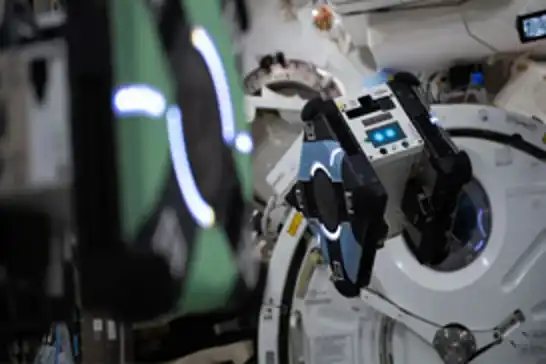
Artificial intelligence has, for the first time, been used to autonomously guide a free-flying robot aboard the International Space Station, marking a significant breakthrough in space robotics and autonomous mission operations.
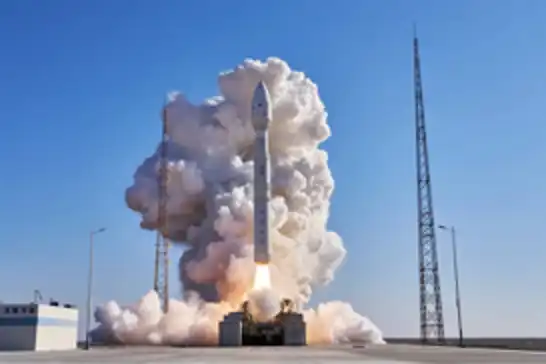
China successfully placed nine satellites into orbit aboard its Lijian-1 (Kinetica-1 Y11) carrier rocket, including an Earth-observation satellite developed under the leadership of the United Arab Emirates (UAE).
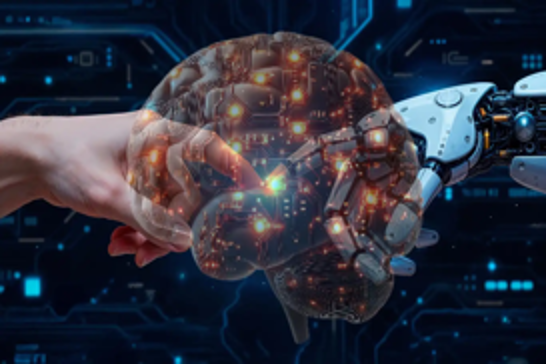
A major new study by the Oxford Internet Institute and the AI Security Institute has revealed that conversational artificial intelligence systems can significantly influence people’s political beliefs, raising serious concerns about the future of democratic processes and election integrity.

The European Commission has imposed a €120 million fine on X (formerly Twitter) for multiple violations of the Digital Services Act (DSA), marking the first non-compliance decision issued under the landmark EU regulation.