Tim Hortons app shares sensitive user data with Israeli cybersecurity firm, investigation reveals

 13 oC

Güneşli

The popular Tim Hortons mobile app is transmitting extensive information about users' devices to an Israeli-founded cybersecurity company, raising fresh concerns about digital privacy, data collection and the potential for device tracking, according to recent investigations.
A CBC Marketplace investigation published on November 13 found that the Canadian coffee chain's app begins transmitting detailed device information to third-party companies as soon as it is opened.
Tests conducted by University of Calgary computer science researcher Joel Reardon and his team found that the information included unique device identifiers, hardware specifications, camera details, lists of device sensors, ringtone and alarm names, and the names of nearby Wi-Fi networks.
Researchers warned that the combination of these details could create a digital fingerprint, allowing individual devices to be recognised and potentially tracked over time.
The identity of the overseas company receiving the information was subsequently revealed by Canadians for Justice and Peace in the Middle East (CJPME), which published further findings on November 17.
According to CJPME, the company is Forter, an Israeli-founded cybersecurity and fraud-prevention firm whose founders are former members of Israel's military intelligence Unit 8200.
CJPME said it contacted Reardon to establish the identity of the company after CBC's investigation raised concerns about the data being transmitted without naming the recipient or its location.
The organisation questioned why information such as device identifiers, camera specifications and nearby Wi-Fi networks was being shared with a company whose founders have backgrounds in Israeli military intelligence.
It also called on Tim Hortons to end its relationship with Forter, citing concerns over the company's connections to Unit 8200, which has faced scrutiny over its role in surveillance operations targeting Palestinians.
Responding to CBC Marketplace, Tim Hortons said the information collected by the third-party provider was used exclusively for fraud prevention, account protection and payment abuse prevention, rather than marketing or advertising.
The company said the data helped identify unfamiliar devices accessing customer accounts and detect attempts by malicious actors to impersonate users.
Tim Hortons also said the third-party provider was prohibited from selling the information and maintained that it did not sell customers' personal data to third-party companies or data brokers.
However, privacy concerns remain over the volume and nature of the information being transmitted, particularly whether such extensive device data is necessary to protect customers' accounts.
The latest findings have revived scrutiny of Tim Hortons' data collection practices following a major privacy scandal in 2022.
A joint investigation by Canada's federal and provincial privacy authorities found that the company's mobile app had collected users' precise location data every few minutes, even when the app was closed.
The investigation found that the information could be used to determine users' home and workplace locations, track their movements and identify visits to competing businesses.
The privacy watchdogs concluded that the collection of such extensive location information violated Canadian privacy laws and that users had not provided meaningful consent.
Tim Hortons subsequently stopped collecting the location data in August 2020 and agreed to delete the information and implement stronger privacy safeguards. In June 2023, Canada's federal privacy commissioner confirmed that the company had fulfilled its commitments arising from the investigation.
The latest findings have once again raised questions about how much personal information mobile applications collect and share with outside companies, often without users fully understanding the extent of the data involved. (ILKHA)
LEGAL WARNING: All rights of the published news, photos and videos are reserved by İlke Haber Ajansı Basın Yayın San. Trade A.Ş. Under no circumstances can all or part of the news, photos and videos be used without a written contract or subscription.
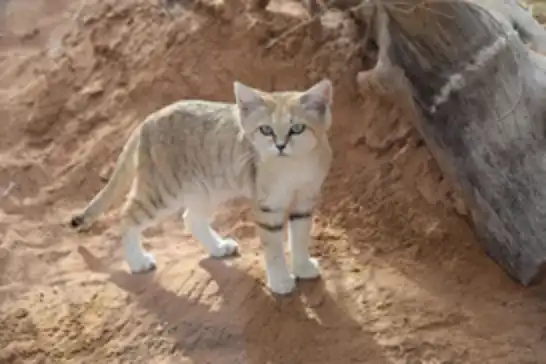
Scientists have confirmed the presence of the elusive sand cat (Felis margarita) in southwestern Tunisia for the first time in nearly a century, offering a rare glimpse of one of the desert’s most secretive wild felines.

The United States and nine partner countries have signed an agreement to strengthen the security of critical technologies and supply chains underpinning artificial intelligence (AI), as Washington seeks to reinforce its technological position amid intensifying global competition.

Google has announced a $17 billion investment to build its first data centre in Wyoming, as the technology giant expands its digital infrastructure to meet growing demand for artificial intelligence and cloud computing.