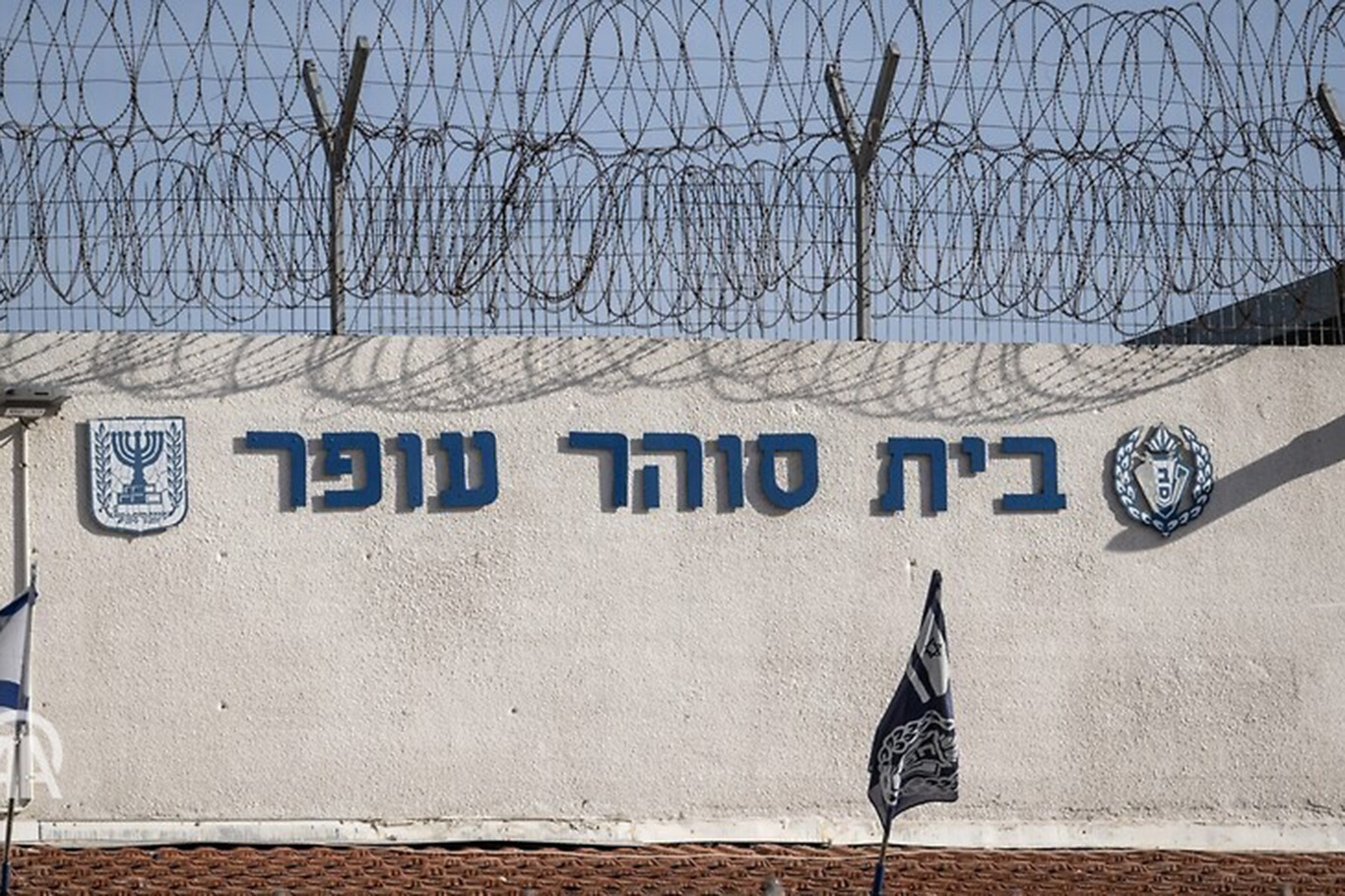
92 Palestinian prisoners martyred in Israeli custody over three years
 13 oC
13 oC 
Güneşli

Palestinian prisoners' organizations have warned that Israel's detention system has become a central instrument of repression against Palestinians, documenting the deaths of 92 identified prisoners in Israeli prisons and detention camps.
The organizations said in a report issued Tuesday marking three years since the beginning of Israel's devastating war on the Gaza Strip that the 92 identified prisoners represent nearly 28 percent of all documented Palestinian prisoner deaths since 1967.
The total number of documented Palestinian prisoners who have died in Israeli custody has now reached 329, according to the report.
The organizations stressed that the published figure does not reflect the full scale of the deaths. More than 100 Palestinian prisoners are believed to have died during the past three years, while the identities and circumstances surrounding the deaths of dozens remain unresolved.
At the same time, Israel continues to withhold the bodies of around 100 Palestinian prisoners who died in custody, according to the organizations.
The fate of numerous Palestinians detained from Gaza also remains unknown, with prisoners' groups accusing Israel of deliberately concealing the whereabouts and conditions of detainees and preventing meaningful independent oversight.
More than 26,000 Palestinians have been arrested in the occupied West Bank and occupied Jerusalem since the beginning of Israel's war on Gaza, according to the report.
The figure does not include thousands of Palestinians detained from Gaza, where documenting arrests has been extremely difficult because of Israel's military operations, restrictions on information and the lack of access to detention facilities.
The sweeping arrest campaign has reached deep into Palestinian society, targeting women, children, elderly people, sick and injured Palestinians, journalists, human rights workers and ordinary civilians.
More than 800 Palestinian women have been arrested or detained since the beginning of the war, while more than 2,000 Palestinian children have been arrested in the occupied West Bank, the organizations said.
For Palestinian families, arrests have often meant far more than the loss of a loved one to imprisonment. Raids on homes, destruction of property, threats, interrogations and intimidation have inflicted lasting psychological, social and economic harm on entire families and communities.
Approximately 9,300 Palestinian prisoners and detainees were being held in Israeli prisons at the beginning of October, according to Palestinian prisoners' organizations.
The figure includes 118 prisoners serving life sentences, 91 women and 350 children.
Another 3,101 Palestinians are being held under Israel's system of administrative detention, which allows Palestinians to be imprisoned without being formally charged or brought to trial. Women and children are among those subjected to the practice.
Israeli authorities also classify 1,419 detainees, including Palestinians from Gaza as well as detainees from Syria and Lebanon, as “unlawful combatants.”
Palestinian prisoners' organizations estimate that roughly 49 percent of Palestinians held in Israeli prisons are being detained without charge or trial.
The organizations argue that the figures demonstrate how Israel's prison system has evolved into a broad mechanism of control and collective repression rather than being limited to conventional criminal detention.
The prisoners' organizations reported a sharp deterioration in conditions inside Israeli prisons since the beginning of the Gaza war.
They documented allegations of torture, severe mistreatment, starvation, deprivation of drinking water, denial of medical care, physical and psychological violence, sexual abuse, violent prison raids and collective punishment.
According to the report, Palestinian detainees have also been subjected to rubber-coated bullets, electric-shock devices, batons, gas, stun grenades and attack dogs during prison raids and repression.
The organizations said some prisoners have died directly from abuse, while others have suffered what they describe as a slow death caused by prolonged starvation, untreated illness, severe deprivation and systematic mistreatment.
Testimonies from Palestinian prisoners interviewed by legal teams, accounts from released detainees and reports by Palestinian and international rights organizations have contributed to the documentation of these alleged abuses.
The organizations warned that the documented figures represent only a fraction of the violations experienced by Palestinian detainees.
Hundreds of Palestinians from Gaza remain in conditions of enforced disappearance, with their families often receiving little or no information about their whereabouts or health.
Human rights organizations and the International Committee of the Red Cross have faced restrictions on access to large numbers of detainees, while Israel has withheld information concerning detention locations and conditions.
The resulting information blackout has made it nearly impossible to determine the full scale of deaths, torture and other abuses allegedly committed against Palestinian detainees from Gaza.
Palestinian prisoners' organizations therefore warned that the actual number of victims could be substantially higher than the figures currently available.
The organizations called on the international community to take urgent action to protect Palestinian prisoners and end what they described as systematic violations inside Israeli detention facilities.
They called for an end to arbitrary and administrative detention, the repeal of legislation that could facilitate the imposition of the death penalty on Palestinian prisoners and an end to discriminatory or retaliatory punishments imposed through Israeli military and civilian courts.
They also stressed that the protection of Palestinian prisoners cannot be dismissed as an internal Israeli matter, arguing that international institutions have a responsibility to protect detainees and investigate alleged violations of international law.
For Palestinians, the prisoner issue remains deeply intertwined with the broader struggle against occupation. Behind every detention statistic are families separated from their loved ones, children growing up without parents, and communities subjected to repeated raids, arrests and intimidation.
As Israel's war on Gaza enters another year, Palestinian prisoners' organizations say the mounting deaths in custody, mass arrests and disappearance of detainees expose a parallel crisis unfolding behind prison walls—one that they say demands urgent international scrutiny and accountability.
The fate of Palestinian prisoners, they stress, must not be forgotten amid the wider devastation in Gaza and the occupied Palestinian territories. (ILKHA)
LEGAL WARNING: All rights of the published news, photos and videos are reserved by İlke Haber Ajansı Basın Yayın San. Trade A.Ş. Under no circumstances can all or part of the news, photos and videos be used without a written contract or subscription.
The United Nations Children's Fund (UNICEF) has warned about the devastating impact of the ongoing Ebola outbreak in the Democratic Republic of the Congo (DRC), reporting that 1,162 children have died from the virus since the outbreak was declared in May.
Al-Awda Health and Community Complex in Nuseirat has suspended nearly all of its healthcare services after repeated generator failures left the facility unable to operate vital medical departments and equipment, further deepening the humanitarian crisis confronting Palestinians across the Gaza Strip.

French Prime Minister Sebastien Lecornu announced that classes at high schools across the country would be suspended until the weekend due to student protests demanding improved education conditions, during which some violent incidents occurred.