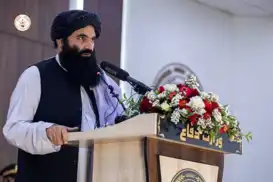
Ateş: Al-Aqsa Flood turned Palestinian cause into global struggle
 13 oC
13 oC 
Güneşli

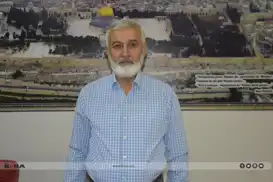
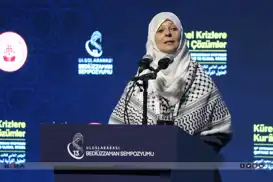
The Oct. 7, 2023 Operation Al-Aqsa Flood transformed the Palestinian struggle from a regional issue into a global cause, challenged perceptions of Israel's military dominance and forced Muslims to reconsider their responsibilities toward Palestine, Turkish theologian Prof. Dr. Abdurrahman Ateş said.
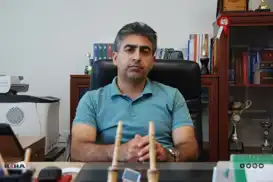
Ateş, a professor in the Department of Tafsir at Malatya İnönü University's Faculty of Theology, made the remarks in an interview with an İLKHA correspondent while assessing the impact of the Al-Aqsa Flood on the Palestinian struggle and the Muslim world.
He described Oct. 7 as a historic turning point, saying the events that followed had changed attitudes toward Palestine, Israel and the question of Jerusalem and Al-Aqsa Mosque.
“The morning of Oct. 7, 2023, with the Al-Aqsa Flood, marked the beginning of a period in which nothing would ever be the same again,” Ateş said. “From that day onward, the world changed, humanity changed and attitudes changed.”
From local struggle to global cause
Ateş said the Palestinian struggle had evolved significantly from earlier decades, when Palestinians often confronted Israeli forces with limited means, including stones, to a resistance movement capable of challenging a technologically superior military power.
He argued that the developments since Oct. 7 had undermined the perception that overwhelming military and technological superiority necessarily makes a power impossible to challenge.
Ateş also said the Al-Aqsa Flood had disrupted efforts to normalize relations between Israel and several Muslim-majority countries.
Before Oct. 7, he said, some Muslim countries had already established relations with Israel while others were considering similar steps.
“In reality, the Al-Aqsa Flood prevented ‘normalization’ with Israel,” he said. “It eliminated the idea that great powers cannot be confronted, that great powers cannot be brought to their knees, and that nothing can be achieved against disproportionate force.”
Ateş strongly criticized Israel's military campaign in Gaza, arguing that the scale of civilian suffering should not be viewed simply as part of a conventional military conflict.
Criticism of Muslim response
While praising Palestinian resilience, Ateş also criticized the response of Muslim governments and societies to the war in Gaza.
He said the Islamic world, with nearly two billion Muslims, had not done enough to support Palestinians.
“We are talking about an Islamic ummah of nearly two billion people,” Ateş said. “The Al-Aqsa Flood has shown us that they have not demonstrated a significant presence against the Zionists. It has exposed the helplessness and weaknesses of Muslims.”
He also criticized what he described as the failure to sustain effective consumer boycotts against Israel and said the Gaza crisis had exposed weaknesses in the political, economic and social mobilization of Muslim societies.
For Ateş, the Palestinian cause has consequently become not only a political question but also a test of faith, solidarity and collective responsibility.
“The whole world has become Palestine”
Ateş said the impact of the Al-Aqsa Flood had extended beyond Palestine and the Middle East, pointing to pro-Palestinian demonstrations and civil society campaigns in Europe and North America.
“With the Al-Aqsa Flood, a struggle that was previously at the national level has been elevated to the global level, and all of humanity — virtually the entire earth — has become Palestine,” he said.
He cited solidarity movements in Ireland, Scotland, Canada, Mexico, Spain and the United States as examples of the international response to the Palestinian cause.
“The Flood has not ended. Its effect will continue,” Ateş said. “Perhaps not its military effect, but its logistical impact is continuing in a tremendous way.”
He said the Palestinian cause remained active in universities, public squares and civil society initiatives around the world.
“Muslims must regain their strength”
Ateş said Muslims needed to draw lessons from Gaza and build the strength necessary to protect their communities and sacred places.
“The only thing Israel understands is power — the strength of Muslims,” he said, referring to Qur'anic teachings on strength and preparedness.
He stressed that strength should not be understood solely in terms of weapons or military technology.
“If you have sincerity, Allah will complete whatever is lacking in you,” he said, arguing that faith, unity, determination and moral resilience were essential components of strength.
Ateş said the objective should be to build a Muslim community capable of deterring aggression and defending its people and sacred values.
“Jerusalem and Al-Aqsa will not be liberated by themselves”
Ateş said the liberation of Jerusalem and Al-Aqsa Mosque would require sustained effort and the development of a conscious and resilient generation.
“Having power alone is not enough,” he said. “Gaza has taught us the need to raise an ummah whose will, resistance, patience and reliance on Allah are of the highest level in using that power.”
He pointed to the resilience of Palestinian children and elderly people during the war as an example for Muslims, saying their determination should prompt Muslim societies to reconsider their educational priorities.
“When we see the stance of 7- and 8-year-old children against the Zionists, we are truly ashamed of our own formation,” Ateş said.
He called for a renewed emphasis on faith, responsibility, patience and resilience in raising younger generations.
Call for Muslim mobilization
Ateş said Muslims should reject complacency and undertake a broader process of self-examination in response to the Gaza war.
“If complacency continues, we should know that our defeat will also be inevitable,” he said. “Complacency is the disease of being unable to do anything. Muslims need to begin mobilizing once again.”
He said the events since Oct. 7 had created an opportunity for Muslims to reconsider their responsibilities toward Palestine, Jerusalem and Al-Aqsa Mosque.
“Nothing will be as it was before. Muslims will also not be as they were before the Al-Aqsa Flood,” Ateş said.
“The Al-Aqsa Flood should make us ask ourselves certain questions. If it does not, there is a serious problem here. If the Al-Aqsa Flood has not caused us to ask questions, then we can declare from this point that we have truly been mistaken and that we have lost.” (ILKHA)
LEGAL WARNING: All rights of the published news, photos and videos are reserved by İlke Haber Ajansı Basın Yayın San. Trade A.Ş. Under no circumstances can all or part of the news, photos and videos be used without a written contract or subscription.

Eight students were injured in a stabbing at a middle school in Istanbul's Başakşehir district on Tuesday, with one in critical condition and two others in serious-to-moderate condition, according to Turkish authorities.
Twelve years after the Oct. 6-8, 2014 violence that left dozens dead across southeastern Türkiye, HÜDA PAR General Administrative Board member Şeyhmus Tanrıkulu said the events represented one of the most serious attacks faced by the region's Islamic community in modern history.
Türkiye's Ministry of Foreign Affairs has expressed condolences following the deadly crash of a Nigerian military aircraft in Ondo State, extending sympathies to the victims' families and the Nigerian people.