Afghanistan, Kazakhstan sign $500 million agreement for Herat-Torghundi railway project
 13 oC

Güneşli

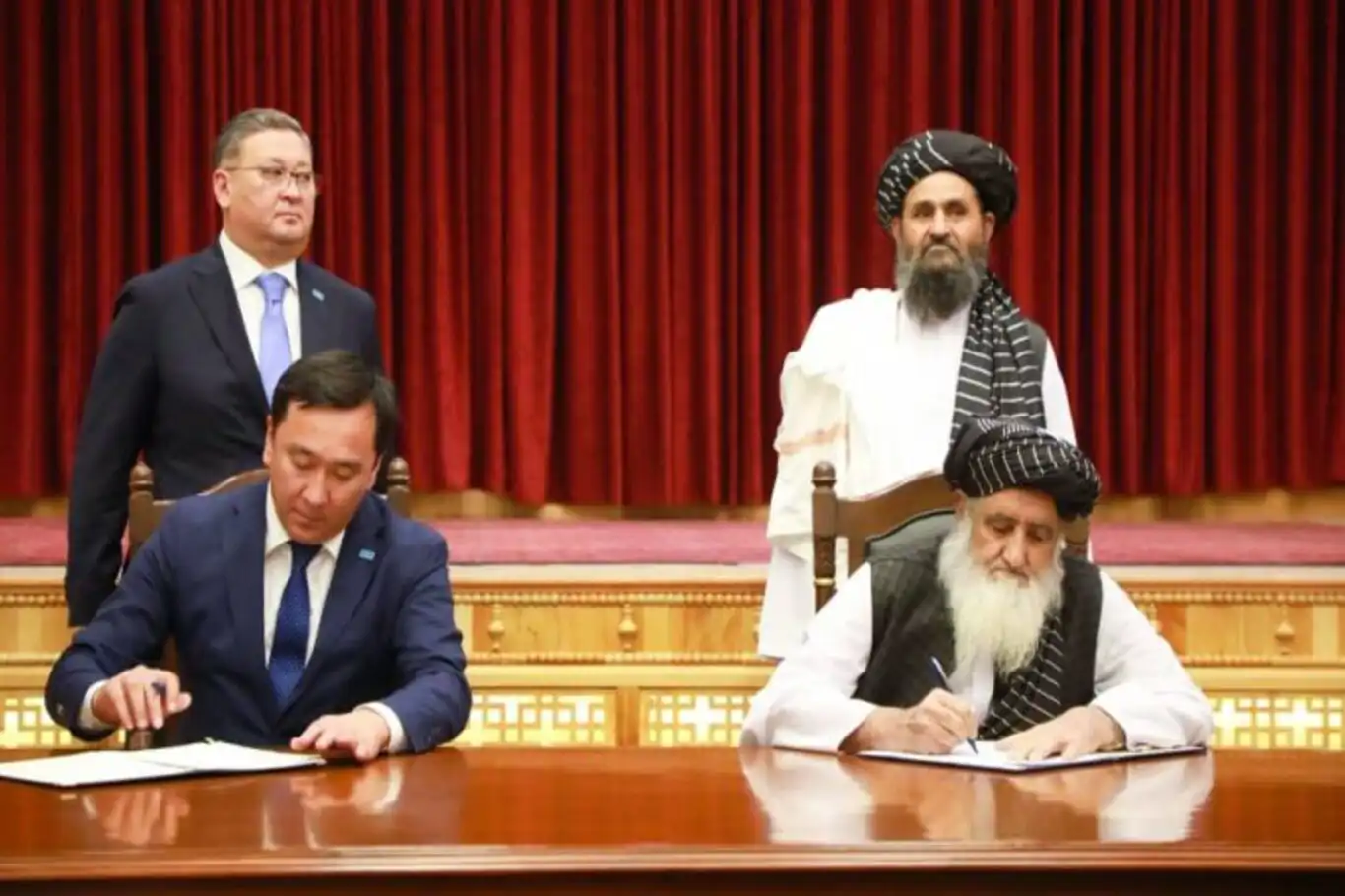
Afghanistan and Kazakhstan have signed a landmark agreement to invest $500 million in the development of the Herat-Torghundi railway, a strategic infrastructure project aimed at boosting regional connectivity and trade.
The agreement was formalized during a high-level meeting held Thursday at the Presidential Palace in Kabul between Mullah Abdul Ghani Baradar Akhund, Afghanistan’s Deputy Prime Minister for Economic Affairs, and Murat Nurtluyev, Kazakhstan’s Deputy Prime Minister and Minister of Foreign Affairs.
During the meeting, both sides reaffirmed their commitment to strengthening bilateral trade, transit cooperation, and economic partnerships. Deputy PM Baradar described the growing ties between Afghanistan and Kazakhstan as positive and forward-looking, noting Afghanistan’s unique position as a potential transit corridor for Kazakh energy exports to South Asia.
The Herat-Torghundi railway, once completed, is expected to serve as a vital link in the region’s transportation network, facilitating cargo movement and enhancing trade between Central and South Asia. The two governments see the project as a cornerstone of long-term regional economic integration.
In addition to the railway investment, officials discussed a wide range of joint venture opportunities in the sectors of mining, transport, energy production, telecommunications, and broader infrastructure development.
To further boost economic ties, both sides explored new agreements covering agricultural product protection, international freight transport, and reductions in transit fees. These steps are expected to elevate bilateral trade volume to an ambitious $3 billion in the coming years.
Kazakh Deputy PM Murat Nurtluyev reaffirmed Kazakhstan’s continued support for Afghanistan in international forums and reiterated his country's willingness to increase electricity exports to Afghanistan. He also highlighted Kazakhstan’s interest in importing Afghan agricultural products, creating further market opportunities for Afghan farmers and exporters.
The agreement is seen as a pivotal step toward economic revival and regional connectivity for Afghanistan, especially under the current circumstances where infrastructure development is vital for internal stability and economic self-sufficiency.
The signing of the $500 million Herat-Torghundi railway deal reflects growing regional interest in engaging with Afghanistan as a land bridge connecting Central Asia with South Asia and beyond. Officials from both sides hailed the agreement as a testament to mutual trust, economic ambition, and strategic vision.
The railway project, when realized, is expected to stimulate trade, generate jobs, and offer a more efficient route for the transit of goods across the region — underscoring the emerging role of Afghanistan in the broader Eurasian economic landscape. (ILKHA)
LEGAL WARNING: All rights of the published news, photos and videos are reserved by İlke Haber Ajansı Basın Yayın San. Trade A.Ş. Under no circumstances can all or part of the news, photos and videos be used without a written contract or subscription.

Germany has decided to stop using Chinese-made unmanned aerial vehicles (UAVs) in military training activities, opting instead for drones manufactured in Germany or other European countries as part of efforts to strengthen technological sovereignty and reduce dependence on non-European suppliers.

Palestinian physician Dr. Hussam Idris Abu Safiya, who remains imprisoned by Israeli occupation authorities, has been awarded the 2026 Arab Doctor Award in the "Medicine of Resilience" category in recognition of his medical and humanitarian efforts in the Gaza Strip.

The Palestinian resistance movement Hamas has called for three days of worldwide protests from Friday to Sunday, urging people across the Arab and Islamic world and supporters of Palestine worldwide to demonstrate in solidarity with Gaza amid the Strip's worsening humanitarian crisis.

The Maldives has introduced legislation that would permanently prohibit holders of Israeli passports from entering the country and is also preparing new restrictions preventing Israeli citizens and companies from investing in real estate projects.