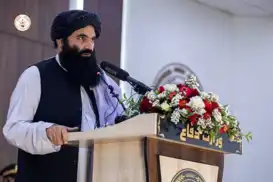
Al-Shaibani: Syria reclaims iIts regional role after years of war and destruction
 13 oC
13 oC 
Güneşli

Syrian Foreign and Expatriates Minister Asaad Hassan al-Shaibani has said Syria is reclaiming its natural role among its Arab partners, describing the country as a “shoulder and support, not a burden” as it moves from more than a decade of conflict toward reconstruction, economic recovery and institutional renewal.
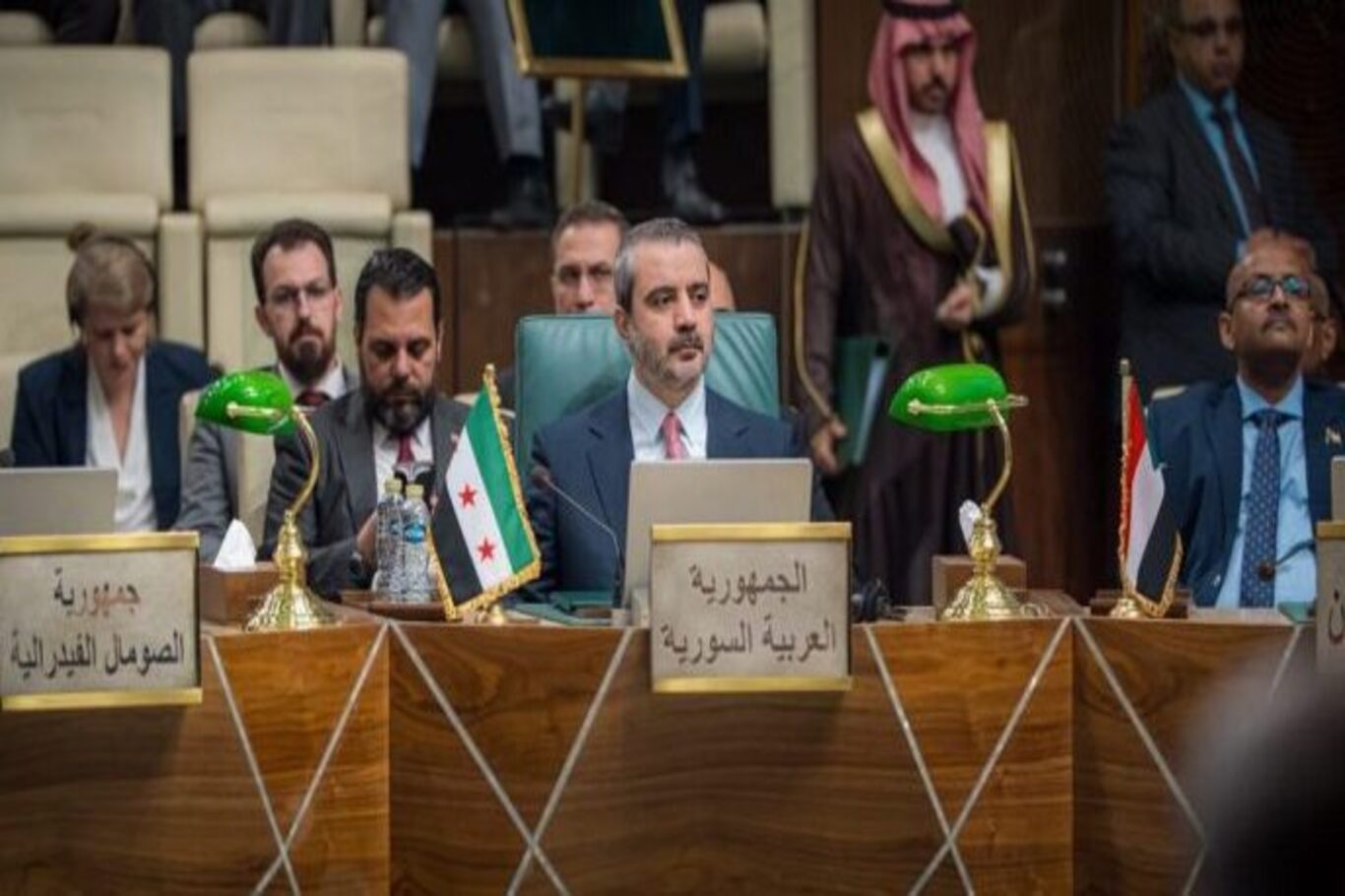
Addressing Arab foreign ministers at the 166th session of the Arab League ministerial meeting in Cairo, al-Shaibani said the current regional environment required Arab countries to strengthen unity and coordinate their positions.
“We meet today under the shared umbrella of Arab unity at a moment that requires us to close ranks and unify our visions,” he said.
Justice, National Unity and State Authority
Al-Shaibani said Syria was working to heal social divisions and wounds that he attributed to the former regime through a process centered on justice, openness and national reconciliation.
He said implementation of a three-part roadmap aimed at establishing peace in Sweida was progressing, with the goal of ensuring the province’s full integration into Syria’s national fabric and guaranteeing its residents equal rights and responsibilities as citizens.
He stressed that Damascus would firmly oppose any attempts to obstruct the process.
The minister also emphasized that the state must retain exclusive authority over weapons and the use of force, arguing that centralized security institutions were essential to protecting Syrians and preserving the country’s territorial integrity.
According to al-Shaibani, dialogue remains the preferred path for facilitating the return of displaced Syrians and advancing national reconstruction.
He said Syrians had achieved significant changes during the previous 20 months, moving from crisis management toward reconstruction after what he described as 15 years of destruction and five decades of authoritarian rule.
Under President Ahmad al-Sharaa, al-Shaibani said, the country had begun laying the foundations for a new era based on justice and sovereignty.
He pointed to the closure of prisons and dismantling of the former regime’s security apparatus, as well as the integration of armed factions and rebuilding of the national army around the principle that weapons must remain exclusively under state control.
Thousands of people accused of war crimes have been brought before the courts, he said, while independent human rights organizations have been permitted to operate openly.
Syria Rejects Partition and Seeks to Preserve National Unity
Al-Shaibani also highlighted what he described as Syria’s success in overcoming efforts to partition the country or separate parts of its territory.
He pointed specifically to developments in northeastern Syria, saying the Syrian Jazira had been reintegrated through a peaceful understanding that restored state institutions while recognizing what he called the legitimate rights of Syrian Kurds.
The minister said the process strengthened the position of Kurds as an integral component of Syria’s shared national identity.
He argued that Syria’s diversity should be viewed not as a source of division but as a strength capable of reinforcing the country’s unity and independence.
Rebuilding State Institutions and Reviving the Economy
Al-Shaibani said Syria’s recovery was closely linked to rebuilding state institutions, beginning with parliament.
He said Syrians had elected what he described as the first People’s Assembly of modern Syria, presenting it as an institution intended to reflect the country’s social and cultural diversity.
National security and defense institutions have also been restructured, he said, with a focus on protecting Syria’s borders and sovereignty and establishing a military doctrine aimed at ending the proliferation of weapons and placing deterrence capabilities under central state authority.
Education and higher education have likewise been identified as government priorities.
According to al-Shaibani, hundreds of thousands of children and young people have returned from displacement camps to schools and universities as educational facilities undergo rehabilitation.
He said the government’s economic program was focused on restoring citizens’ dignity by addressing shortages of essential goods, doubling wages and restarting domestic production.
Diplomatic Breakthroughs and Return of Displaced Syrians
The minister also pointed to what he described as significant diplomatic gains achieved during Syria’s recovery.
He cited the repeal of the Caesar Act, the lifting of U.S. and European sanctions and Syria’s removal from the U.S. list of state sponsors of terrorism after 47 years.
Al-Shaibani said Syria had expanded its international diplomatic presence dramatically, moving from only five functioning embassies in Damascus on the eve of what he called liberation to maintaining relations with more than 100 countries and international organizations.
The return of displaced Syrians, he said, represents one of the most significant achievements of the country’s recovery.
Al-Shaibani said approximately 3.7 million refugees and internally displaced Syrians had returned to their cities and villages, while the number of people remaining in displacement camps had fallen to around one-quarter of its previous level.
He added that Syria hopes to eliminate displacement camps entirely by the end of next year.
The minister also said international financial institutions were forecasting economic growth of more than 10% over the next two years.
He expressed gratitude to Arab and other friendly countries that supported Syria during the years of conflict, particularly those that helped the country overcome the impact of sanctions and provided refuge to Syrians.
Damascus Seeks a Renewed Role in Arab Security
Al-Shaibani argued that Syria’s geographic position and historical role mean that its recovery will have consequences well beyond its own borders.
He said Syria’s economic and political revival could benefit both the Syrian people and their Arab partners.
According to the minister, Damascus has begun playing a more active role in regional efforts to preserve peace, combat terrorism and counter transnational crime.
He also emphasized the importance of strengthening regional connectivity through trade corridors, secure energy routes and economic cooperation, arguing that borders should become channels for development rather than sources of division.
Al-Shaibani called for Syria to be immediately incorporated into the programs of Arab organizations and funds for 2027.
He also invited Arab countries to participate in and support an upcoming Arab Industries Exhibition in Damascus, which he presented as an opportunity to expand economic partnerships and strengthen regional trade.
The minister said Syria had returned to the Arab fold as a “shoulder and support,” rather than a burden, at the heart of Arab national security.
He pointed to Damascus’ declared solidarity with Gulf states and Jordan following the outbreak of what he described as the U.S.-Israeli-Iranian war.
Syria, he said, rejects the use of Arab territory as a battleground for disputes between other countries and likewise opposes allowing Syrian territory to be used as a launching ground for attacks.
At the same time, Damascus supports dialogue and stronger security and economic cooperation, particularly with neighboring Arab countries, he said.
Syria Seeks Diplomatic Solution to Israeli Escalation
Turning to the occupied Syrian Golan, al-Shaibani criticized Colombia’s recent recognition of its annexation and thanked Arab countries for condemning the move.
He proposed that the Arab Group at the United Nations in New York include a condemnation of the decision in a resolution during the 81st session of the UN General Assembly and formally notify Bogotá that Arab rights are “inalienable.”
Al-Shaibani said the diplomatic developments had coincided with an escalation by Israel, which he accused of seeking to establish new zones of influence and undermine Syria’s recovery.
Damascus, he stressed, does not want to be drawn into a new conflict that could divert resources and attention away from reconstruction.
Instead, Syria is pursuing a diplomatic solution, he said.
“We are engaged in U.S.-mediated negotiations aimed at ending the attacks, arrests and incursions, securing a withdrawal to the lines preceding Dec. 8, 2024, and restoring full compliance with the 1974 Disengagement Agreement,” al-Shaibani said.
He stressed that any diplomatic process must preserve Syria’s sovereignty over the occupied Golan and its sovereign right to establish and develop its national army.
The minister also thanked the Arab League for its continued support for Syrian sovereignty over the territory.
‘A Historic Syrian Success Story’
Concluding his address, al-Shaibani expressed confidence that the coming years would mark a new chapter in Syria’s history.
He portrayed the country’s ongoing political, economic and institutional transformation as the foundation for a broader national recovery and a renewed regional role.
Syria, he said, is determined to emerge from years of conflict as a stable and productive member of the Arab community—returning to its place as a “shoulder and support, not a burden.” (ILKHA)
LEGAL WARNING: All rights of the published news, photos and videos are reserved by İlke Haber Ajansı Basın Yayın San. Trade A.Ş. Under no circumstances can all or part of the news, photos and videos be used without a written contract or subscription.
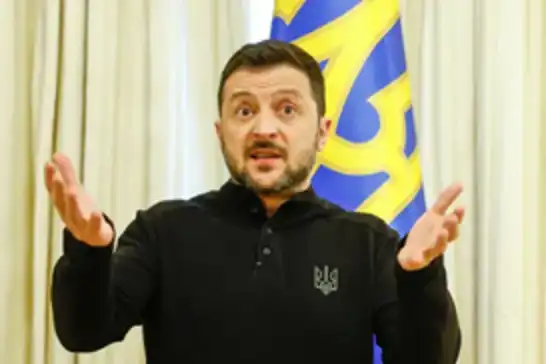
Ukraine had no information about an energy ceasefire between Kyiv and Moscow announced by U.S. President Donald Trump on Sunday, a senior Ukrainian official told the Kyiv Independent, casting doubt on whether an agreement had been reached.
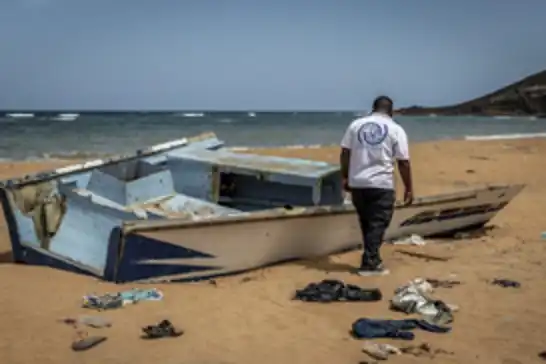
At least 139 migrants have died and 84 others remain missing after a boat carrying 305 people capsized off the coast of Djibouti while travelling to Yemen, the International Organization for Migration (IOM) said.
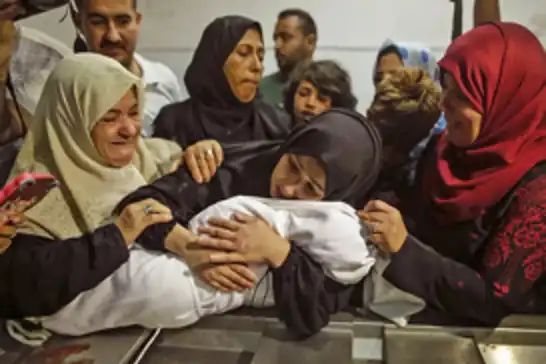
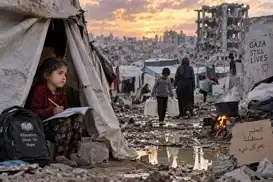
Nearly 22,000 Palestinian children have been killed in Israel’s war on the Gaza Strip, including 1,125 infants under the age of one, while hundreds of thousands face hunger, displacement and the collapse of essential services, Gaza’s Government Media Office said on Sunday.
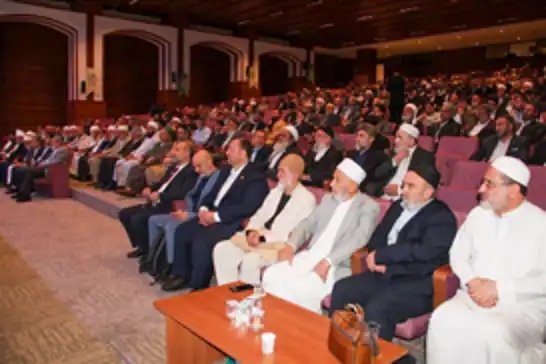
The 11th Scholars’ Meeting, organized by the Union of Scholars and Madrasas (İTTİHADUL ULEMA), is continuing in Diyarbakır on its second and final day, bringing together Islamic scholars, academics and preachers from Türkiye and several countries.