Andrej Babiš returns as Czech prime minister, signaling shift on Ukraine and EU
 13 oC
13 oC 
Güneşli

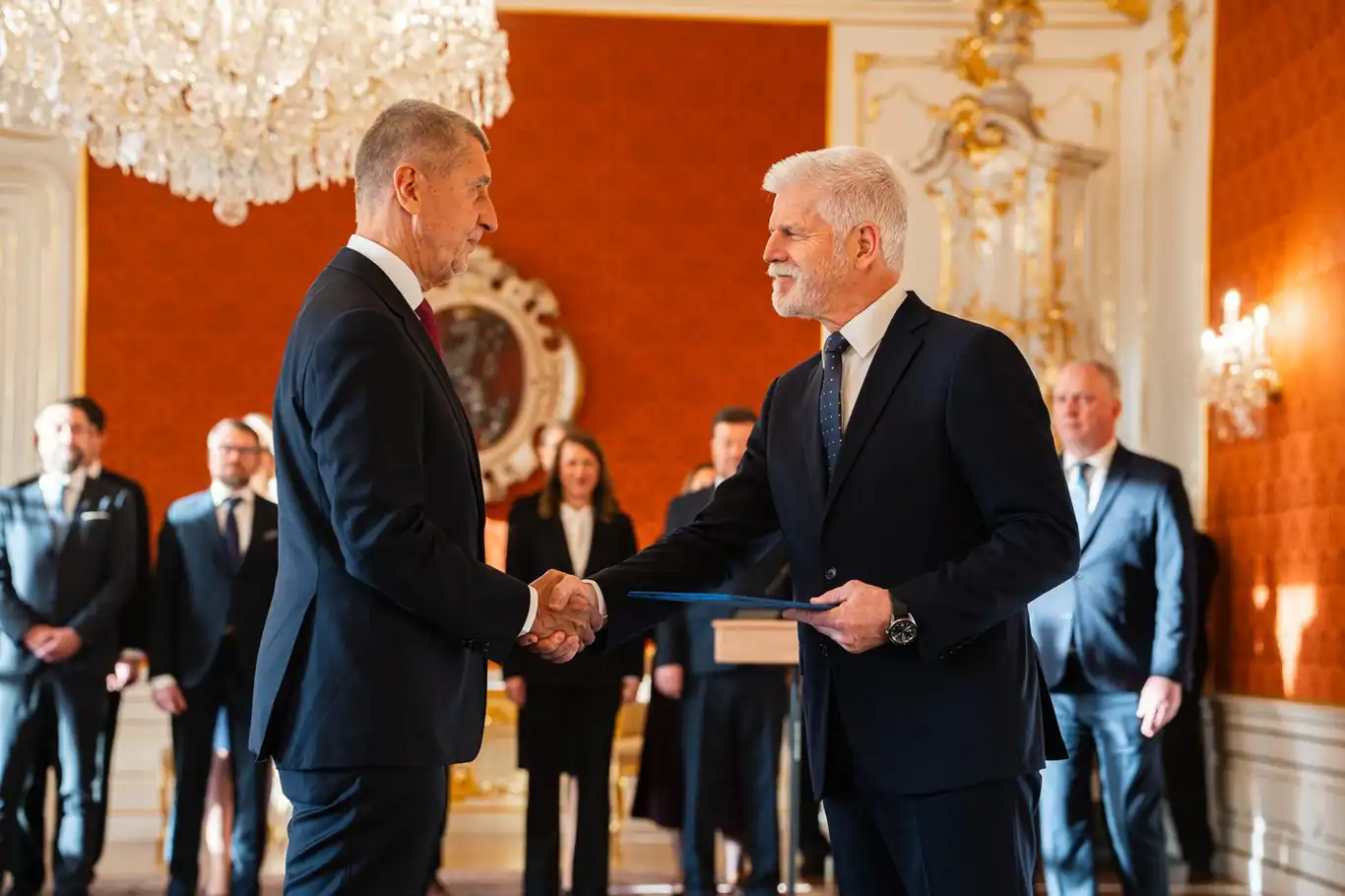
Andrej Babiš was sworn in as the Czech Republic’s new prime minister on Monday following his victory in October’s parliamentary elections, marking a significant political shift that is expected to weaken Prague’s support for Ukraine and strengthen the influence of Europe’s populist right.
Babiš, a 71-year-old billionaire and former prime minister, returns to office after four years in opposition. He leads a coalition government that includes the far-right Freedom and Direct Democracy (SPD) party, known for its anti-EU and pro-Russian positions, and the Motorists for Themselves party, whose core platform focuses on opposing the European Union’s climate policies.
At the swearing-in ceremony, President Petr Pavel urged the new government to govern responsibly and to recognize the strategic importance of NATO and EU membership for the country of 10.9 million people.
“Our country would undoubtedly not be more secure if we were not part of NATO, just as it would be less economically prosperous and stable if we were not members of the European Union,” Pavel said. “That is why we should approach membership in these institutions with the utmost responsibility and be responsible, constructive members rather than rejecters.”
Babiš’s return to power replaces a strongly pro-EU and pro-Ukrainian administration and shifts the Czech Republic’s political centre of gravity away from the liberal mainstream toward the European fringe right. His ANO party is part of the Patriots for Europe grouping in the European Parliament, alongside Hungarian Prime Minister Viktor Orbán’s Fidesz, Austria’s Freedom Party, and France’s far-right National Rally.
On Saturday, Babiš said the Czech Republic would not provide national guarantees for financing Ukraine, arguing that the European Commission should find alternative mechanisms to support Kyiv. His remarks come ahead of EU discussions on a proposed loan package for Ukraine that would involve frozen Russian assets and potential guarantees from member states.
Russia invaded Ukraine in 2022, and the Czech Republic has since been among Kyiv’s most vocal supporters in Central Europe, providing military aid and spearheading initiatives to supply ammunition to Ukrainian forces. Babiš has pledged to cut military assistance to Ukraine from the national budget and has suggested his government may terminate a Czech-led program that procures large-calibre ammunition for Ukraine from global markets, citing concerns about transparency.
Babiš has said his priority is to defend Czech interests domestically and internationally. A long-time critic of EU institutions, he has repeatedly argued that power should rest more with national governments and has expressed a preference for dealing directly with fellow leaders through the European Council rather than Brussels-based bodies. He has also vowed to reject EU migration policies and oppose plans to expand carbon emission charges to household heating and car fuels.
However, despite pressure from his far-right coalition partners, Babiš has ruled out referendums on EU and NATO membership, pledging to keep the Czech Republic within both alliances.
A dominant figure in Czech politics for more than a decade, Babiš built his fortune through the Agrofert conglomerate, which has interests in agriculture, chemicals, and media. His previous term as prime minister, from 2017 to 2021, was marked by clashes with the EU over rule-of-law issues and allegations of conflicts of interest related to EU subsidies, which he has consistently denied.
As Babiš begins his new term, analysts say his government is likely to pursue a more nationalist and eurosceptic agenda, testing relations with Brussels while reshaping the Czech Republic’s role in European and transatlantic efforts to support Ukraine. (ILKHA)
LEGAL WARNING: All rights of the published news, photos and videos are reserved by İlke Haber Ajansı Basın Yayın San. Trade A.Ş. Under no circumstances can all or part of the news, photos and videos be used without a written contract or subscription.

The death toll in the Gaza Strip has climbed to at least 70,665 Palestinians since the start of Israel’s military offensive on Oct. 7, 2023, medical sources confirmed on Monday, underscoring the devastating human cost of the ongoing assault on the besieged enclave.

The European Council has introduced a new criterion allowing the European Union to impose sanctions on individuals, entities, and bodies linked to actions or policies attributed to Belarus that undermine or threaten democracy, the rule of law, or the stability and security of the EU and its member states.

Ukrainian President Volodymyr Zelensky met with U.S. envoys in Berlin on Monday to continue discussions on a potential plan to end the Russia-Ukraine war.