China rejects Philippines' New South China Sea claims, vows 'resolute response'
 13 oC
13 oC 
Güneşli

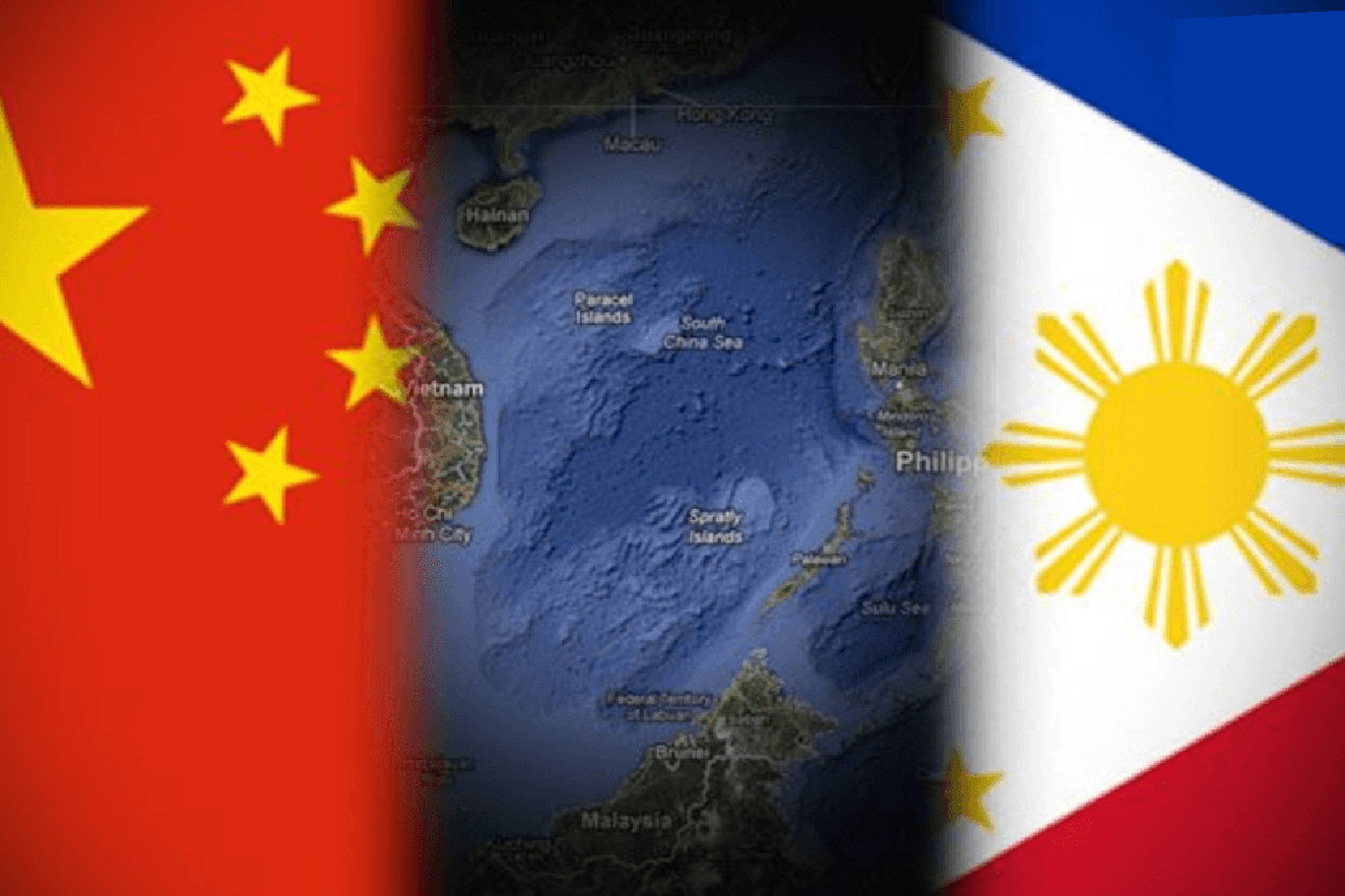
China on Friday strongly condemned the Philippines' latest moves to reinforce its territorial claims in the South China Sea, warning that it would take a "resolute response" against violations of China's sovereignty over the disputed waters.
The latest diplomatic dispute follows Manila's submission to the United Nations Commission on the Limits of the Continental Shelf (CLCS) and its decision to establish territorial sea baselines around Huangyan Dao, known internationally as Scarborough Shoal or Bajo de Masinloc, one of the region's most fiercely contested maritime features.
In a statement, China's Ministry of Foreign Affairs rejected the Philippine action as "illegal, null and void," arguing that it infringes upon China's territorial sovereignty and maritime rights.
Foreign Ministry spokesperson Lin Jian said Beijing would never recognize the Philippine claims and accused Manila of deliberately escalating tensions in the South China Sea.
"The Philippines has repeatedly taken provocative actions that undermine peace and stability in the South China Sea," Lin told a regular press briefing, adding that Beijing would firmly safeguard its sovereignty and legitimate maritime interests.
Chinese authorities also accused the Philippines of organizing media activities aboard government vessels to publicize confrontations with Chinese maritime forces.
Meanwhile, the China Coast Guard confirmed that it had taken what it described as "necessary control measures" against Philippine government vessels and fishing boats operating near Scarborough Shoal.
According to Chinese officials, coast guard ships used water cannons and other non-lethal measures to prevent what Beijing called unauthorized entry into waters under Chinese jurisdiction.
The Philippine government has rejected China's claims, maintaining that Scarborough Shoal lies within its exclusive economic zone under the 1982 United Nations Convention on the Law of the Sea (UNCLOS) and citing the 2016 Permanent Court of Arbitration ruling, which invalidated China's expansive "nine-dash line" claims. Beijing has consistently rejected that ruling, declaring it legally invalid and refusing to recognize its findings.
The latest confrontation comes amid increased maritime activity in the South China Sea, where Chinese and Philippine coast guard vessels have engaged in a series of increasingly tense encounters over the past year.
Regional observers say the dispute has become one of the most volatile flashpoints in Asia, with growing concerns that repeated confrontations could lead to an unintended military escalation.
The South China Sea carries an estimated one-third of global maritime trade, making stability in the region vital to international commerce. Analysts warn that prolonged tensions or disruptions to shipping routes could have significant economic consequences, increasing freight costs, insurance premiums and supply chain risks for economies across Asia and beyond.
The United States, which has a mutual defense treaty with the Philippines, has repeatedly reaffirmed its commitment to Manila's security and called for freedom of navigation in the South China Sea. Washington has also criticized what it describes as China's increasingly assertive maritime actions, while Beijing accuses the United States of interfering in regional affairs and militarizing the dispute.
Despite renewed diplomatic exchanges between China and the Philippines in recent months, no breakthrough has been achieved in resolving the longstanding territorial dispute, and maritime encounters between the two sides continue to fuel concerns over regional stability. (ILKHA)
LEGAL WARNING: All rights of the published news, photos and videos are reserved by İlke Haber Ajansı Basın Yayın San. Trade A.Ş. Under no circumstances can all or part of the news, photos and videos be used without a written contract or subscription.

Israeli occupation forces, backed by armed illegal Israeli settlers, launched widespread raids across the occupied West Bank and occupied Jerusalem overnight into Friday, demolishing Palestinian homes, carrying out mass arrests and injuring dozens of civilians.
At least 100 people died during last week's mass migrant crossings from Morocco into Spain's North African enclave of Ceuta, according to the head of the enclave's local government.
Turkish President Recep Tayyip Erdoğan, who is in Makkah for a one-day working visit, met on Friday with Saudi Crown Prince and Prime Minister Mohammed bin Salman at al-Safa Palace.