WMO warns of escalating climate threats across Southwest Pacific
 13 oC
13 oC 
Güneşli

The World Meteorological Organization (WMO) has warned that global warming, ocean acidification and sea level rise are posing increasing risks to countries across the Southwest Pacific.
In its State of the Climate in the South-West Pacific 2025 report, released during the Southeast Asia Marine Heatwave Services Workshop in Singapore, the UN weather agency said the region experienced its second-warmest year on record in 2025.
Average annual surface air temperatures over land and ocean were around 0.37 degrees Celsius above the 1991–2020 average, while ocean warming continued to intensify marine heatwaves and other climate-related hazards.
Marine ecosystems under growing pressure
The report said prolonged marine heatwaves have become more frequent, longer-lasting and more intense, posing serious threats to marine ecosystems and the communities and industries that depend on them.
Marine heatwaves can trigger widespread coral bleaching, fish die-offs, major disruptions to aquaculture, the loss of kelp forests, shifts in species distribution and harmful algal blooms.
Record-high ocean heat content in the upper 700 meters was observed in parts of the waters south of Australia, the southern Tasman Sea, areas of the tropical North Pacific between the Philippines and Hawaii, and south of Indonesia's Sumatra Island.
Sea levels continue to rise
According to the report, sea levels across the Southwest Pacific rose at an average annual rate of between 3.7 and 10.3 millimeters from 1999 to 2025, threatening low-lying islands, coastal communities and local economies.
The WMO also said ocean acidification continued to intensify as seawater absorbed increasing amounts of carbon dioxide, with nearly the entire Southwest Pacific recording its lowest surface ocean pH levels on record in 2025.
Extreme weather takes heavy toll
Many countries across the region suffered significant human and economic losses from extreme weather events, particularly tropical cyclones.
Among the most devastating was Cyclone Senyar, described as the first known system to reach tropical cyclone strength in the Strait of Malacca. The storm affected more than 10 million people in Indonesia and Malaysia and claimed over 1,200 lives.
Armida Salsiah Alisjahbana, Executive Secretary of the United Nations Economic and Social Commission for Asia and the Pacific (ESCAP), said rising temperatures are intensifying interconnected risks to food systems, public health, infrastructure and oceans, creating new pressures on livelihoods across the region.
The WMO has repeatedly warned that Pacific island nations are among the world's most vulnerable to climate change, facing growing threats from rising seas, coastal erosion and increasingly severe weather events despite contributing only a small share of global greenhouse gas emissions. (ILKHA)
LEGAL WARNING: All rights of the published news, photos and videos are reserved by İlke Haber Ajansı Basın Yayın San. Trade A.Ş. Under no circumstances can all or part of the news, photos and videos be used without a written contract or subscription.
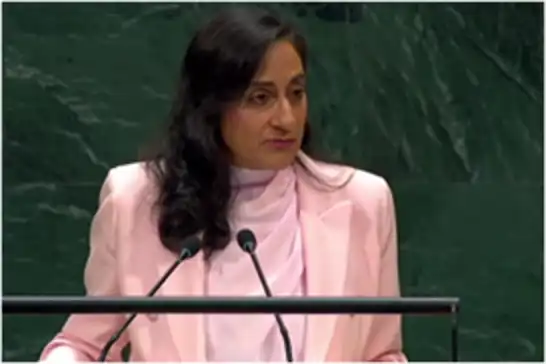
Canada’s Foreign Minister Anita Anand said Saturday that Palestinians have an equal right to self-determination and called for the establishment of an independent Palestinian state alongside Israel, while describing Israeli settlements in the occupied West Bank as illegal under international law.

Iranian President Masoud Pezeshkian described the Mecca Defense Agreement signed by Saudi Arabia, Türkiye and Pakistan as a positive step toward Muslim unity while expressing deep distrust of Washington over stalled nuclear negotiations in an interview with Qatar-based broadcaster Al Jazeera.

At least 27 people were killed in two separate mass shootings in South Africa, police said Sunday, with gunmen targeting an entertainment venue near Johannesburg and another in a township outside Cape Town.

Four people were killed Saturday after a helicopter crashed and caught fire southeast of Montreal, Quebec provincial police said.