Ethiopia clashes force 50,000 to flee into Kenya as regional tensions mount
 13 oC

Güneşli

Fighting in southern Ethiopia has forced an estimated 50,000 people to cross into neighbouring Kenya since clashes erupted last week, the United Nations refugee agency said, warning that the rapidly deteriorating situation is creating urgent humanitarian needs.
The United Nations High Commissioner for Refugees (UNHCR) said on Wednesday that local authorities had reported up to 50,000 crossings, a sharp increase from the 36,000 people recorded a day earlier.
“According to local authorities, up to an estimated 50,000 people have crossed into Kenya,” Fatima Mohammed-Cole, UNHCR's representative in Kenya, said in a statement.
The agency cautioned that the figure remained provisional as further crossings were reported and registration and verification efforts continued.
The violence erupted on October 20 in Moyale, a border town affected by a territorial dispute between Ethiopia's Oromia and Somali regional administrations. The immediate trigger was reportedly the raising of a Somali regional flag in the contested area.
Clashes between regional forces and armed groups have left several people dead, according to reports from the area. The fighting has also prompted growing concern about the potential spillover of violence into Kenya.
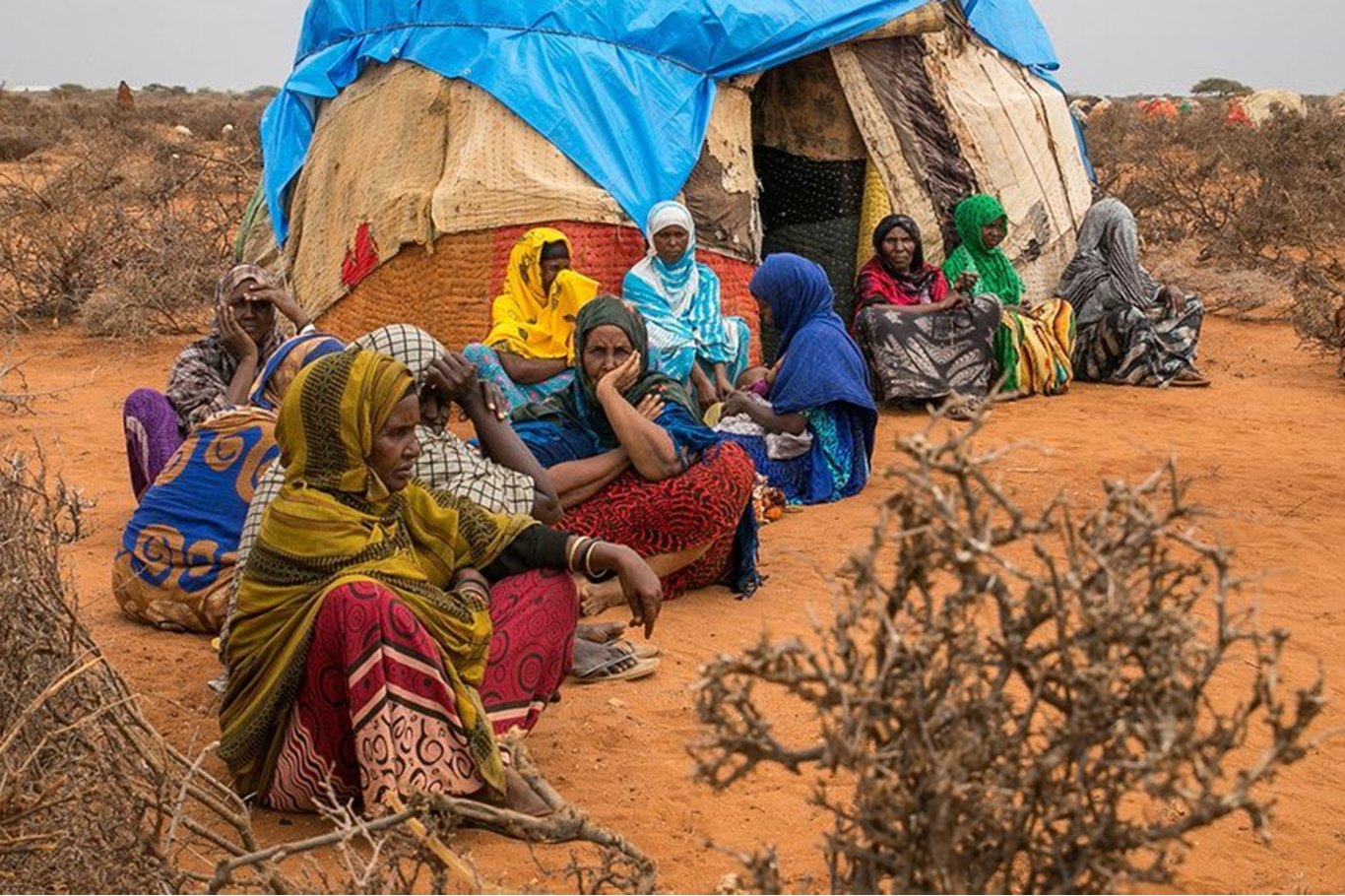
Many of those crossing the border are women and children, according to UNHCR. Some have found accommodation with relatives and local host communities, while others are sheltering in schools and churches.
Food is the most urgent need, the agency said, alongside safe drinking water, emergency shelter, sanitation and healthcare.
UNHCR has deployed an emergency team to Moyale and is coordinating with the Kenyan government, the International Organization for Migration, UNICEF, the World Food Programme, the Kenya Red Cross Society and other humanitarian organisations.
The agency said it was mobilising emergency supplies, including essential household items and temporary shelter materials, to assist nearly 12,000 people, while seeking to expand the response as needs grow.
Humanitarian concerns are mounting as the influx places additional pressure on communities near the border, where access to basic services and resources is already limited.
The Kenya National Commission on Human Rights has called for urgent action to protect displaced people and ensure they receive essential assistance.
The crisis in Moyale adds to Ethiopia's wider security challenges, with armed conflicts and political disputes affecting several regions of the country.
In Oromia and Amhara, federal authorities have faced prolonged insurgencies involving armed groups. Meanwhile, fighting has recently intensified again in northern Tigray, threatening the fragile peace established after the devastating 2020-2022 war.
The renewed Tigray conflict has also heightened tensions between Ethiopia and neighbouring Eritrea, with both countries exchanging accusations over military activities and support for armed groups.
Ethiopia has accused Eritrea of deploying troops across its territory and supporting insurgent movements, allegations that Asmara has not confirmed. Eritrea has criticised Addis Ababa's statements as a threat to regional peace.
The United States has called for restraint. Secretary of State Marco Rubio urged Ethiopian Prime Minister Abiy Ahmed to pursue dialogue and respect neighbouring countries' sovereignty during a phone call on Wednesday, according to the US State Department.
Human Rights Watch has also reported receiving accounts of civilians killed or injured by shelling in southern Tigray and called for independent monitoring and safe humanitarian access.
The developments have raised fears that renewed fighting could undermine regional stability across the Horn of Africa.
Against this backdrop, Abiy announced on Wednesday that Ethiopia had received Russian-made Su-35 fighter jets and would later receive four batteries of S-400 air defence systems.
The announcement was made during the Russia-Africa summit in Moscow, where the Ethiopian prime minister thanked Russian President Vladimir Putin for facilitating the delivery of the aircraft ahead of schedule.
Abiy described the acquisition as a step towards strengthening Ethiopia's national defence capabilities. He did not disclose the value of the agreement or specify where the aircraft and air defence systems would be deployed.
Reuters reported that Russia's state-owned arms exporter Rosoboronexport confirmed the delivery of an initial batch of two Su-35 aircraft, while the wider agreement covers 12 fighter jets and four S-400 batteries.
The military purchases come as Ethiopia faces internal armed conflicts and worsening relations with Eritrea, adding another dimension to an increasingly volatile regional security environment.
Ethiopia, Africa's second-most populous country, has also been seeking access to the Red Sea, a strategic objective that has contributed to tensions with Eritrea since the latter gained independence in 1993.
For now, the immediate concern remains the humanitarian emergency along the Kenyan border, where thousands of people continue to seek safety. Aid agencies have warned that the scale of displacement could rise further if the fighting persists. (ILKHA)
LEGAL WARNING: All rights of the published news, photos and videos are reserved by İlke Haber Ajansı Basın Yayın San. Trade A.Ş. Under no circumstances can all or part of the news, photos and videos be used without a written contract or subscription.
Russian forces have struck a cargo vessel in the Black Sea that was allegedly being used to supply the Ukrainian military, Russia’s Defence Ministry said, as attacks on shipping and port infrastructure intensify across the region.

The United States and Japan have agreed to establish a joint production facility in Japan for advanced medium-range air-to-air missiles, as the two allies move to strengthen their military cooperation amid growing security concerns across the Asia-Pacific region.
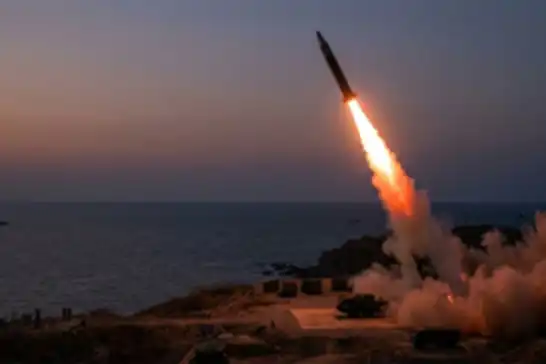
North Korea fired around 10 short-range ballistic missiles toward the sea off its eastern coast on Thursday, South Korea's military said, amid escalating tensions between the two Koreas over a border dispute and growing uncertainty surrounding potential nuclear talks between Pyongyang and Washington.