Five injured as Israeli settlers assault olive harvesters in occupied West Bank
 13 oC
13 oC 
Güneşli

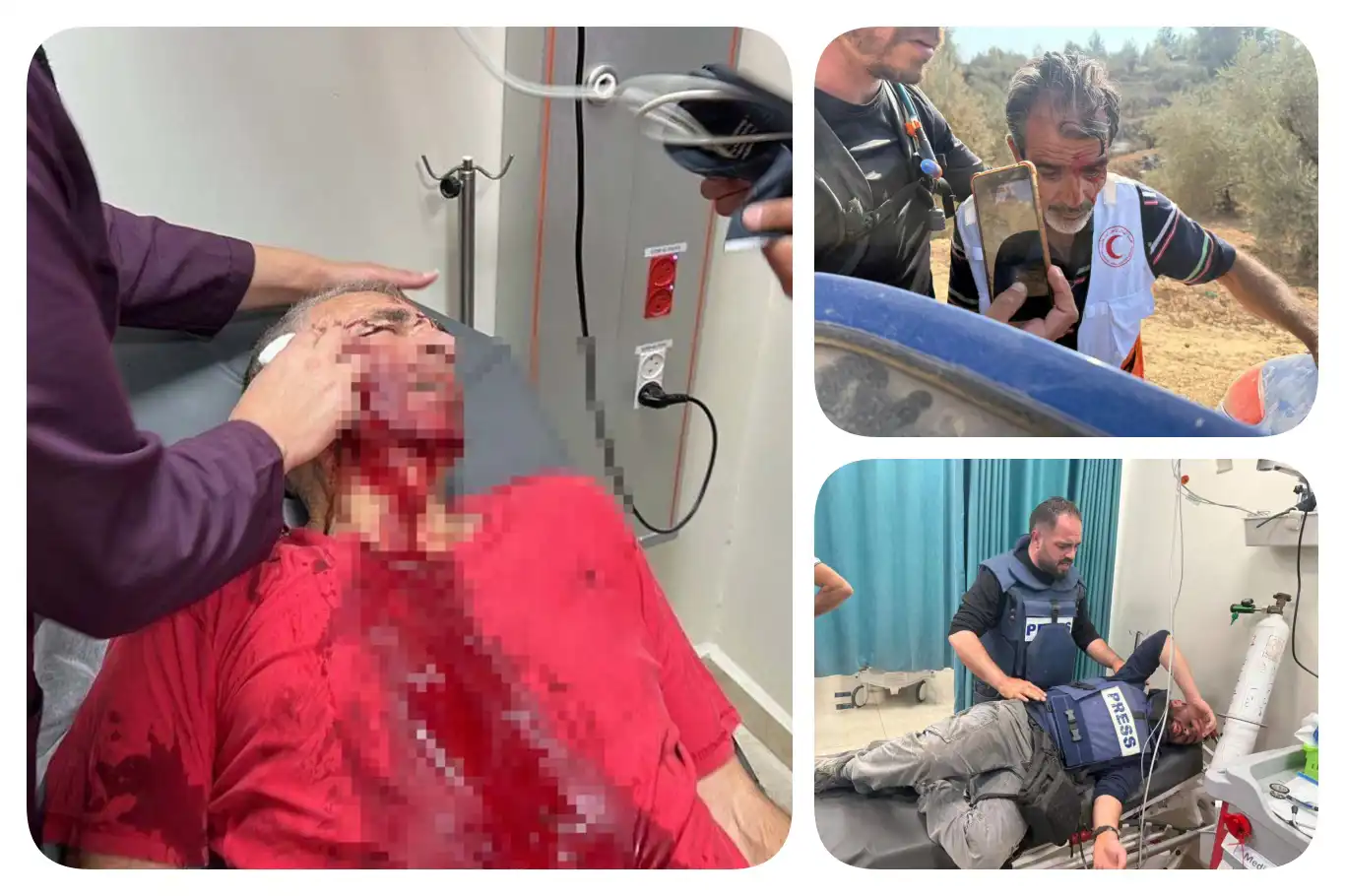
A Palestinian farmer and four international solidarity activists were injured on Saturday after a violent attack by Israeli settlers in the village of Burin, south of Nablus, in the occupied West Bank.
Local sources reported that dozens of armed settlers stormed the eastern outskirts of the village, targeting Palestinian residents and international volunteers who were helping families harvest olives — an annual act of steadfastness and resistance deeply rooted in Palestinian tradition.
According to witnesses, the settlers attacked Bashar Eid, a local farmer, along with several foreign activists using stones, sticks, and iron bars. Eid sustained serious fractures and multiple wounds, while four international volunteers were also injured during the assault.
Medical teams from the Palestinian Red Crescent Society (PRCS) arrived at the scene and treated the wounded. The PRCS confirmed that a 57-year-old Palestinian man was transferred to hospital for further treatment, while the international activists received on-site medical assistance for moderate injuries.
The assault took place during the olive harvest season — a period when settler attacks traditionally escalate as Israeli settlers, often under army protection, seek to intimidate Palestinian farmers and prevent them from accessing their lands.
Residents of Burin told reporters that settlers came from nearby illegal outposts built on confiscated village lands. “They came down in groups, throwing stones and shouting death threats,” said one farmer. “The army was present but did nothing to stop them.”
Human rights organizations, including B’Tselem and Yesh Din, have long documented the pattern of settler violence against Palestinians during the olive harvest, noting that the Israeli army frequently fails to intervene — and often provides cover for the assailants.
The Nablus governorate condemned the attack, calling it part of an ongoing campaign of terror aimed at driving Palestinian families from their lands.
“This is not an isolated incident,” a local official said. “These attacks are systematic and intended to destroy Palestinian livelihoods and erase our presence from our ancestral lands.”
Burin, located in the northern West Bank, has been one of the most frequently targeted villages by extremist settlers from surrounding illegal colonies such as Yitzhar and Givat Ronen. In recent weeks, dozens of similar assaults have been recorded, leaving farmers injured and olive trees uprooted.
Despite repeated international condemnations, settler violence has intensified under the current Israeli government, which continues to expand settlement construction while providing political and legal protection to perpetrators.
Palestinian and international activists have vowed to continue accompanying farmers to their lands, calling their work an act of nonviolent resistance and solidarity with the Palestinian people. (ILKHA)
LEGAL WARNING: All rights of the published news, photos and videos are reserved by İlke Haber Ajansı Basın Yayın San. Trade A.Ş. Under no circumstances can all or part of the news, photos and videos be used without a written contract or subscription.

Heavy rains have triggered flash floods and mudslides in Chile's capital, Santiago, and surrounding areas, injuring at least six people, forcing the evacuation of hundreds of households and damaging thousands of homes, according to authorities.
United Nations Secretary-General António Guterres has strongly condemned new US sanctions targeting the International Criminal Court (ICC) as an institution, warning that the measures could undermine its ability to pursue international criminal justice.

A powerful earthquake with a magnitude of 7.7 struck southern Panama on Friday, shaking buildings in the capital, prompting evacuations and triggering tsunami alerts for parts of the Pacific coast of Central and South America.

The European Commission will represent the European Union at the latest round of Ukraine peace talks on October 9, with Björn Seibert, chief of staff to Commission President Ursula von der Leyen, attending on behalf of the bloc, diplomatic sources told the Kyiv Independent.