France accused of failing its muslim citizens amid rising discrimination
 13 oC
13 oC 
Güneşli

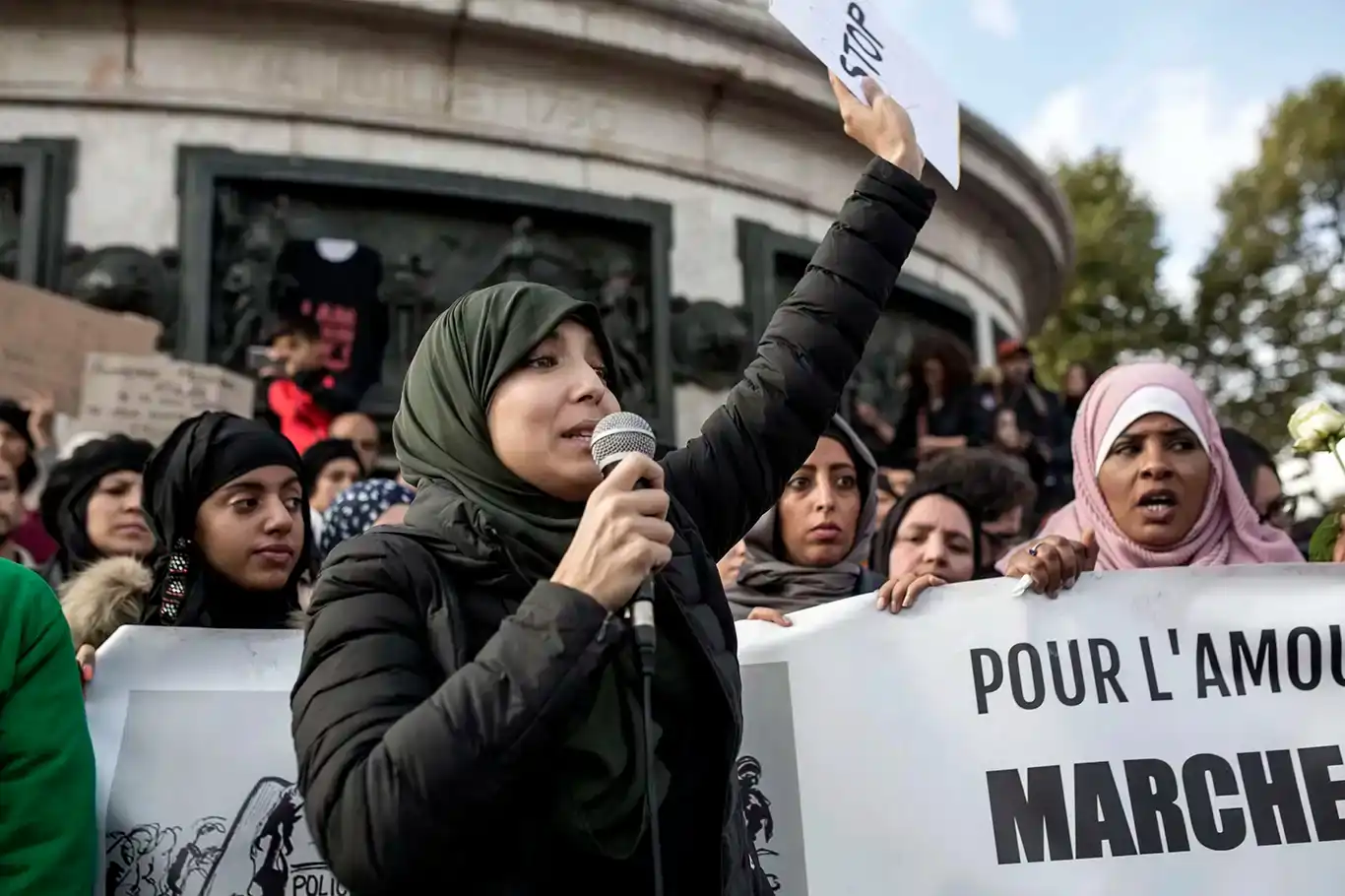
A new report released by France’s Defender of Rights has revealed a sharp rise in religion-based discrimination across the country, highlighting that Muslims—particularly women who wear the headscarf—are increasingly subjected to systematic exclusion and social hostility.
The findings, drawn from a 2024 nationwide survey involving 5,000 participants, indicate that one in three Muslims in France report experiencing discrimination in recent years, a rate significantly higher than that of other religious groups.
France, home to one of Europe’s largest Muslim populations due to historic migration from former French colonies, legally prohibits the collection of data related to religious or ethnic identity. This restriction has long made it difficult to assess the full extent of discrimination. Despite this limitation, the Defender of Rights report provides one of the clearest snapshots to date, revealing that seven percent of all respondents said they had been discriminated against on religious grounds within the last five years, compared to five percent in 2016.
The discrepancy becomes much more pronounced when focusing on Muslims or individuals perceived as Muslim, among whom the discrimination rate rises dramatically to 34 percent. By contrast, the rate was recorded at 19 percent among members of other religious groups and only 4 percent among Christians.
The report underscores that Muslim women face the brunt of discriminatory practices, with 38 percent of them stating they have been targeted because of their religious identity, compared to 31 percent among Muslim men. Women who wear the headscarf are particularly vulnerable, frequently encountering obstacles in employment and public life.
Many report being rejected by employers, pressured to abandon their positions, or directed toward roles that fall far below their skill level. The report also notes that some women are forced into self-employment or work within community-based businesses after being repeatedly turned away from the broader job market. In certain instances, Muslim women are even prevented from participating in sports or leisure activities solely because of their attire, further demonstrating the breadth of exclusion they experience.
According to the Defender of Rights, this rising hostility cannot be separated from the political and media climate that has taken shape in France over the past decade. Although the country’s secularism principle, established by the 1905 law separating church and state, was originally intended to protect freedom of conscience and ensure state neutrality, the report argues that it has increasingly been misused as a tool to justify restrictive measures against religious expression.
Since the 2015 attacks in France, far-right rhetoric has gained considerable ground in mainstream discourse, normalizing claims such as “Islamic expansion” and contributing to an atmosphere of suspicion and stigmatization toward Muslim communities.
This politicization of secularism has also significantly influenced public perceptions. A separate study referenced in the report shows that nearly one-quarter of French citizens mistakenly interpret secularism as a mandate to ban all visible religious symbols in public spaces—an interpretation that the Defender of Rights stresses is legally incorrect. Such misunderstanding, combined with repeated political and media narratives portraying Muslims as a threat to national cohesion, has widened the gap between the legal framework of secularism and its social application. Instead of mitigating discrimination, these trends have fueled it, reinforcing structural barriers and deepening social divisions.
The report concludes by warning that discriminatory practices against Muslims, particularly Muslim women, have become deeply entrenched and continue to escalate. It calls for better public education on the principles of secularism, stronger protections against religious discrimination, and a reevaluation of policies that, while framed as measures promoting neutrality, effectively marginalize a significant segment of French society.
The Defender of Rights emphasizes that unless these systemic issues are addressed, discrimination against Muslims in France will persist and likely worsen, further undermining the country’s commitment to equality and human rights. (ILKHA)
LEGAL WARNING: All rights of the published news, photos and videos are reserved by İlke Haber Ajansı Basın Yayın San. Trade A.Ş. Under no circumstances can all or part of the news, photos and videos be used without a written contract or subscription.
HÜDA PAR Deputy Chairman and Gaziantep Member of Parliament Şahzade Demir has expressed concerns over the proposed “Agreement on the Establishment of a UN Women Türkiye Country Office in Ankara,” warning that it could have consequences similar to those attributed by critics to the Istanbul Convention.

Apple and Tesla supplier Tata Electronics has suffered a major cybersecurity breach, with researchers reporting that over 200,000 corporate files have been leaked on the dark web.

A US Coast Guard helicopter crashed during a routine training exercise near the city of Sitka, Alaska, with all four crew members on board surviving the incident.

A severe heatwave escalating across Germany has led to a fatal incident after three individuals drowned while swimming in the Rhine River to cool off.